
Debt can make it difficult to manage monthly expenses, save money, and plan for the future. Whether you are dealing with credit card balances, personal loans, student loans, or other forms of borrowing, having a clear debt repayment strategy can make the process more organized and manageable.
The goal of debt repayment is not simply to pay whatever amount is available each month. A good strategy helps you understand how much you owe, prioritize your payments, reduce unnecessary interest costs where possible, and create a realistic plan that fits your income.
Before choosing a repayment method, it is important to understand your complete financial situation. Your income, essential expenses, interest rates, minimum payments, and other financial goals all affect which approach may work best for you.
1. Understand Your Debt and Build a Realistic Repayment Plan
The first step in creating a debt repayment strategy is knowing exactly what you owe. Many people focus on the total amount of debt but overlook important details such as interest rates, minimum payments, due dates, and loan terms.
Create a simple list containing:
- Name of each creditor or lender
- Current balance
- Interest rate
- Minimum monthly payment
- Payment due date
- Type of debt
- Any important fees or penalties
Once everything is listed, calculate the total amount you owe and the minimum amount required each month.
This gives you a clear picture of your financial obligations.
You should also review your monthly budget. A debt repayment plan needs to fit within your actual cash flow. If you allocate too much money toward debt and leave too little for essential expenses, the plan may become difficult to maintain.
If you need help organizing your finances first, our guide on Smart Money Management can help you understand how to manage income, expenses, savings, and financial priorities more effectively.
Separate Essential Expenses From Optional Spending
Before deciding how much extra money to put toward debt, identify your essential expenses.
These may include:
- Housing
- Food
- Utilities
- Transportation
- Insurance
- Necessary healthcare costs
- Minimum debt payments
Then review discretionary spending such as entertainment, subscriptions, dining out, unnecessary shopping, and other optional expenses.
The goal is not necessarily to eliminate everything enjoyable from your budget. Instead, look for expenses that can reasonably be reduced and redirect part of the savings toward your repayment plan.
Create a Debt Repayment Amount
After calculating your income and essential expenses, determine how much additional money you can consistently dedicate to debt.
For example, if your minimum payments total $400 per month and your budget allows another $200, your planned debt payment could be $600 per month.
The important factor is consistency.
A repayment amount that you can maintain every month is generally more useful than an aggressive amount that causes your budget to fail after a few weeks.
You can also review your progress regularly and adjust the plan when your income or expenses change.
2. Choose a Debt Repayment Method That Fits Your Situation
Once you understand your debts and available monthly cash flow, the next step is choosing a repayment method.
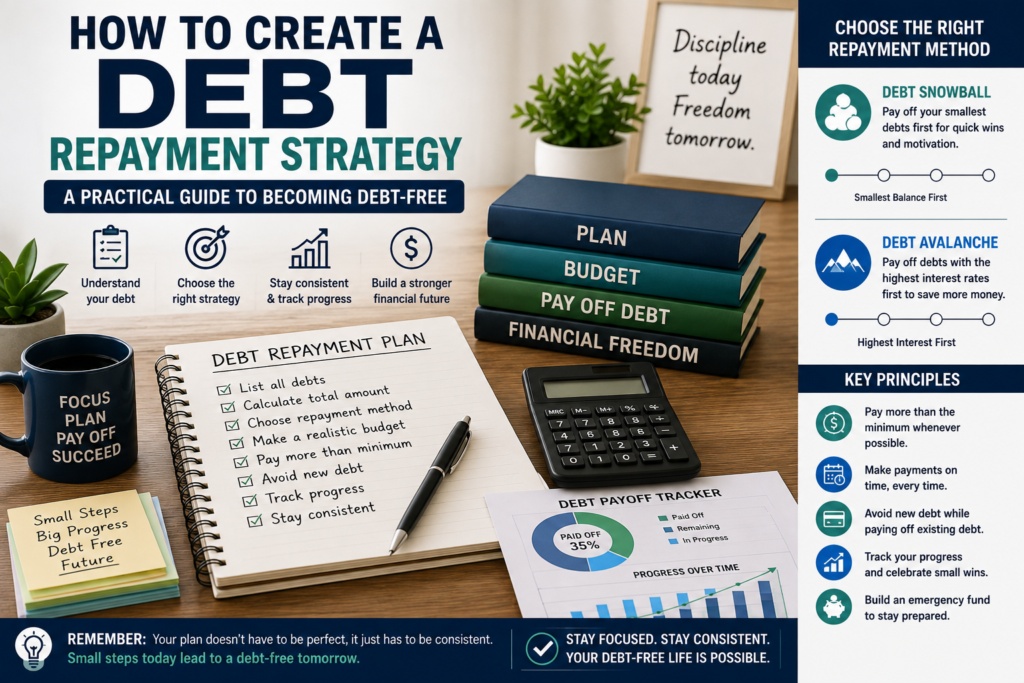
Two commonly discussed approaches are the debt snowball method and the debt avalanche method.
Debt Snowball Method
With the debt snowball approach, you generally focus on paying off your smallest debt first while continuing to make the required minimum payments on your other debts.
Once the smallest balance is paid off, the money previously used for that payment can be directed toward the next debt.
For example:
- Debt A: $500
- Debt B: $1,500
- Debt C: $4,000
You would focus additional repayment money on Debt A first.
One potential advantage of this method is psychological motivation. Paying off a smaller balance can create a sense of progress and make it easier to stay committed to the overall plan.
However, the smallest debt may not always have the highest interest rate, so this approach does not necessarily minimize total interest costs.
Debt Avalanche Method
The debt avalanche method generally prioritizes debts with the highest interest rates while making the required minimum payments on other debts.
For example:
- Credit card: 24% interest
- Personal loan: 12%
- Other loan: 7%
Under an avalanche approach, the highest-interest debt would receive the extra repayment money first.
The potential benefit is that reducing high-interest debt earlier may lower the amount of interest paid over time.
However, the method can sometimes feel slower if the highest-interest debt also has a large balance.
Which Method Should You Choose?
There is no single repayment method that is perfect for everyone.
The snowball approach may appeal to people who benefit from quick, visible wins. The avalanche approach may appeal to people who want to prioritize higher-interest debt.
The most important thing is to choose a strategy that you understand and can consistently follow.
You should also carefully review the terms of your loans before making additional payments. Some financial products may have specific rules regarding early repayment, fees, or how extra payments are applied.
If you are uncertain about a particular loan or your financial circumstances are complicated, consider getting advice from a qualified financial professional.
Avoid Taking on New Debt While Repaying Existing Debt
A repayment strategy can become much harder if new debt continues to accumulate.
Try to identify the reasons behind your borrowing. If credit cards are being used because monthly income is consistently insufficient for essential expenses, simply paying down the balance may not solve the underlying problem.
Look at your budget and determine whether you can:
- Reduce recurring expenses
- Increase income
- Build a small cash buffer
- Avoid unnecessary purchases
- Use existing savings carefully for planned expenses
- Stop relying on high-cost borrowing for everyday spending
Building an emergency fund can also reduce the need to use credit when unexpected expenses occur. Our guide on How to Build an Emergency Fund explains how to approach emergency savings step by step.
3. Stay Consistent, Track Progress, and Improve Your Financial Position
Creating a debt repayment strategy is only the beginning. The real challenge is following the plan consistently over time.
Debt repayment can take months or even years depending on the amount owed, interest rates, income, and monthly payment amount.
Instead of focusing only on the final debt-free date, track smaller milestones.
For example:
- Total debt reduced by 10%
- First account completely paid off
- Highest-interest debt eliminated
- Three consecutive months of on-time payments
- Monthly interest costs reduced
- Emergency savings started
These milestones can make long-term progress easier to see.
Automate Payments Where Appropriate
Missing payments can create additional financial problems. Depending on the account and lender, late payments may result in fees and potentially affect your credit history.
Where available and appropriate, automatic payments can help you avoid forgetting regular due dates.
However, make sure enough money is available in your account before scheduled payments are processed.
Review Your Interest Rates and Loan Options Carefully
Interest rates can have a significant effect on the cost of borrowing.
If you are considering refinancing, consolidation, balance transfers, or another debt-management option, do not focus only on the advertised interest rate.
Review:
- Fees
- Promotional periods
- New interest rates
- Repayment terms
- Eligibility requirements
- Total repayment cost
- Potential penalties
- What happens when promotional terms expire
A lower monthly payment does not necessarily mean the debt will cost less overall. Extending the repayment period can sometimes increase the total amount paid.
Therefore, compare the complete terms before making a decision.
Look for Ways to Increase Your Available Cash Flow
Another way to accelerate debt repayment is to increase the amount of money available for payments.
Depending on your circumstances, this might involve:
- Freelance work
- Part-time work
- Selling unused items
- Negotiating certain recurring expenses
- Developing additional business income
- Improving professional skills
- Finding opportunities for higher-paying work
Even a relatively small additional amount can become meaningful when consistently directed toward debt.
If you are a small business owner, keeping business and personal finances organized can also help you understand where money is going. Our guide on How Businesses Can Improve Cash Flow provides additional ideas for improving financial visibility and cash management.
Build Better Financial Habits After Paying Off Debt
Debt repayment should not be viewed as the final destination.
Once a debt is paid off, consider redirecting at least part of the money that was previously used for repayments toward other financial priorities.
Depending on your circumstances, these priorities could include:
- Building an emergency fund
- Saving for planned expenses
- Paying down other debts
- Preparing for future financial goals
- Increasing long-term savings
- Improving your financial education
The objective is to avoid returning to the same borrowing cycle.
Creating a long-term financial plan can help connect debt repayment with your broader financial goals. Our Smart Financial Planning guide provides a broader framework for organizing those goals.
Final Thoughts
A successful debt repayment strategy starts with understanding exactly what you owe and creating a realistic plan based on your income and expenses.
You can then choose a repayment method such as the snowball or avalanche approach, prioritize consistent payments, avoid unnecessary new debt, and regularly monitor your progress.
There is no universal strategy that works for every financial situation. The right approach depends on factors such as your debt types, interest rates, income, expenses, and financial goals.
The most important step is to create a realistic plan and stick with it. Small, consistent improvements can help you move toward greater financial stability over time.