

Healthcare is increasingly moving toward models that consider not only medical services, but also the needs, preferences, experiences, and circumstances of the people receiving those services.
This approach is commonly known as patient-centered care. The Agency for Healthcare Research and Quality describes patient-centered healthcare as an approach that involves patients and families and personalizes care around individual needs.
The concept is also closely related to person-centered care. The Centers for Medicare & Medicaid Services describes person-centered care as healthcare that responds to an individual’s goals, values, and preferences while supporting communication and collaboration between patients and providers.
As healthcare systems become more connected and digital, the idea of putting people at the center is becoming increasingly relevant. Technology can support communication, information access, coordination, and participation, but successful patient-centered healthcare also depends on human relationships and well-designed systems.
What Patient-Centered Healthcare Means
Patient-centered healthcare is based on the idea that people should have an active role in healthcare interactions rather than being treated simply as recipients of a service.
This can involve listening to individual preferences, explaining information clearly, coordinating services, and considering a person’s broader circumstances.
Shared decision-making is one important part of this approach. AHRQ describes it as a collaborative process in which patients and clinicians work together using evidence, professional knowledge, and the patient’s values, goals, preferences, and circumstances.
This does not mean that patients are expected to make healthcare decisions without professional guidance. Instead, it emphasizes communication and collaboration between people and healthcare professionals.
Patient-centered healthcare can also involve families and caregivers where appropriate. AHRQ notes that patients and families can be important partners in healthcare and that their needs, preferences, and circumstances can be considered within care relationships.
Another important principle is coordination. People may interact with primary care professionals, specialists, hospitals, laboratories, pharmacies, community services, and other parts of the healthcare system.
When information and services are poorly coordinated, people may have difficulty navigating the system. WHO’s integrated people-centred care framework emphasizes coordination across services and a stronger focus on the needs of people and communities.
How Technology Can Support Patient-Centered Healthcare
Technology is becoming an important part of the patient-centered healthcare conversation.
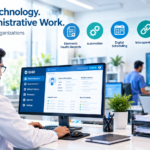
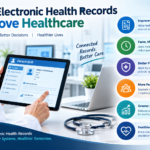
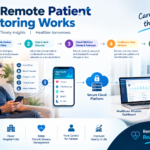
Electronic health records can allow authorized healthcare professionals to access relevant information through digital systems. Patient portals can provide digital access to selected healthcare information and communication services.
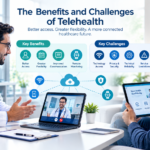
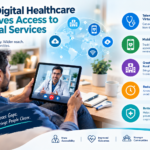
Telehealth can provide another channel for communication when a service is appropriate for remote delivery.
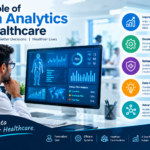
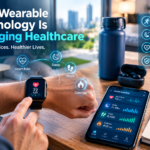
The broader development of digital health technology is creating more ways for patients, providers, and healthcare organizations to interact. Global Business Times has also covered how digital technologies such as telemedicine, wearable devices, electronic records, and connected systems are becoming part of modern healthcare.
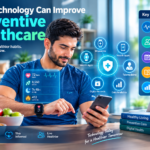
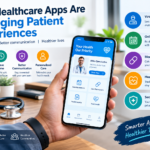
Mobile applications and connected devices can also provide people with access to selected health-related information. However, the usefulness of these technologies depends on factors such as usability, accessibility, privacy, security, and the quality of the information involved.
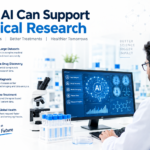
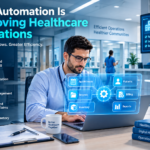
Artificial intelligence is another area attracting significant attention. Artificial intelligence in healthcare is being explored for a range of applications, including information management, research, administrative workflows, and digital health systems.
The role of AI needs to be considered carefully because healthcare applications can vary significantly in purpose and risk. The World Health Organization has emphasized the importance of ethics, governance, safety, equity, and human rights when AI is used in health.
Technology can also support accessibility. Digital systems can offer different ways for people to communicate, access information, or interact with healthcare organizations.
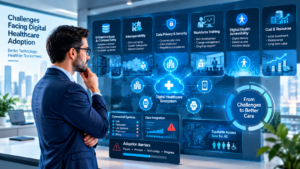
At the same time, technology can create new barriers. People may have different levels of internet access, digital skills, device availability, language support, or familiarity with digital platforms.
For this reason, a patient-centered digital system should consider accessibility from the beginning rather than assuming that every user has the same technological resources.
Challenges in Building Patient-Centered Systems
Creating genuinely patient-centered healthcare can be difficult because healthcare systems are complex.
One challenge is coordination between different providers and organizations. Information may be stored in separate systems, making it difficult to maintain a consistent view of a person’s interactions with different parts of the healthcare system.
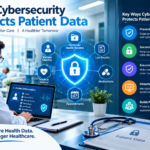
Privacy and security are also important. Patient-centered systems depend partly on information, but health information needs appropriate protection.
Another challenge is communication.
People may have different levels of health literacy, language preferences, cultural backgrounds, disabilities, or communication needs. A system designed around a single communication method may not work equally well for everyone.
WHO’s people-centred care framework emphasizes responsiveness, participation, equity, and coordination as important features of healthcare systems designed around people.
Healthcare organizations also need to consider the patient experience across the full journey rather than focusing on a single interaction.
For example, a healthcare organization could have an efficient appointment system but still provide a difficult experience if communication, information access, referrals, or follow-up processes are poorly coordinated.
Measurement can therefore become important. Organizations may examine patient feedback, communication quality, coordination, access, and other indicators to understand how people experience healthcare services.
Technology should support these goals rather than become the goal itself.
A sophisticated digital platform is not necessarily patient-centered simply because it uses advanced technology. Its usefulness depends on whether it actually makes healthcare interactions easier to understand, navigate, and coordinate.
The Future of Patient-Centered Healthcare
The future of patient-centered healthcare will likely involve a combination of technology, coordinated services, stronger communication, and greater attention to individual preferences.
WHO’s digital health work emphasizes interoperability, data sharing, evidence, and implementation of digital solutions, while its people-centred care framework calls for healthcare systems designed around the needs and participation of people and communities.
One important development may be greater integration between digital services and traditional healthcare environments.
Patients may increasingly interact with healthcare organizations through multiple channels, including in-person visits, digital platforms, telehealth, mobile applications, and connected devices.
Another important area is preventive healthcare. Digital tools can support access to educational information, health records, communication, and selected monitoring services, although their exact role will depend on the technology and healthcare setting.
The future may also involve more personalized digital interfaces. Systems could potentially present information in formats that better match users’ communication needs and preferences.
However, personalization should not come at the expense of privacy, transparency, accessibility, or human oversight.
The long-term development of patient-centered healthcare will likely depend on how well organizations combine technology with human-centered design.
The strongest systems may not necessarily be the ones with the most advanced technology. They may be the ones that make it easier for people to understand available services, communicate with healthcare professionals, access relevant information, and navigate different parts of the healthcare system.
Patient-centered healthcare is therefore likely to remain an important direction for the future of healthcare delivery.
Editorial Note: This article is intended for general informational and educational purposes only. It does not provide medical, diagnostic, treatment, medication, legal, regulatory, or professional advice.