

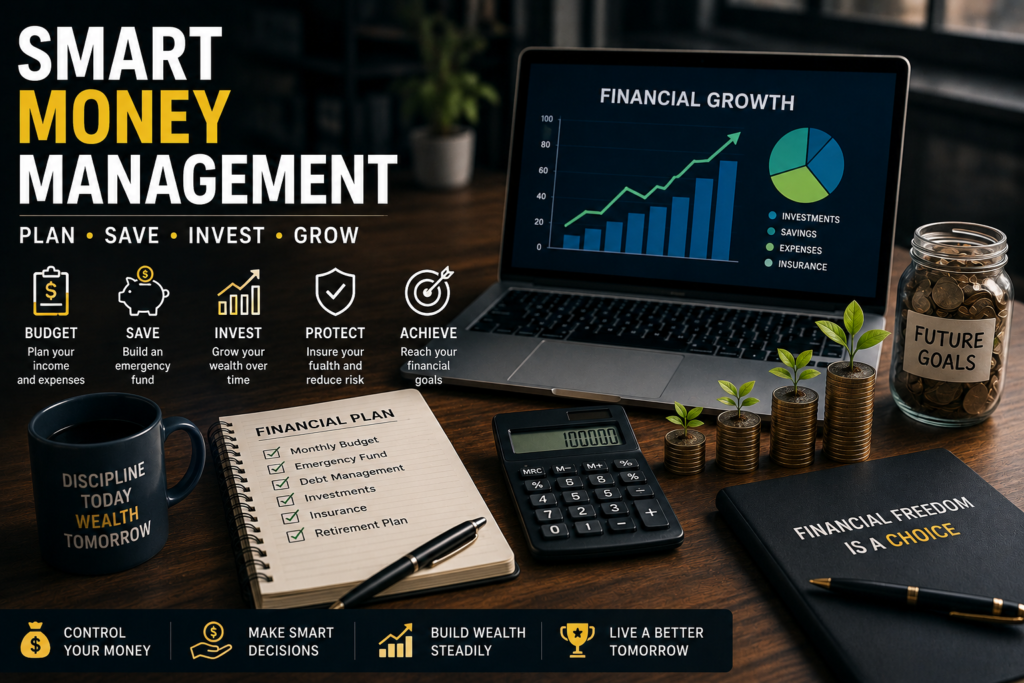
Managing money effectively is one of the most important skills for achieving financial security and long-term success. Whether you are an employee, entrepreneur, freelancer, or investor, making informed financial decisions helps you reduce stress, build wealth, and prepare for unexpected challenges.
Many people believe financial success depends only on earning a high income. In reality, smart financial management is about controlling expenses, saving consistently, investing wisely, and planning for the future. Even individuals with moderate incomes can achieve financial stability by following disciplined financial habits.
This guide explores practical strategies that help individuals and businesses improve financial health while creating a strong foundation for long-term growth.
Create a Monthly Budget
Every successful financial plan begins with a budget.
A budget allows you to understand where your money comes from and where it goes each month. Without a budget, unnecessary spending can quickly reduce savings and make it difficult to achieve financial goals.
A simple budget should include:
- Monthly income
- Fixed expenses
- Variable expenses
- Savings
- Investments
- Emergency fund
According to the Consumer Financial Protection Bureau (CFPB), budgeting is one of the most effective ways to improve financial stability.
Build an Emergency Fund
Unexpected expenses can happen at any time. Medical emergencies, job loss, or major repairs can create financial pressure if you are not prepared.
Financial experts recommend building an emergency fund that covers at least three to six months of essential living expenses.
Keeping emergency savings separate from everyday spending accounts helps prevent unnecessary withdrawals.
An emergency fund provides peace of mind while protecting long-term financial goals.
Reduce Unnecessary Debt
Not all debt is harmful, but excessive debt can limit financial freedom.
Before borrowing money, consider whether the purchase is truly necessary.
To reduce debt effectively:
- Pay high-interest loans first.
- Make payments on time.
- Avoid unnecessary credit card balances.
- Borrow only when required.
Reducing debt improves cash flow and increases financial flexibility.
Start Investing Early
Investing allows your money to grow over time through compound returns.
Many people delay investing because they believe they need large amounts of money to begin. In reality, consistent investing with small amounts can produce significant long-term results.
Popular investment options include:
- Stock market
- Mutual funds
- Index funds
- Exchange-Traded Funds (ETFs)
- Real estate
- Retirement accounts
According to Investor.gov, compound growth rewards investors who remain consistent over long periods.
Diversify Your Investments
Putting all your money into one investment increases risk.
Diversification spreads investments across different asset classes to reduce potential losses.
A diversified portfolio may include:
- Stocks
- Bonds
- Real estate
- Gold
- Cash savings
Diversification helps balance risk while improving long-term financial performance.
Increase Multiple Income Streams
Relying on only one source of income can be risky.
Many financially successful individuals build additional income through:
- Freelancing
- Online businesses
- Investments
- Rental properties
- Digital products
- Dividend-paying investments
Additional income streams improve financial security and accelerate wealth creation.
Track Your Financial Progress
Reviewing your financial situation regularly helps you identify strengths and weaknesses.
Important financial indicators include:
- Monthly savings rate
- Debt level
- Investment growth
- Net worth
- Cash flow
Tracking progress allows you to adjust financial strategies when necessary.
Avoid Lifestyle Inflation
As income increases, many people increase spending instead of saving.
This habit, known as lifestyle inflation, often prevents long-term wealth accumulation.
Instead of spending every salary increase, consider:
- Increasing investments
- Paying off debt
- Growing your emergency fund
- Saving for future goals
Maintaining disciplined spending habits creates stronger financial stability.
Protect Your Financial Future
Financial planning should include protection against unexpected events.
Consider:
- Health insurance
- Life insurance
- Business insurance
- Retirement planning
- Estate planning
These financial protections reduce long-term risks for individuals and families.
Continue Learning About Personal Finance
Financial markets and investment opportunities continue evolving.
Reading financial books, following reputable financial publications, and learning about investing help improve decision-making.
Continuous financial education enables individuals to adapt to changing economic conditions while making smarter investment choices.
Conclusion
Smart money management is not about earning the highest income—it is about making wise financial decisions consistently. Budgeting, saving, investing, reducing debt, and planning for the future help individuals achieve financial independence and long-term stability.
Financial success is built through discipline rather than shortcuts. Small improvements made consistently over many years often produce remarkable results.
Whether you are managing personal finances or running a business, adopting strong financial habits today can create lasting financial security tomorrow.
Frequently Asked Questions
Why is budgeting important?
Budgeting helps control spending, increase savings, and improve financial decision-making.
How much should I save for emergencies?
Financial experts generally recommend saving three to six months of essential living expenses.
When should I start investing?
The earlier you begin investing, the more time your money has to grow through compound returns.
Is paying off debt better than investing?
It depends on the interest rate. High-interest debt should usually be paid off before making significant investments.
Why is diversification important?
Diversification reduces investment risk by spreading money across different assets instead of relying on a single investment.