
Healthcare is becoming increasingly digital, and automation is playing an important role in how hospitals, clinics, laboratories, pharmacies, and other healthcare organizations manage their daily operations. Instead of relying entirely on manual processes, healthcare organizations can use software, digital workflows, artificial intelligence, and connected systems to handle repetitive administrative and operational tasks.
Healthcare automation does not necessarily mean replacing healthcare professionals. In many situations, its purpose is to reduce repetitive work so that staff can spend more time on tasks that require professional judgment, communication, and human interaction.
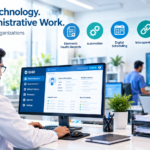
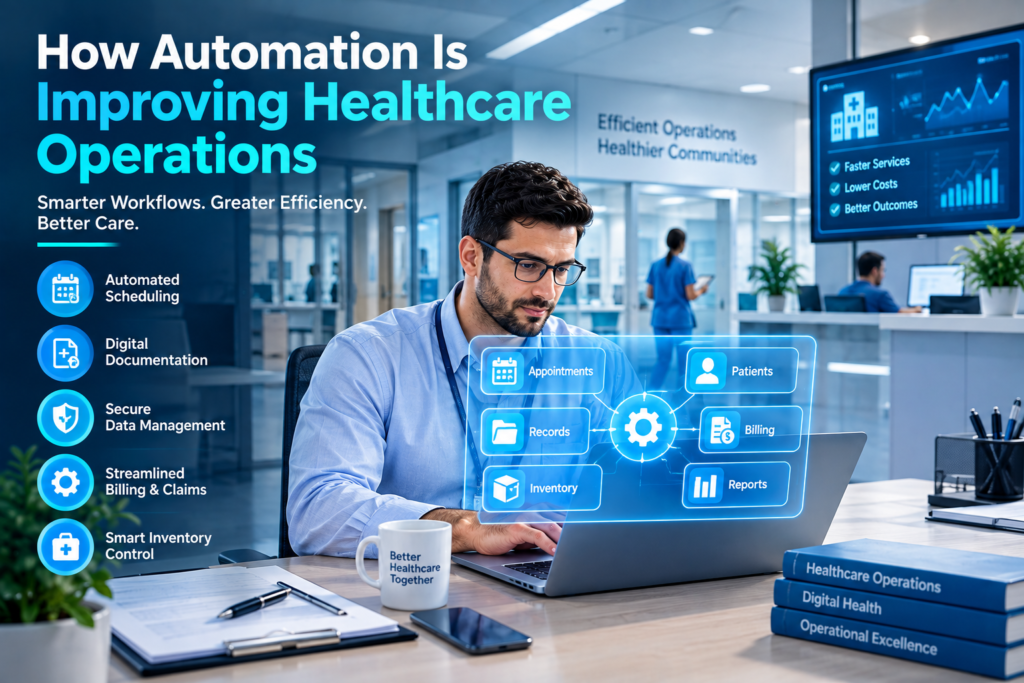
Automation can support areas such as appointment scheduling, patient registration, documentation, billing workflows, reminders, inventory management, data processing, and administrative reporting. When properly designed and implemented, these technologies can improve efficiency while reducing unnecessary paperwork and repetitive processes.
However, healthcare automation also requires careful planning. Patient information is sensitive, healthcare workflows are complex, and automated systems can produce errors if they are poorly designed or used without appropriate human oversight.
What Is Healthcare Automation?
Healthcare automation refers to the use of software and digital technologies to perform repetitive or structured tasks with limited manual intervention. The technology can range from simple automated reminders to more advanced systems that use artificial intelligence and data analysis.
Some common examples include:
- Automated appointment scheduling
- Patient registration and digital intake forms
- Appointment reminders through email or messaging
- Automated billing and claims workflows
- Digital documentation support
- Laboratory result notifications
- Inventory and supply management
- Administrative reporting
- Workflow notifications
- Data entry and information transfer between systems
Electronic health records are another important part of modern healthcare operations. According to the U.S. Office of the National Coordinator for Health Information Technology, EHRs can improve access to information, support coordination between healthcare professionals, reduce administrative burden, and streamline provider workflows.
Automation can work alongside these systems to reduce repetitive administrative activities. For example, instead of staff manually entering the same information into multiple systems, properly connected digital workflows may allow information to move automatically between compatible systems.
This is particularly important because healthcare organizations often manage large amounts of information every day. Patient records, appointments, laboratory information, insurance details, prescriptions, invoices, and operational reports all require accurate handling.
The goal of automation should therefore be to make these processes more organized and efficient while maintaining appropriate human oversight.
How Automation Improves Healthcare Operations
1. More Efficient Appointment Management
Appointment scheduling is one of the most repetitive administrative activities in healthcare.
Traditional scheduling may require staff to answer phone calls, check availability, enter patient information, send confirmations, and manage cancellations manually. Automation can simplify many of these steps.
Online scheduling systems can allow patients to request or select available appointments. Automated reminders can then notify patients before their scheduled visit.
Healthcare organizations can also use digital systems to manage cancellations and appointment changes more efficiently.
This can reduce repetitive administrative work and allow staff to concentrate on patients who require direct assistance.
2. Reduced Administrative Work
Healthcare professionals and administrative employees often spend considerable time completing documentation and other operational tasks.
Automation can help organize information, generate routine notifications, transfer structured data, and support documentation workflows.
The World Health Organization has highlighted the potential of digital technologies to reduce administrative burdens and improve efficiency in healthcare-related processes.
The important point is that automation should support employees rather than simply add another layer of technology. If a system is complicated or poorly integrated, it can actually create additional work.
Successful automation therefore depends on designing workflows around real operational needs.
3. Faster Patient Registration and Check-In
Patient registration can involve collecting contact details, insurance information, medical history, consent forms, and other administrative information.
Digital registration tools can allow patients to provide information before arriving at a healthcare facility.
Automated check-in systems can then help staff access the information they need without repeatedly entering the same data.
This can make the registration process more organized and potentially reduce waiting associated with manual paperwork.
However, organizations must ensure that sensitive information is handled securely and that patients have appropriate opportunities to correct inaccurate information.
4. Improved Documentation Workflows
Documentation is an essential part of healthcare operations.
Digital systems can help organize notes, forms, records, and other information. Some newer technologies, including AI-supported tools, can assist with administrative documentation and summarization.
WHO has identified clerical and administrative activities, including documentation and summarization within electronic health records, as one potential application area for AI-based technologies. At the same time, WHO emphasizes the need for oversight because automated systems can produce inaccurate or incomplete information.
For this reason, automated documentation should generally be treated as a support function rather than an unquestioned replacement for professional review.
5. Streamlined Billing and Administrative Processes
Billing is another area where healthcare organizations manage large amounts of structured information.
Automation can assist with tasks such as:
- Generating invoices
- Organizing billing information
- Tracking payment status
- Identifying missing information
- Sending routine notifications
- Supporting claims workflows
- Producing financial reports
Automating repetitive administrative steps can reduce manual processing and make it easier for organizations to identify incomplete information.
Digital technologies can also improve the speed and accuracy of certain health-financing processes when they are appropriately designed and implemented. WHO notes that digital technologies can simplify health-financing tasks and improve efficiency and transparency, while also emphasizing the need to assess risks in the specific context where the technology is used.
6. Better Inventory and Supply Management
Hospitals and clinics depend on a continuous supply of medicines, medical equipment, protective equipment, laboratory supplies, and other resources.
Manual inventory management can make it difficult to identify changing stock levels quickly.
Automated inventory systems can track quantities, record transactions, generate alerts, and support purchasing decisions.
For example, a healthcare facility may configure a system to notify staff when particular supplies reach a predefined level.
This does not eliminate the need for human decision-making, but it can reduce the amount of manual monitoring required.
7. Improved Communication and Notifications
Healthcare operations involve communication between patients, administrative staff, clinicians, laboratories, pharmacies, and other departments.
Automation can support routine communication through scheduled notifications and workflow alerts.
Examples include appointment reminders, preparation instructions, administrative updates, follow-up notifications, and internal task alerts.
Automated communication can help ensure that routine messages are delivered consistently.
At the same time, organizations need safeguards to prevent sensitive information from being sent to the wrong person or through an inappropriate channel.
Challenges of Healthcare Automation
Although automation offers potential operational benefits, healthcare organizations should not assume that every process should be automated.
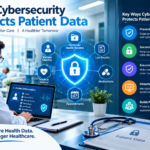
One major challenge is data privacy and security. Healthcare information can be highly sensitive, so digital systems need appropriate security controls and governance.
Another concern is accuracy. An automated system can repeat an error quickly if the underlying information or workflow is incorrect.
There is also the risk of automation bias. WHO has warned that people may place excessive trust in automated or AI-generated outputs, potentially overlooking errors that they might otherwise identify.
Interoperability is another important consideration. Healthcare organizations may use multiple software systems that do not always communicate effectively. The U.S. health information technology authorities continue to emphasize interoperability standards because the ability of systems to exchange information is important for clinical, administrative, public health, and research purposes.
Finally, healthcare workers need appropriate training. Introducing a new automated system without explaining how it works can create confusion, resistance, or additional administrative work.
Automation should therefore be introduced gradually, tested carefully, monitored after deployment, and reviewed by qualified personnel.
The Future of Automation in Healthcare
Healthcare automation is likely to become increasingly connected with artificial intelligence, electronic health records, digital health platforms, analytics, and other technologies.
Future healthcare operations may use automation to coordinate more complex workflows across departments. Routine administrative tasks could become increasingly digital, while healthcare professionals remain responsible for decisions that require expertise, context, judgment, and patient interaction.
The World Health Organization has emphasized that digital health technologies can contribute to stronger health systems, but they are not a substitute for functioning healthcare systems and must be evaluated for benefits, harms, feasibility, resource use, and equity.
The most useful approach is therefore not to automate everything. Instead, healthcare organizations can identify repetitive processes where automation can provide clear operational value while maintaining human oversight for sensitive or complex activities.
Healthcare automation is ultimately about improving the way healthcare organizations work. When implemented responsibly, it can reduce repetitive administrative tasks, improve workflow efficiency, organize information, support communication, and give healthcare workers more time for activities that require human expertise.
The future of healthcare operations will likely combine automation with skilled professionals rather than treating technology and human workers as competing alternatives. The strongest systems will use technology to support people while maintaining privacy, security, accountability, and appropriate professional oversight.
Healthcare Disclaimer
This article is for general educational and informational purposes only. It does not provide medical diagnosis, treatment, or individualized healthcare advice. AI tools and healthcare technologies can have limitations and should not replace advice from qualified healthcare professionals.