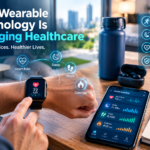

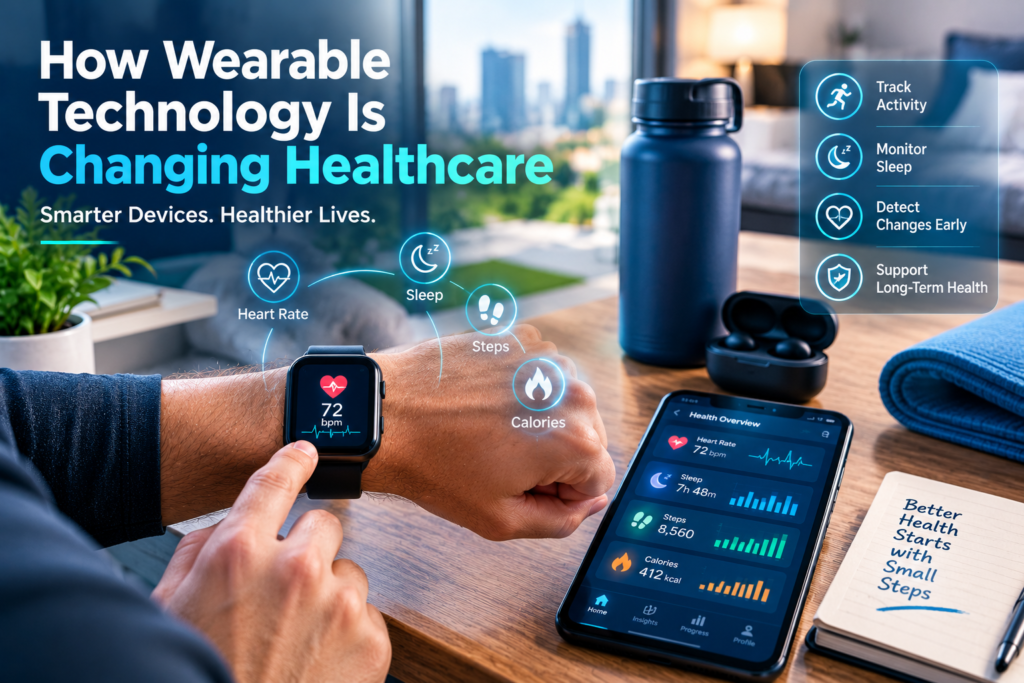
Wearable technology is becoming an increasingly important part of modern digital health. Smartwatches, fitness trackers, smart rings, patches, and other sensor-based devices can collect information about activity, heart rate, sleep, and other health-related measurements. As these technologies develop, the data they generate can potentially support individuals, researchers, and healthcare professionals in understanding health patterns.
The role of wearables is broader than simply counting steps. The U.S. National Institutes of Health (NIH) notes that newer wearable sensors may monitor measures such as vital signs and blood oxygen levels, while research is exploring how continuous data could contribute to health monitoring.
At the same time, wearable data should be interpreted carefully. A consumer device is not automatically a medical device, and measurements can vary according to the device, sensor, user, and circumstances. The U.S. Food and Drug Administration (FDA) distinguishes digital health technologies used for general wellness from technologies that meet medical-device requirements.
1. How Wearable Technology Collects and Uses Health Data
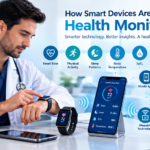
Modern wearable technology combines small sensors, computing components, wireless connectivity, and software in devices designed to be worn on or near the body. Depending on the device, sensors may collect information related to movement, heart rate, sleep, temperature, or other physiological signals.
One of the most common uses is physical activity tracking. Fitness trackers and smartwatches can record steps, movement, exercise sessions, and other activity-related information. This can help users understand their daily activity patterns and observe changes over time.
The World Health Organization has also examined the use of wearable sensor technology for measuring physical activity. Its work highlights the importance of appropriate metrics, device specifications, evaluation methods, and evidence when wearables are used for health-related measurement.
Another common application is sleep tracking. Some wearable devices estimate sleep duration and identify periods of movement during the night. These measurements can help users observe patterns in their routines, although estimates from consumer devices should not automatically be treated as clinical sleep assessments.
Wearables can also generate information related to heart rate and other physiological signals. NIH research has explored how continuous streams of data from commercially available wearable devices could be combined with conventional health measurements for research purposes.
This creates a broader concept of patient-generated health data, where information collected outside traditional healthcare settings can potentially contribute to research, monitoring, and communication with healthcare professionals.
However, collecting more data does not automatically mean better healthcare. Data quality, device validation, privacy, interoperability, and appropriate interpretation are all important. Healthcare professionals may need additional clinical information before making decisions based on any health-related measurement.
2. How Wearables Can Support Patients, Researchers, and Healthcare Systems
One major advantage of connected wearable devices is that they can collect information outside hospitals and clinics. Traditional healthcare often depends on information collected during appointments, while wearable devices can provide additional observations from everyday life.
For individuals, this can make health patterns easier to understand. A person may notice changes in activity, sleep routines, or other measurements and discuss relevant observations with a healthcare professional when appropriate.
For researchers, continuous or repeated measurements can provide large datasets for studying health patterns. NIH research has investigated how wearable sensors can provide streams of personal health information that may be useful in scientific research.
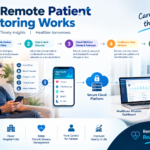
Wearables may also become part of remote monitoring systems. FDA research on patient monitoring technologies describes how sensors, connectivity, artificial intelligence, and interoperability can support new approaches to patient monitoring, including wearable healthcare technologies.
The broader digital-health ecosystem is also important. The WHO describes digital health as a field that includes technologies intended to improve health services, strengthen health systems, support informed decision-making, and improve access to quality care.
Wearable devices can therefore be viewed as one component of a larger digital healthcare system rather than as standalone solutions.
Healthcare organizations may eventually use wearable information alongside electronic health records, telehealth platforms, remote monitoring systems, and other digital tools. For this to work effectively, systems need appropriate standards for data sharing and interoperability. WHO identifies interoperability and responsible implementation as important elements of digital health development.
There are also limitations. Different devices may use different sensors, algorithms, measurement methods, and data-processing systems. Results may therefore not be directly comparable between products.
Another important issue is information overload. If a person receives constant notifications and measurements without appropriate context, the data may create confusion rather than improve understanding. Healthcare technology works best when information is relevant, understandable, and used for an appropriate purpose.
3. Privacy, Regulation, Accuracy, and the Future of Wearable Healthcare
As wearable healthcare expands, privacy and data security will become increasingly important. Wearable devices can collect highly personal information, and users should understand what information a device collects, where it is stored, how it is transmitted, and which services or applications can access it.
Regulation is another important consideration. FDA information shows that digital health technologies cover a broad range of products, from general wellness technologies to medical devices. Some sensor-based digital health technologies are specifically designed for continuous or spot-check monitoring of health parameters in non-clinical settings.
This distinction matters because consumers should not assume that every smartwatch, ring, band, or fitness tracker has the same clinical capabilities or regulatory status.
Accuracy is equally important. A wearable measurement is an estimate generated through a particular sensor and software system. Factors such as device placement, movement, skin contact, environment, and the measurement method can influence results.
For this reason, wearable information should generally be considered a source of additional information rather than a replacement for professional medical assessment. If a device produces an unexpected health-related reading, users should avoid making major medical decisions based only on the device and should seek appropriate professional guidance.
The future of wearable healthcare is likely to focus on better sensors, improved interoperability, stronger privacy protections, more evidence-based validation, and more useful integration with healthcare systems.
The WHO’s Global Strategy on Digital Health has been extended through 2027, reflecting the continuing importance of digital technologies in the development of health systems.
As wearable technology becomes more sophisticated, its greatest value may come not from producing more measurements, but from producing useful, reliable information that can be responsibly connected to healthcare research and services.
Conclusion
Wearable technology is changing healthcare by making health-related data more available outside traditional clinical settings. Activity tracking, sleep monitoring, physiological measurements, research applications, and remote monitoring are all contributing to the development of connected healthcare.
However, wearables should not be viewed as automatic substitutes for medical professionals. Accuracy, privacy, regulation, interoperability, and responsible interpretation remain essential.
The future of wearable healthcare will depend on combining technological innovation with scientific evidence, appropriate regulation, secure data practices, and patient-centered healthcare. When these elements work together, wearable devices can become a useful part of a broader digital health ecosystem.