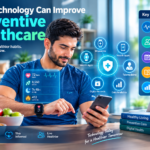

Technology has become an increasingly visible part of everyday life, and healthcare is one area where digital tools are developing quickly. Smartphones, smartwatches, fitness trackers, connected sensors, and other devices can collect different types of information related to everyday activity and health.
These tools are often described as smart devices because they can collect data through sensors, process information, and sometimes connect with mobile applications or other digital systems.
The growing use of connected devices has created new possibilities for health monitoring. Instead of collecting information only during occasional appointments or assessments, some devices can record selected measurements during normal daily activities.
This does not mean that every consumer device is a medical device or that every measurement is suitable for clinical use. The purpose, accuracy, design, and authorization of a device can vary significantly.
How Smart Devices Collect Health Information
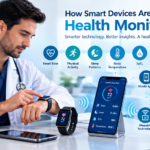
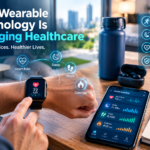
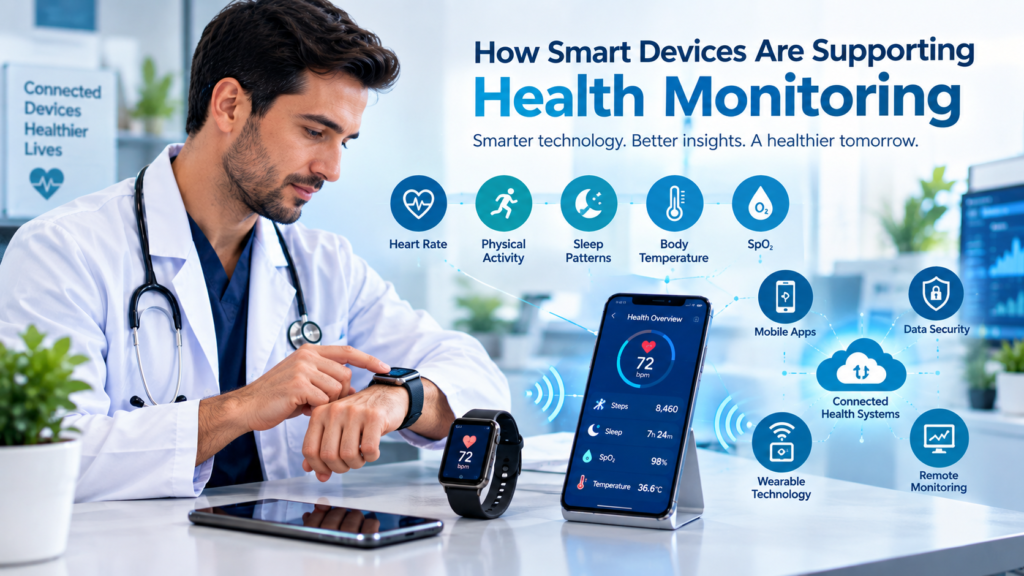
Modern wearable and connected devices can use sensors to collect different types of information. Depending on the device, these measurements may include physical activity, heart rate, sleep patterns, movement, temperature, or other signals.
The National Institutes of Health explains that wearable sensors are being developed to monitor a range of personal health information, including vital signs and blood oxygen levels. NIH-supported research has also explored the use of smartwatch data collected over extended periods.
Fitness trackers and smartwatches commonly use sensors to record movement and activity. Some devices can also estimate additional measurements through optical, electrical, motion, or temperature sensors.
This information can then be transferred to an associated smartphone application or cloud-based platform, depending on how the device has been designed.
One important feature of wearable technology is that it can collect information while a person is going about normal daily activities. Instead of requiring a person to manually record every observation, a connected device may automatically capture selected information at regular intervals.
Smart devices can also be used outside consumer fitness products. Healthcare organizations and researchers may use specialized sensors and connected monitoring systems for specific health-related purposes.
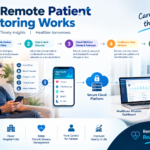
Remote monitoring is one example. Telehealth guidance from the U.S. Department of Health and Human Services describes remote patient monitoring as a form of telehealth that can use devices to collect health information outside traditional healthcare settings.
Uses, Benefits, and Limitations
One potential advantage of connected health devices is the ability to collect information over time.
A single measurement provides information at one point. Repeated measurements can create a larger dataset that may help users or healthcare professionals understand patterns over a period of time, depending on the device and its intended purpose.
For example, activity trackers can record movement throughout the day, while some devices can collect heart-rate information at different intervals.
Remote patient monitoring can also allow selected information to be transmitted from a person’s home to a healthcare organization. HHS describes examples that include devices for weight, heart rate, blood pressure, blood glucose, oxygen levels, and other measurements.
Another potential benefit is convenience. People can collect certain information without visiting a facility simply to obtain that measurement.
Smart devices can also support research. Researchers are increasingly interested in continuous or frequent data collection because it can provide information about everyday behavior and physiological signals that may not be captured during a short appointment.
However, there are important limitations.
A consumer wearable should not automatically be treated as equivalent to a clinical device. Sensors, software, algorithms, and measurement methods can differ between products.
The FDA, for example, has warned that smartwatches and smart rings that claim to measure blood glucose levels on their own have not been authorized, cleared, or approved for that purpose.
The FDA also notes that pulse oximeters have limitations and that readings should not be considered in isolation.
These examples show why users should understand what a device is actually designed and authorized to measure rather than assuming that every number displayed by a wearable has the same meaning as a clinical measurement.
Another consideration is data quality. Measurements may be affected by device placement, movement, connectivity, software, sensor design, and other technical factors.
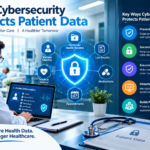
Privacy is also important. Smart devices can generate substantial amounts of health data, and organizations handling that information need appropriate privacy and security practices.
Role of Smart Devices in Digital Healthcare
Smart devices are becoming part of the wider digital health ecosystem.
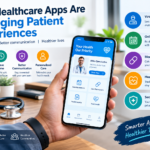
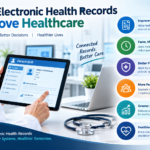
A connected device may work together with a smartphone application, electronic health record, patient portal, remote monitoring platform, or other healthcare technology.
This connectivity can allow information to move between different parts of a healthcare workflow when systems are designed to support that exchange.
Interoperability is particularly important as more devices generate health-related information. Without appropriate integration, healthcare professionals may receive information in disconnected formats or through separate systems.
Researchers are also exploring ways to use artificial intelligence and machine learning with wearable data. A recent review of wearable sensing technologies highlights continuing development in areas such as physiological monitoring, wireless communication, and AI-based analysis, while also noting regulatory and ethical challenges.
The future of smart health devices may therefore involve smaller sensors, improved connectivity, better data processing, and more specialized applications.
Research is also moving toward systems capable of collecting information from several types of sensors rather than relying on a single measurement. NIH’s current research initiatives describe wearable devices, biosensors, mobile technologies, and connected health systems as areas of ongoing development.
For healthcare organizations, this could create new ways to manage information between traditional visits. For researchers, connected devices may provide larger datasets for studying health, behavior, and physiological patterns.
At the same time, responsible use remains important. Accuracy, privacy, cybersecurity, accessibility, interoperability, and appropriate oversight all influence the usefulness of smart health technologies.
The Future of Smart Health Monitoring
The development of smart devices is likely to continue as sensors become smaller, connected systems become more common, and software becomes more capable of processing large amounts of information.
Future devices may monitor a broader range of signals and communicate with other healthcare technologies more effectively. Wearable sensors are already being studied for continuous or frequent monitoring in everyday environments, while researchers continue to explore new sensing methods and applications.
However, more data does not automatically mean better information. A useful monitoring system depends on the quality of the measurement, how the information is interpreted, and whether the data is appropriate for its intended purpose.
The healthcare industry will also need to consider how personal information is stored, shared, and protected. As more devices connect to healthcare systems, privacy and security will remain important parts of implementation.
For consumers, understanding the difference between wellness tracking and medically intended monitoring will also become increasingly important.
Smart devices can provide useful information about activity and selected health-related measurements, but their role should be understood according to the device’s design, capabilities, and intended use.
Conclusion
Smart devices are becoming an important part of modern health technology. Wearables, connected sensors, smartphones, and remote monitoring equipment can collect information that may support personal tracking, research, and selected healthcare workflows.
Their value depends on several factors, including measurement quality, intended purpose, connectivity, privacy, security, and responsible interpretation.
As technology develops, smart devices may become more integrated with healthcare systems and digital platforms. The future of health monitoring will likely depend not only on collecting more information, but also on ensuring that the information is reliable, secure, and used appropriately.
Editorial Note: This article is intended for general informational and educational purposes only. It does not provide medical, diagnostic, treatment, medication, or professional advice. Readers should rely on qualified healthcare professionals for personal health decisions.