hello elementor?
lorem ipsum is a fun created by the jerman physician

Why Small Businesses That Embrace Digital Transformation Are Winning in 2026
The business landscape is changing faster than ever. Technological innovation, shifting consumer expectations, and increasing competition are forcing companies of all sizes to rethink how they operate. While large corporations have long invested in digital technologies, small businesses are now realizing that digital transformation is no longer optional—it is essential for survival and growth.
In 2026, businesses that embrace digital tools are gaining significant advantages over competitors that continue relying on traditional methods. From automation and cloud-based systems to artificial intelligence and data analytics, digital transformation is helping organizations improve efficiency, reduce costs, and deliver better customer experiences.
For small businesses, the ability to adapt quickly may be one of the most important factors determining long-term success. Companies that leverage technology effectively can compete with larger players, reach wider audiences, and build stronger customer relationships.
As digital innovation continues to accelerate, understanding how to implement and benefit from digital transformation has become a priority for business leaders around the world.
How Digital Transformation Is Changing Modern Business
Digital transformation involves integrating technology into every aspect of a business. It is not simply about adopting new software—it requires organizations to rethink processes, improve workflows, and create more value for customers.
One of the most significant benefits is improved operational efficiency. Many routine tasks that once required hours of manual work can now be automated through digital tools. Businesses are using software to manage accounting, customer relationships, inventory, marketing campaigns, and employee collaboration.
Cloud technology has also transformed how companies operate. Employees can access important information from anywhere, making remote and hybrid work models more effective. This flexibility allows businesses to attract talent, improve productivity, and reduce operational expenses.
Data has become another valuable asset. Modern businesses can collect and analyze customer behavior, sales trends, and operational performance in real time. These insights enable leaders to make more informed decisions and respond quickly to changing market conditions.
Customer expectations have also evolved. Consumers increasingly expect fast responses, personalized experiences, and seamless digital interactions. Businesses that fail to meet these expectations risk losing customers to more technologically advanced competitors.
As a result, digital transformation is becoming a core strategy rather than a technology initiative.
Why Small Businesses Have a Unique Opportunity
Many small business owners assume that digital transformation is expensive or only suitable for large enterprises. However, advances in technology have made powerful business tools more affordable and accessible than ever before.
Cloud-based software often operates on subscription models, allowing businesses to access enterprise-level capabilities without major upfront investments. Small companies can now utilize customer relationship management platforms, marketing automation systems, and advanced analytics tools at relatively low costs.
Artificial intelligence is also becoming increasingly available to smaller organizations. AI-powered solutions can assist with customer support, content creation, lead generation, scheduling, and data analysis. These capabilities help businesses improve productivity without significantly increasing staffing costs.
Social media and digital marketing platforms provide another growth opportunity. Small businesses can target specific audiences, build brand awareness, and generate leads through highly cost-effective campaigns. Unlike traditional advertising methods, digital marketing offers measurable results and greater flexibility.
Furthermore, small businesses often have an advantage when implementing change. Their smaller size allows them to adapt more quickly than large organizations with complex structures and lengthy decision-making processes.
This agility enables small companies to experiment with new technologies, respond to customer feedback, and innovate more rapidly.
Building a Successful Digital Transformation Strategy
While digital transformation offers many benefits, success requires careful planning and execution. Businesses should begin by identifying their most significant challenges and determining how technology can help address them.
The first step is evaluating existing processes. Leaders should identify repetitive tasks, communication bottlenecks, and inefficiencies that reduce productivity. These areas often provide the greatest opportunities for improvement.
Employee training is equally important. Technology investments deliver limited value if teams do not understand how to use new tools effectively. Businesses should invest in education and encourage continuous learning throughout the organization.
Cybersecurity must also be a priority. As businesses become increasingly digital, protecting sensitive information and customer data becomes more critical. Implementing strong security measures helps reduce risks and maintain customer trust.
Another key factor is maintaining a customer-focused approach. Digital transformation should ultimately improve the customer experience. Every technology investment should support better service, increased convenience, or stronger customer relationships.
Business leaders should also adopt a long-term mindset. Digital transformation is an ongoing process rather than a one-time project. Technologies, customer expectations, and market conditions will continue evolving, requiring continuous adaptation.
Organizations that remain committed to innovation and improvement will be better positioned for future success.
Conclusion
Digital transformation is reshaping the way businesses operate in 2026. Advances in cloud computing, artificial intelligence, automation, and data analytics are creating new opportunities for organizations to improve efficiency and compete more effectively.
For small businesses, embracing digital technologies can unlock significant advantages, including lower costs, better customer experiences, and stronger growth potential. While the journey requires planning, investment, and ongoing learning, the benefits often outweigh the challenges.
As the global economy becomes increasingly digital, businesses that adapt and innovate will be better prepared to succeed. Those that resist change may find it increasingly difficult to compete in a rapidly evolving marketplace.
The future belongs to organizations that view technology not as a cost, but as a strategic tool for growth, innovation, and long-term success.
Why Small Businesses That Embrace Digital Transformation Are Winning in 2026
The business landscape is changing faster than ever. Technological innovation, shifting consumer expectations, and increasing competition are forcing companies of all sizes to rethink how they operate. While large corporations have long invested in digital technologies, small businesses are now realizing that digital transformation is no longer optional—it is essential for survival and growth.
In 2026, businesses that embrace digital tools are gaining significant advantages over competitors that continue relying on traditional methods. From automation and cloud-based systems to artificial intelligence and data analytics, digital transformation is helping organizations improve efficiency, reduce costs, and deliver better customer experiences.
For small businesses, the ability to adapt quickly may be one of the most important factors determining long-term success. Companies that leverage technology effectively can compete with larger players, reach wider audiences, and build stronger customer relationships.
As digital innovation continues to accelerate, understanding how to implement and benefit from digital transformation has become a priority for business leaders around the world.
How Digital Transformation Is Changing Modern Business
Digital transformation involves integrating technology into every aspect of a business. It is not simply about adopting new software—it requires organizations to rethink processes, improve workflows, and create more value for customers.
One of the most significant benefits is improved operational efficiency. Many routine tasks that once required hours of manual work can now be automated through digital tools. Businesses are using software to manage accounting, customer relationships, inventory, marketing campaigns, and employee collaboration.
Cloud technology has also transformed how companies operate. Employees can access important information from anywhere, making remote and hybrid work models more effective. This flexibility allows businesses to attract talent, improve productivity, and reduce operational expenses.
Data has become another valuable asset. Modern businesses can collect and analyze customer behavior, sales trends, and operational performance in real time. These insights enable leaders to make more informed decisions and respond quickly to changing market conditions.
Customer expectations have also evolved. Consumers increasingly expect fast responses, personalized experiences, and seamless digital interactions. Businesses that fail to meet these expectations risk losing customers to more technologically advanced competitors.
As a result, digital transformation is becoming a core strategy rather than a technology initiative.
Why Small Businesses Have a Unique Opportunity
Many small business owners assume that digital transformation is expensive or only suitable for large enterprises. However, advances in technology have made powerful business tools more affordable and accessible than ever before.
Cloud-based software often operates on subscription models, allowing businesses to access enterprise-level capabilities without major upfront investments. Small companies can now utilize customer relationship management platforms, marketing automation systems, and advanced analytics tools at relatively low costs.
Artificial intelligence is also becoming increasingly available to smaller organizations. AI-powered solutions can assist with customer support, content creation, lead generation, scheduling, and data analysis. These capabilities help businesses improve productivity without significantly increasing staffing costs.
Social media and digital marketing platforms provide another growth opportunity. Small businesses can target specific audiences, build brand awareness, and generate leads through highly cost-effective campaigns. Unlike traditional advertising methods, digital marketing offers measurable results and greater flexibility.
Furthermore, small businesses often have an advantage when implementing change. Their smaller size allows them to adapt more quickly than large organizations with complex structures and lengthy decision-making processes.
This agility enables small companies to experiment with new technologies, respond to customer feedback, and innovate more rapidly.
Building a Successful Digital Transformation Strategy
While digital transformation offers many benefits, success requires careful planning and execution. Businesses should begin by identifying their most significant challenges and determining how technology can help address them.
The first step is evaluating existing processes. Leaders should identify repetitive tasks, communication bottlenecks, and inefficiencies that reduce productivity. These areas often provide the greatest opportunities for improvement.
Employee training is equally important. Technology investments deliver limited value if teams do not understand how to use new tools effectively. Businesses should invest in education and encourage continuous learning throughout the organization.
Cybersecurity must also be a priority. As businesses become increasingly digital, protecting sensitive information and customer data becomes more critical. Implementing strong security measures helps reduce risks and maintain customer trust.
Another key factor is maintaining a customer-focused approach. Digital transformation should ultimately improve the customer experience. Every technology investment should support better service, increased convenience, or stronger customer relationships.
Business leaders should also adopt a long-term mindset. Digital transformation is an ongoing process rather than a one-time project. Technologies, customer expectations, and market conditions will continue evolving, requiring continuous adaptation.
Organizations that remain committed to innovation and improvement will be better positioned for future success.
Conclusion
Digital transformation is reshaping the way businesses operate in 2026. Advances in cloud computing, artificial intelligence, automation, and data analytics are creating new opportunities for organizations to improve efficiency and compete more effectively.
For small businesses, embracing digital technologies can unlock significant advantages, including lower costs, better customer experiences, and stronger growth potential. While the journey requires planning, investment, and ongoing learning, the benefits often outweigh the challenges.
As the global economy becomes increasingly digital, businesses that adapt and innovate will be better prepared to succeed. Those that resist change may find it increasingly difficult to compete in a rapidly evolving marketplace.
The future belongs to organizations that view technology not as a cost, but as a strategic tool for growth, innovation, and long-term success.
Why Preventive Healthcare Is Becoming the Most Important Health Trend in 2026
Healthcare systems around the world are undergoing significant transformation. For decades, medical care has largely focused on treating illnesses after they occur. However, rising healthcare costs, increasing rates of chronic diseases, and growing awareness of healthy lifestyles are shifting attention toward prevention rather than treatment.
In 2026, preventive healthcare has emerged as one of the most important trends in the medical industry. Governments, healthcare providers, employers, and individuals are investing more resources into preventing diseases before they develop. This approach not only improves quality of life but also reduces long-term healthcare expenses and eases pressure on healthcare systems.
Preventive healthcare involves taking proactive steps to maintain health, identify risks early, and reduce the likelihood of serious medical conditions. From regular health screenings and vaccinations to fitness programs and nutrition education, preventive care is becoming a cornerstone of modern healthcare strategies.
As people become increasingly focused on long-term wellness, preventive healthcare is expected to play a central role in shaping the future of medicine.
The Growing Importance of Disease Prevention
Chronic diseases such as heart disease, diabetes, obesity, and hypertension continue to affect millions of people worldwide. Many of these conditions develop gradually over time and are often linked to lifestyle factors.
Healthcare experts increasingly recognize that preventing these diseases is more effective than treating them after they become severe.
One major reason for this shift is the rising cost of healthcare. Treating advanced medical conditions often requires expensive medications, surgeries, hospital stays, and long-term care. Preventive measures, on the other hand, are generally more affordable and can significantly reduce future medical expenses.
Early detection is another critical advantage. Regular health screenings help identify potential health issues before symptoms become serious. Conditions such as high blood pressure, high cholesterol, and certain cancers can often be managed more successfully when detected early.
Public awareness has also increased dramatically. Access to health information through digital platforms, healthcare apps, and wearable devices has encouraged individuals to take a more active role in managing their health.
Preventive healthcare is no longer viewed solely as a medical responsibility. It is increasingly becoming a lifestyle choice that empowers people to improve their overall well-being.
How Technology Is Transforming Preventive Healthcare
Technology is playing a crucial role in making preventive healthcare more accessible and effective. Innovations in digital health are helping individuals monitor their health in real time and make informed decisions about their lifestyles.
Wearable devices such as fitness trackers and smartwatches can monitor:
- Heart rate
- Physical activity
- Sleep patterns
- Blood oxygen levels
- Stress indicators
These tools provide valuable insights that help users identify unhealthy habits and make positive changes.
Artificial intelligence is also contributing to preventive healthcare. AI-powered systems can analyze large amounts of health data to identify patterns, predict risks, and support early intervention strategies.
Telemedicine has expanded access to healthcare services by allowing patients to consult healthcare professionals remotely. This convenience encourages more people to seek medical advice before minor concerns become serious problems.
Digital health applications are helping individuals track nutrition, exercise, hydration, medication schedules, and mental health. These tools promote consistent engagement with personal wellness goals.
Healthcare providers are increasingly using data analytics to identify high-risk patients and implement preventive care programs. This proactive approach improves patient outcomes while reducing healthcare costs.
As technology continues to evolve, preventive healthcare solutions are expected to become even more personalized and effective.
Building a Healthier Future Through Preventive Care
The success of preventive healthcare depends on collaboration between healthcare providers, policymakers, employers, and individuals.
Employers are increasingly investing in workplace wellness programs that encourage healthy habits among employees. These initiatives often include fitness incentives, mental health support, health screenings, and nutrition education.
Schools and community organizations are also promoting preventive health education to help people develop healthy habits from an early age.
Mental health is becoming an important component of preventive healthcare as well. Stress, anxiety, and burnout can contribute to numerous physical health problems. Preventive mental health strategies such as counseling, mindfulness practices, and stress management programs are gaining widespread attention.
Individuals play the most important role in preventive healthcare. Simple lifestyle choices can significantly reduce health risks and improve overall well-being.
Examples include:
- Maintaining a balanced diet
- Exercising regularly
- Getting sufficient sleep
- Avoiding tobacco products
- Limiting alcohol consumption
- Managing stress effectively
- Attending regular health checkups
Small daily habits often have a greater long-term impact than major medical interventions.
Healthcare experts believe that preventive care will become increasingly integrated into everyday life over the coming years. Rather than waiting for illness to occur, future healthcare systems will focus on maintaining wellness and reducing risks before problems arise.
Conclusion
Preventive healthcare is rapidly becoming one of the most significant trends in modern medicine. As healthcare costs continue to rise and chronic diseases become more common, prevention offers a practical and effective solution.
Advancements in technology, growing public awareness, and increased access to health information are making preventive care more achievable than ever before. From wearable devices and AI-driven health insights to regular screenings and healthy lifestyle choices, individuals now have more tools available to protect their long-term health.
The future of healthcare is shifting from treatment to prevention. Those who embrace preventive healthcare today may enjoy healthier lives, lower medical costs, and improved overall well-being for years to come.
Why Startup Founders Who Focus on Customer Experience Grow Faster Than Their Competitors
Launching a startup has never been easier. With access to technology, funding opportunities, remote teams, and digital marketing channels, entrepreneurs can build businesses faster than ever before. However, despite these advantages, the majority of startups still fail within their first few years.
Many founders assume that success depends primarily on having a great product, raising investment, or implementing aggressive marketing strategies. While these factors certainly matter, one of the most overlooked growth drivers is customer experience.
In 2026, customers have more choices than ever. They can compare products instantly, read reviews online, and switch to competitors with just a few clicks. This means startups that deliver exceptional customer experiences often grow significantly faster than those focused solely on product development.
Companies that prioritize customer satisfaction not only increase sales but also build stronger brands, improve retention rates, and create loyal communities around their products. As competition continues to rise across industries, customer experience is becoming one of the most important competitive advantages for startups.
Why Customer Experience Has Become a Competitive Advantage
Traditionally, businesses competed on product features and pricing. Today, customer expectations have evolved dramatically. Consumers want seamless interactions, fast support, personalized experiences, and brands they can trust.
Research consistently shows that customers are willing to spend more with companies that provide superior experiences. A startup may offer a product similar to its competitors, but the way customers feel during their journey can make all the difference.
Customer experience includes every interaction a customer has with a business, including:
- Visiting the website
- Purchasing a product
- Contacting customer support
- Receiving updates and communication
- Using the product or service
- Leaving feedback or reviews
When startups focus on improving these touchpoints, they create stronger relationships with customers.
Many successful startups have built their reputations not because they offered revolutionary products but because they made customers feel valued. Positive experiences encourage repeat purchases and word-of-mouth recommendations, both of which are essential for sustainable growth.
Furthermore, acquiring new customers is becoming increasingly expensive due to rising advertising costs. Startups that retain customers through excellent experiences often spend less on marketing while generating higher lifetime value from existing customers.
How Customer-Centric Startups Achieve Faster Growth
Customer-centric startups place customer needs at the center of every business decision. Instead of focusing solely on internal goals, they continuously seek feedback and improve their products based on real user experiences.
One of the most effective ways to achieve this is through active listening. Successful founders regularly engage with customers through surveys, support channels, social media, and community platforms. This feedback provides valuable insights that help companies identify pain points and opportunities for improvement.
Personalization has also become a major growth factor. Modern customers expect businesses to understand their preferences and deliver relevant experiences. Startups that personalize recommendations, communication, and support often achieve higher engagement rates and stronger customer loyalty.
Fast and effective customer support is another crucial element. In today’s digital environment, customers expect quick responses to questions and problems. Delayed support can lead to frustration and lost revenue. Many startups are now investing in live chat systems, AI-powered support tools, and dedicated customer success teams to improve response times.
Transparency also plays a significant role in building trust. Customers appreciate honest communication regarding pricing, policies, product limitations, and company values. Startups that communicate openly often establish stronger relationships with their audiences.
Building a customer-focused culture starts at the leadership level. Founders who genuinely care about solving customer problems often inspire their teams to adopt the same mindset. This culture influences product development, marketing, sales, and support activities throughout the organization.
Companies that consistently exceed customer expectations benefit from higher retention rates, stronger online reviews, increased referrals, and sustainable long-term growth.
Building a Startup Around Customer Success
Customer success should not be viewed as a department—it should be a business strategy. The most successful startups understand that their long-term success depends on helping customers achieve their goals.
The first step is understanding customer needs deeply. Founders should spend time researching their target audience, identifying challenges, and learning what outcomes customers truly value.
The second step involves simplifying the customer journey. Every unnecessary step, confusing process, or delay creates friction that can reduce satisfaction. Startups should regularly evaluate their user experience and remove obstacles wherever possible.
Technology can also help improve customer success. CRM systems, analytics platforms, automation tools, and customer feedback software enable startups to better understand and serve their audiences.
Another important factor is community building. Many fast-growing startups create communities where customers can share experiences, ask questions, and connect with one another. These communities strengthen brand loyalty and provide valuable insights for future improvements.
Finally, startups should measure customer satisfaction regularly using metrics such as customer retention, net promoter score (NPS), customer lifetime value, and support response times. Tracking these indicators helps businesses identify strengths and areas for improvement.
As markets become increasingly competitive, customer success is evolving from a support function into a growth engine. Startups that prioritize customer outcomes often outperform competitors and establish stronger positions within their industries.
Conclusion
In the modern startup ecosystem, delivering a great product is no longer enough. Customers expect exceptional experiences throughout their entire journey with a company. Startups that invest in customer satisfaction, personalization, transparency, and support often achieve stronger growth than those focused solely on acquisition.
By putting customers at the center of every decision, founders can build trust, increase loyalty, and create sustainable competitive advantages. As 2026 continues to bring new challenges and opportunities, customer experience remains one of the most powerful drivers of startup success.
The startups that win in the future will not necessarily be the ones with the biggest budgets or the most advanced technology. They will be the companies that understand their customers best and consistently deliver value at every stage of the relationship.
Modern Marketing Strategies: How Businesses Can Grow in the Digital Era
Understanding the New Age of Marketing
Marketing has changed dramatically over the past decade. Traditional methods such as newspaper advertisements, television commercials, and radio promotions still exist, but digital marketing has become the driving force behind modern business growth. Today, customers spend a significant amount of their time online, making digital channels the primary place where businesses interact with potential buyers.
Modern marketing is no longer about simply promoting products or services. It focuses on understanding customer needs, building relationships, creating value, and establishing trust. Businesses that understand their audience and provide relevant content often outperform competitors with larger advertising budgets.
Consumer behavior has also evolved. People research products online, read reviews, compare prices, and seek recommendations before making purchasing decisions. Because of this, companies need to maintain a strong online presence across websites, search engines, social media platforms, and other digital channels.
Branding plays a major role in modern marketing. Customers prefer brands they trust and recognize. Consistent messaging, professional design, quality content, and positive customer experiences help companies establish credibility and loyalty.
Content marketing has become one of the most effective strategies for attracting and engaging customers. Businesses now create blog posts, videos, social media content, newsletters, and guides to educate their audience and provide value. This approach helps build trust while positioning companies as industry experts.
Search engines also influence purchasing decisions. When users search for products or services online, companies that appear on the first page of search results receive most of the traffic. This has increased the importance of search engine optimization, content creation, and authority building.
Successful marketing today requires a customer-focused approach. Businesses must understand their audience’s problems, interests, and goals. Companies that provide solutions rather than simply promoting products often achieve better results.
Technology has also made marketing more measurable. Businesses can track website visitors, conversions, customer behavior, and campaign performance. These insights allow marketers to improve strategies and maximize return on investment.
As competition continues to increase, businesses must adapt to changing trends and customer expectations. Companies that embrace innovation and focus on delivering value are more likely to succeed in the modern marketplace.
Digital Marketing Channels That Drive Business Growth
Digital marketing offers several channels that help businesses reach customers effectively. Each channel serves a unique purpose and contributes to overall business growth.
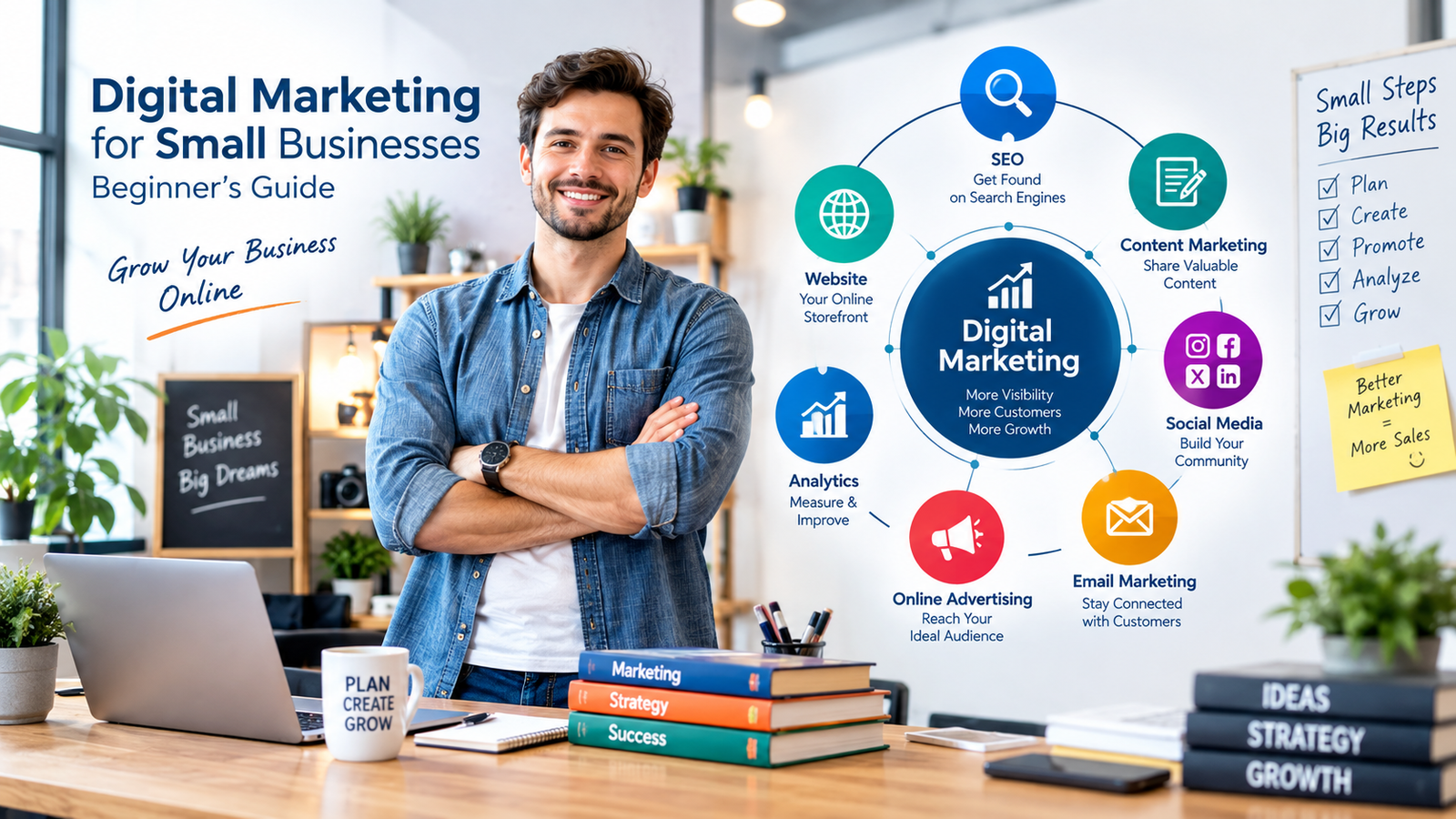
Search engine optimization remains one of the most valuable marketing investments. SEO helps websites appear higher in search engine results, generating organic traffic and long-term visibility. Businesses that rank for relevant keywords often receive consistent leads without paying for every visitor.
Content marketing supports SEO while educating customers. Articles, blogs, case studies, and guides provide valuable information that helps users solve problems. High-quality content increases website traffic and establishes authority within an industry.
Social media marketing has become essential for building brand awareness and engaging customers. Platforms such as LinkedIn, Facebook, Instagram, and X allow businesses to communicate directly with their audience. Companies use social media to share updates, promote content, and strengthen customer relationships.
Email marketing remains one of the highest-converting digital channels. Businesses can nurture leads, share valuable content, announce promotions, and maintain relationships with existing customers. Personalized email campaigns often generate strong engagement and sales.
Pay-per-click advertising provides immediate visibility. Platforms such as Google Ads allow businesses to target specific keywords and audiences. Paid advertising can generate quick traffic and leads while supporting long-term marketing goals.
Influencer marketing has also gained popularity. Businesses collaborate with industry experts and content creators to reach targeted audiences. Trusted recommendations often influence customer decisions more effectively than traditional advertising.
Video marketing continues to grow rapidly. Videos help businesses explain products, demonstrate services, and connect emotionally with audiences. Platforms such as YouTube, LinkedIn, and TikTok provide opportunities for brands to expand their reach.
Digital public relations has become increasingly important for authority building. Media placements, interviews, and online publications help businesses gain exposure and improve credibility. Strong media coverage can also improve search engine rankings and brand trust.
Analytics tools allow marketers to measure campaign performance. Businesses can monitor traffic, engagement, conversions, and customer behavior to identify successful strategies and improve future campaigns.
Integrating multiple marketing channels often produces the best results. Companies that combine SEO, content marketing, social media, email campaigns, and digital PR create stronger customer experiences and improve business growth.
Future Marketing Trends and Long-Term Success
Marketing continues to evolve as technology advances and consumer behavior changes. Businesses that adapt to emerging trends can maintain a competitive advantage and achieve sustainable growth.
Artificial intelligence is becoming an important part of marketing. AI tools help businesses analyze data, personalize customer experiences, automate tasks, and improve content creation. Companies using AI effectively can increase efficiency and deliver better customer experiences.
Voice search is changing how people find information online. More users are searching through voice assistants and smart devices. Businesses must optimize content for conversational queries and natural language searches.
Personalization is becoming increasingly important. Customers expect businesses to understand their preferences and provide relevant experiences. Personalized recommendations, emails, and content improve customer satisfaction and loyalty.
Customer experience has become a key differentiator. Businesses that provide excellent support, easy navigation, and positive interactions often outperform competitors. Marketing now extends beyond promotion and includes every customer touchpoint.
Trust and authenticity continue to influence purchasing decisions. Customers prefer transparent companies that provide honest information and deliver on promises. Building trust requires consistent communication and genuine relationships.
Video and interactive content are expected to grow further. Businesses that create engaging content can attract attention and encourage audience participation. Webinars, live videos, and interactive experiences provide additional opportunities for engagement.
Search engines and AI-driven platforms increasingly prioritize authority and expertise. Businesses that publish high-quality content, earn credible backlinks, and receive media mentions can improve visibility across traditional and AI search platforms.
Data privacy and ethical marketing practices are also becoming more important. Customers expect companies to protect their information and use data responsibly. Businesses that respect privacy build stronger relationships and maintain trust.
Long-term marketing success depends on consistency. Companies that continuously create valuable content, invest in relationships, and adapt to changing trends often achieve sustainable growth.
Ultimately, marketing is about understanding people and providing solutions to their problems. Businesses that focus on helping customers, building trust, and delivering value will continue to succeed regardless of changing technologies or market conditions.
Business
120+ Articles
Technology
150+ Articles
Healthcare
90+ Articles
Marketing
110+ Articles
Finance
80+ Articles
Startups
70+ Articles
The Global Business Times
The Global Business Times is a leading digital publication covering business, technology, finance, startups, marketing and more.