
Healthcare is becoming increasingly connected through digital technology. One of the most visible changes is telehealth, which allows healthcare services and communication to take place through digital and telecommunications technologies rather than requiring every interaction to happen in person.
Telehealth can include video consultations, telephone-based services, secure messaging, remote monitoring, digital patient communication, and other technology-supported healthcare activities.
The growth of digital healthcare has created new possibilities for healthcare organizations and patients, particularly when distance, scheduling, or access to facilities can make traditional healthcare delivery more difficult.
At the same time, telehealth is not suitable for every situation. Technology access, privacy, security, technical reliability, and the nature of a healthcare service can all affect whether a remote approach is appropriate.
What Is Telehealth and How Does It Work?
Telehealth generally refers to the use of telecommunications technology to support healthcare services from a distance. The World Health Organization describes telemedicine as the delivery of healthcare services over distance and provides guidance covering planning, implementation, and maintenance of telemedicine programs.
Telehealth can use computers, smartphones, tablets, telephone systems, secure platforms, and other connected technologies.
Some common forms include:
- Video-based healthcare consultations
- Telephone communication
- Secure digital messaging
- Remote patient monitoring
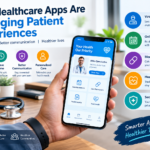
- Digital health applications
- Electronic sharing of relevant health information
The exact services available through telehealth depend on the healthcare organization, technology platform, provider, location, and applicable rules.
The U.S. Centers for Medicare & Medicaid Services maintains a current list of Medicare telehealth services and updates its policies through the annual physician fee schedule process.
Telehealth also fits into the wider development of healthcare technology, where electronic health records, artificial intelligence, connected devices, and other digital systems are changing healthcare operations.
For a broader discussion of these developments, see digital healthcare.
Benefits of Telehealth for Healthcare Systems
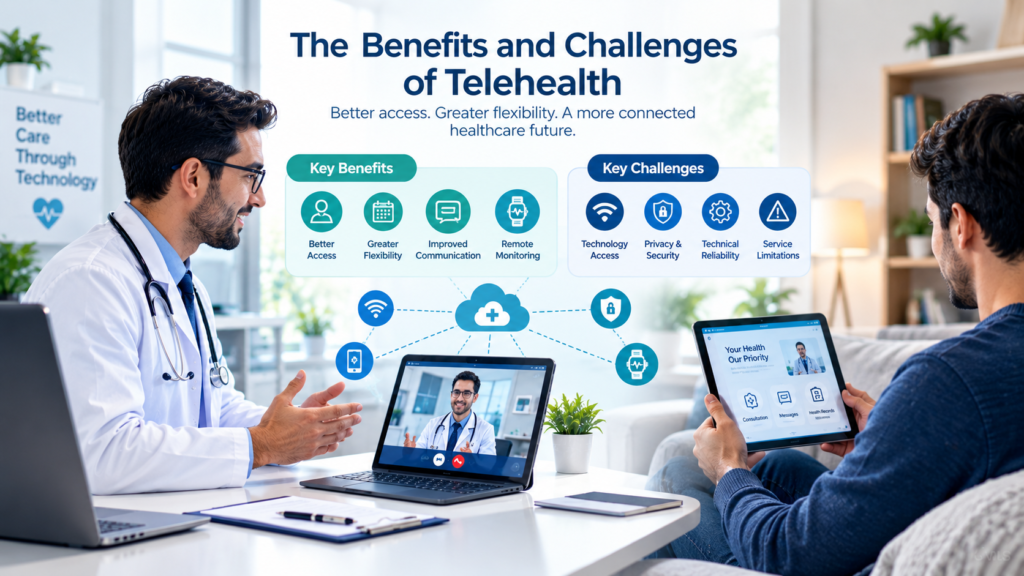
One of the main potential benefits of telehealth is greater flexibility in how healthcare services can be delivered.
For some services, remote communication can reduce the need for a physical visit. This may be particularly useful when distance or travel creates difficulties for patients or healthcare organizations.
Telehealth can also support communication between healthcare professionals and patients through digital channels. Depending on the service, remote appointments may make it easier to coordinate schedules and maintain communication.
Another potential benefit is access. Telehealth can help connect people with healthcare professionals when physical distance is a barrier. Rural and geographically dispersed communities are often discussed in relation to telehealth because digital communication can connect patients and providers without requiring every interaction to take place at the same location.
The World Health Organization identifies extending the coverage of services as one of the potential benefits associated with telemedicine while also emphasizing the importance of proper implementation and planning.
Telehealth can also support healthcare organizations that operate across multiple locations. A connected digital system may allow appropriate services and communication to be coordinated across different facilities.
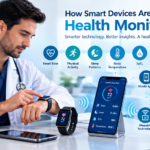
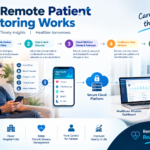
Another developing area is remote monitoring. Connected devices can transmit selected health-related information to healthcare professionals through digital systems. CMS currently provides information on remote patient monitoring within Medicare and describes how connected devices can transmit health data to providers.
Telehealth is also becoming part of broader preventive healthcare and digital health discussions because technology can support ongoing communication and health-related information management.
You can learn more in preventive healthcare.
Challenges and Limitations of Telehealth
Although telehealth offers useful possibilities, it also has limitations.
The first challenge is technology access. A telehealth service may require an appropriate device, reliable internet connectivity, suitable software, and enough digital familiarity to use the system.
Not everyone has the same level of access to these resources. This creates what is often described as a digital divide and means that telehealth should not automatically be treated as a replacement for every traditional healthcare service.
Technical problems can also interrupt remote communication. Poor internet connections, device problems, software issues, or platform failures can make a virtual interaction more difficult.
Privacy and security are another major consideration. Telehealth involves the collection, transmission, and storage of potentially sensitive health information. Telehealth.HHS.gov identifies risks such as unauthorized access, insecure devices or networks, and inadequate privacy and security policies.
Healthcare organizations therefore need appropriate security practices, policies, staff training, and technology controls.
The nature of the healthcare service is another limitation. Some healthcare interactions require physical examination, specialized equipment, testing, or other activities that cannot be performed remotely in the same way.
This means telehealth should be viewed as one component of healthcare delivery rather than a universal replacement for in-person services.
Regulatory and reimbursement requirements can also vary. Policies may differ depending on the country, state, healthcare program, service, and provider. For example, CMS maintains specific Medicare telehealth policies and service lists that can change over time.
Healthcare organizations therefore need to consider the rules that apply to their particular services rather than assuming that the same requirements apply everywhere.
The development of artificial intelligence is also creating new possibilities for digital healthcare, although AI introduces its own questions around privacy, accuracy, oversight, and responsible implementation.
Our related article explains how AI is developing across industries: artificial intelligence.
The Future of Telehealth
Telehealth is likely to remain an important part of healthcare technology as digital systems become more connected.
Future telehealth services may increasingly combine video communication, electronic health records, remote monitoring, mobile applications, automation, and other digital tools.
Interoperability will be particularly important. When systems can exchange information appropriately, healthcare organizations may be able to coordinate digital services more effectively.
Healthcare technology may also make telehealth more flexible by supporting multiple forms of communication rather than relying on a single platform.
At the same time, privacy and security will remain central considerations. Telehealth.HHS.gov recommends organizations establish appropriate privacy and security policies, use secure technology, and provide relevant training for telehealth use. (telehealth.hhs.gov)
For organizations planning or expanding telehealth programs, the World Health Organization’s guidance emphasizes planning, implementation, maintenance, and evaluation rather than simply introducing technology without a broader strategy. (who.int)
Conclusion
Telehealth has changed how some healthcare services can be delivered and how patients and healthcare professionals communicate.
Its potential benefits include greater flexibility, improved access in some circumstances, digital communication, and support for remote healthcare services. However, challenges such as technology access, privacy, cybersecurity, technical reliability, service limitations, and changing regulatory requirements also need consideration.
The future of telehealth will likely depend on how effectively healthcare organizations combine technology with appropriate workflows, security measures, human oversight, and accessible service options.
Telehealth is therefore best understood as an evolving part of modern healthcare rather than a complete replacement for traditional healthcare delivery.
Editorial Note: This article is provided for general informational and educational purposes only. It does not provide medical, legal, regulatory, or professional advice. Healthcare services, telehealth availability, privacy requirements, and reimbursement policies can vary by location and organization.