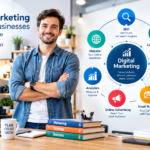

In today’s highly competitive business environment, marketing is no longer just about attracting attention. Successful companies focus on strategies that generate measurable business results, build customer relationships, and support long-term growth.
While marketing channels continue to evolve, the core objective remains the same: connecting the right audience with the right solution at the right time. Businesses that invest in effective marketing strategies are better positioned to increase revenue, strengthen brand awareness, and gain a competitive advantage.
This article explores some of the most effective marketing strategies that continue to drive real growth for businesses across industries.
Understanding Growth-Focused Marketing
Growth-focused marketing goes beyond vanity metrics such as likes, impressions, and follower counts. Instead, it focuses on outcomes that directly contribute to business success.
These outcomes include:
- Lead generation
- Customer acquisition
- Revenue growth
- Customer retention
- Brand authority
- Market expansion
Businesses that align marketing activities with clear objectives are more likely to achieve sustainable growth.
Content Marketing Builds Trust
Content marketing remains one of the most effective long-term growth strategies.
High-quality content helps businesses:
- Educate potential customers
- Answer common questions
- Demonstrate expertise
- Improve search engine visibility
- Build credibility
Examples of content marketing include:
- Blog articles
- Industry reports
- Case studies
- Videos
- Infographics
- Podcasts
Rather than focusing solely on sales messages, successful brands provide valuable information that helps their audience solve problems.
Over time, this approach builds trust and positions the company as an authority in its industry.
Search Engine Optimization (SEO)
Search Engine Optimization continues to be one of the most cost-effective methods for attracting qualified traffic.
SEO helps businesses appear in search results when potential customers are actively looking for information, products, or services.
Effective SEO involves:
Keyword Research
Understanding the search terms customers use when seeking solutions.
High-Quality Content
Creating valuable content that addresses user intent.
Technical Optimization
Ensuring websites are fast, secure, and mobile-friendly.
Link Building
Earning backlinks from reputable websites to improve authority.
Companies that invest consistently in SEO often benefit from long-term organic traffic and reduced dependence on paid advertising.
Email Marketing Delivers Strong ROI
Despite the growth of social media and other digital channels, email marketing remains one of the highest-performing marketing strategies.
Benefits include:
- Direct communication with customers
- Personalized messaging
- High conversion potential
- Customer retention opportunities
Effective email campaigns may include:
- Newsletters
- Product updates
- Educational content
- Promotional offers
- Customer onboarding sequences
By delivering relevant content to the right audience, businesses can strengthen relationships and increase customer lifetime value.
Social Media Marketing
Social media platforms provide valuable opportunities for businesses to engage with audiences and increase brand visibility.
Popular platforms include:
- X (formerly Twitter)
- YouTube
- TikTok
Successful social media strategies focus on:
- Consistent posting
- Audience engagement
- Valuable content
- Community building
- Brand storytelling
Businesses should prioritize platforms that align with their target audience rather than trying to be active everywhere.
Video Marketing Continues to Grow
Video has become one of the most powerful forms of digital content.
Consumers increasingly prefer video because it is engaging, informative, and easy to consume.
Popular video formats include:
- Product demonstrations
- Educational tutorials
- Customer testimonials
- Company updates
- Industry insights
Video content can improve engagement across websites, social media platforms, and email campaigns.
As internet speeds and mobile usage continue to increase, video marketing is expected to remain a critical growth channel.
Building a Strong Brand
A strong brand creates recognition, trust, and differentiation.
Businesses with strong brands often enjoy:
- Higher customer loyalty
- Better conversion rates
- Greater pricing power
- Increased referral opportunities
Brand-building involves:
- Consistent visual identity
- Clear messaging
- Positive customer experiences
- Authentic communication
Marketing efforts are generally more effective when supported by a recognizable and trusted brand.
Influencer and Partnership Marketing
Consumers often trust recommendations from individuals and organizations they respect.
Influencer marketing allows businesses to leverage established audiences and credibility.
Partnership opportunities may include:
- Industry influencers
- Content creators
- Business associations
- Strategic alliances
- Affiliate programs
When executed effectively, partnerships can increase brand awareness and accelerate customer acquisition.
Customer Retention Marketing
Acquiring new customers is important, but retaining existing customers is often more profitable.
Retention-focused marketing strategies include:
- Loyalty programs
- Personalized communication
- Exclusive offers
- Customer success initiatives
- Regular engagement campaigns
Satisfied customers are more likely to make repeat purchases and recommend the business to others.
Strong customer retention can significantly improve long-term profitability.
Data-Driven Marketing Decisions
Modern marketing generates vast amounts of data.
Successful organizations use analytics to measure:
- Website traffic
- Conversion rates
- Campaign performance
- Customer behavior
- Return on investment
Data-driven decision-making helps businesses:
- Identify successful strategies
- Eliminate ineffective tactics
- Optimize marketing budgets
- Improve customer targeting
Rather than relying on assumptions, marketers can make informed decisions based on real performance metrics.
The Role of Artificial Intelligence
Artificial intelligence is becoming increasingly important in modern marketing.
AI-powered tools can assist with:
- Audience segmentation
- Content recommendations
- Predictive analytics
- Marketing automation
- Customer support
AI enables marketers to deliver more personalized experiences while improving efficiency.
As technology advances, AI will continue to play a larger role in growth-focused marketing strategies.
Creating a Multi-Channel Approach
Customers interact with brands through multiple touchpoints.
A successful marketing strategy often combines:
- SEO
- Content marketing
- Email marketing
- Social media
- Paid advertising
- Video content
An integrated approach ensures consistent messaging and improves the overall customer experience.
Businesses that effectively coordinate multiple channels often achieve stronger results than those relying on a single marketing tactic.
Common Marketing Mistakes
Many businesses struggle to achieve growth because they:
- Focus on short-term results only
- Ignore customer feedback
- Neglect SEO
- Fail to measure performance
- Lack a clear strategy
- Inconsistently communicate with their audience
Avoiding these mistakes can significantly improve marketing effectiveness.
Conclusion
Marketing success is not determined by the number of channels a business uses but by how effectively those channels support business objectives.
Content marketing, SEO, email campaigns, social media engagement, video marketing, and customer retention strategies all contribute to sustainable growth when implemented correctly.
Businesses that focus on delivering value, understanding their audience, and making data-driven decisions are more likely to achieve lasting success.
In an increasingly competitive marketplace, growth-focused marketing remains one of the most powerful tools organizations can use to build stronger brands, attract customers, and drive long-term business performance.