

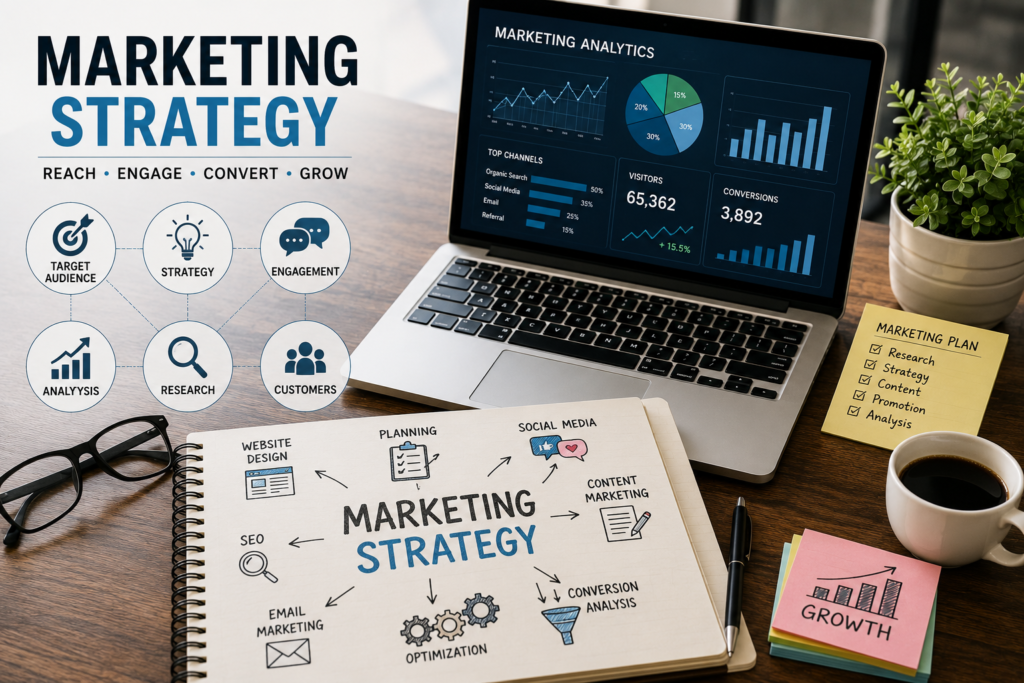
Marketing is one of the most important parts of building and growing a successful business. A company may have an excellent product or service, but without an effective marketing strategy, potential customers may never discover it.
Modern marketing has changed significantly. Businesses now have access to websites, search engines, social media, email campaigns, video content, online advertising, and many other digital channels. These tools provide valuable opportunities, but they also create greater competition for customer attention.
A successful marketing strategy is not simply about promoting a product as frequently as possible. It is about understanding the target audience, communicating the right message, building trust, and creating valuable experiences.
Businesses that approach marketing strategically are better positioned to attract customers, build strong brands, and create long-term relationships.
Understanding the Target Audience Is the Foundation of Effective Marketing
One of the most common marketing mistakes businesses make is trying to communicate with everyone at the same time.
Different customers have different needs, problems, preferences, and purchasing motivations. A marketing message that works for one audience may not be effective for another.
Understanding the target audience allows businesses to create more relevant campaigns. Companies should consider factors such as:
- What problems do customers face?
- What solutions are they looking for?
- What influences their buying decisions?
- Where do they search for information?
- What concerns prevent them from making a purchase?
Customer research can provide valuable insights. Businesses can analyze customer feedback, reviews, search behavior, social media discussions, and purchasing patterns.
This information can help companies create marketing campaigns that address real customer needs.
A strong marketing message should focus on value. Instead of only explaining what a product does, businesses should communicate how it can help customers solve a problem or achieve a goal.
For example, a software company should not only list its features. It should explain how the software can help businesses save time, improve efficiency, or reduce operational challenges.
Clear positioning can also help a business stand out from competitors. Customers should understand what makes a company different and why they should consider its products or services.
The better a business understands its audience, the more effectively it can communicate with potential customers.
Digital Marketing Channels Are Creating New Growth Opportunities
Digital marketing has become an essential part of modern business strategy. Companies can use multiple online channels to reach potential customers and build brand awareness.
Search engine optimization helps businesses improve their visibility when people search for relevant information, products, or services. A website that consistently publishes useful content and provides a good user experience can attract visitors through search engines.
Content marketing is another powerful strategy. Helpful articles, guides, videos, reports, and educational resources can help businesses demonstrate knowledge and build trust with their audience.
Instead of constantly promoting products, businesses can provide information that helps customers make better decisions.
Social media also provides opportunities to build relationships with audiences. Companies can share educational content, company updates, product information, customer stories, and other relevant material.
However, businesses should not feel the need to use every social media platform. It is usually more effective to focus on channels where the target audience is active.
Email marketing remains an important communication channel. Businesses can use email to share useful information, product updates, special offers, and personalized messages.
A strong email strategy focuses on providing value rather than sending excessive promotional messages.
Paid advertising can also help businesses reach specific audiences. Digital advertising platforms allow companies to target users based on interests, location, behavior, and other characteristics.
However, paid campaigns should be carefully monitored. Businesses should track results and understand which campaigns generate meaningful outcomes.
The most effective digital marketing strategies often combine multiple channels. For example, a company may use search engine optimization to attract visitors, content marketing to educate them, and email marketing to maintain long-term relationships.
Building Trust and Measuring Marketing Performance
Trust is one of the most valuable assets a business can build. Customers are more likely to purchase from companies they consider reliable and credible.
Businesses can build trust by providing accurate information, delivering consistent quality, responding professionally to customers, and maintaining transparent communication.
Customer reviews and testimonials can also influence purchasing decisions. Positive experiences from existing customers can help potential buyers feel more confident.
Brand consistency is important as well. A business should maintain a recognizable identity across its website, social media profiles, advertising campaigns, and other communication channels.
This includes consistent messaging, visual design, and brand values.
Marketing performance should also be measured regularly. Businesses should not assume that a campaign is successful simply because it receives attention.
Important performance indicators may include:
- Website traffic
- Leads
- Conversion rates
- Customer acquisition costs
- Sales
- Email engagement
- Return on advertising investment
The right metrics depend on the goals of the campaign.
For example, a brand awareness campaign may focus on reach and engagement, while a sales campaign may focus on conversions and revenue.
Testing can also improve marketing performance. Businesses can experiment with different headlines, images, offers, landing pages, and messages to identify what works best.
Marketing is not a one-time activity. Customer behavior, technology, and competition continue to change. Businesses should regularly review their strategies and make improvements based on data and customer feedback.
The companies that achieve long-term marketing success are often those that remain flexible and continue learning.
Conclusion
A strong marketing strategy can help businesses attract new customers, build brand awareness, and create long-term growth.
The foundation of effective marketing is understanding the target audience and communicating a clear value proposition. Digital channels such as search engines, content marketing, social media, email, and online advertising provide businesses with powerful ways to reach potential customers.
However, successful marketing requires more than visibility. Businesses must also build trust, deliver value, measure results, and continuously improve their strategies.
The most effective marketing campaigns are customer-focused. They address real problems, provide useful information, and create meaningful connections.
By combining audience research, valuable content, digital marketing, consistent branding, and performance measurement, businesses can create a stronger marketing foundation and improve their ability to compete in a changing marketplace.