
For a local business, having a good product or service is only one part of attracting customers. People also need to be able to find the business when they search online. Whether someone is looking for a restaurant, dentist, plumber, accountant, salon, repair service, real estate agent, or another local provider, online visibility can influence which business they choose.
The good news is that local businesses do not always need a large advertising budget to improve their online presence. A professional website, local SEO, accurate business listings, customer reviews, useful content, and consistent digital marketing can help a business reach people who are already searching for its products or services.
The goal is not simply to get more website visitors. The real objective is to attract relevant local customers, build trust, and make it easy for them to contact the business, request a quote, book an appointment, or make a purchase.
1. Build a Strong Local Online Foundation
The first step is to create a professional online foundation. Your website should clearly explain what your business offers, who you serve, and which locations you cover.
Start with a mobile-friendly website because many local searches take place on smartphones. Important information such as your phone number, address, opening hours, services, and contact options should be easy to find.
Your homepage should quickly answer three questions: What do you offer? Who do you serve? Where do you operate?
For example, a local plumbing company should not simply describe itself as a “professional plumbing company.” It can communicate more clearly by mentioning the specific services and areas it serves.
Your service pages should also be specific. If your business offers several important services, create dedicated pages where appropriate. A dental practice, for example, could have separate pages for general dentistry, emergency dentistry, cosmetic dentistry, and dental cleaning.
Location information is equally important. If you serve a particular city or surrounding areas, make that information clear on your website. However, avoid creating large numbers of low-quality pages simply by changing the city name. Location pages should contain genuinely useful information.
Understanding your ideal customers should come before deciding how to market your business. Your How to Identify Your Target Market guide can help you understand customer characteristics, needs, purchasing behavior, and market segments.
Your website should also provide a simple way for customers to take action. Depending on the business, this could be a phone call, contact form, booking system, quote request, online order, or consultation request.
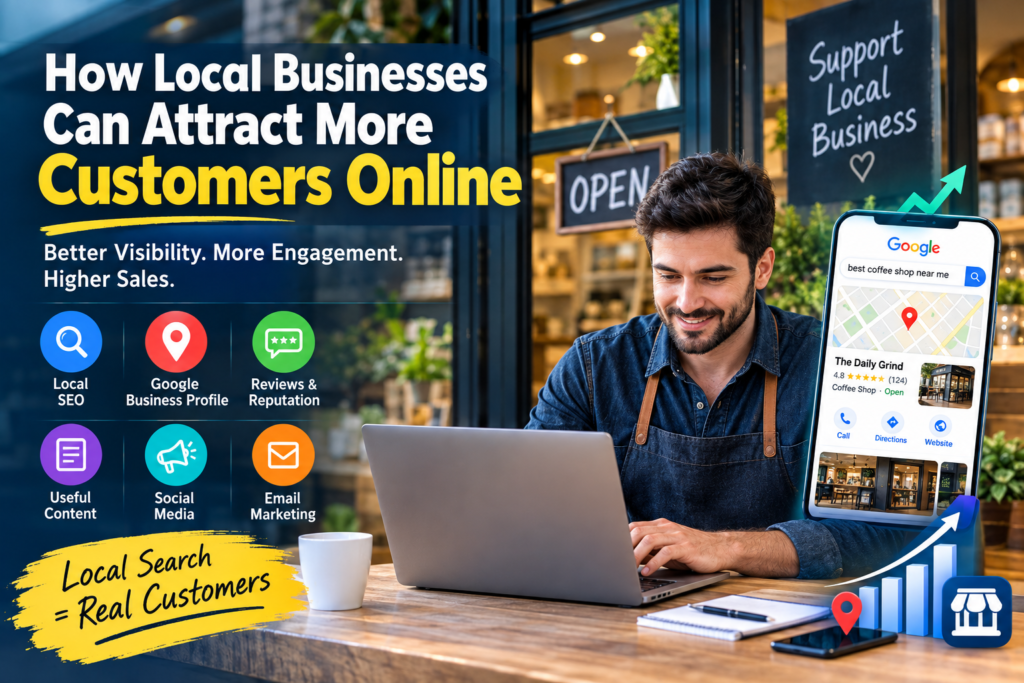
Google Business Profile is another important part of local visibility. Eligible businesses can use it to provide information that may appear in Google Search and Google Maps.
Make sure your business name, address, phone number, website, opening hours, and service information are accurate. Use high-quality photos of your business, products, team, storefront, completed projects, or service environment.
Consistency matters across the web. If your business has different phone numbers, addresses, or names on different platforms, customers may become confused.
Website performance should also be monitored. Large images, unnecessary plugins, outdated software, and poorly optimized pages can slow down a website. Compress images, remove unnecessary elements, update software, and test important pages regularly.
Security is another basic requirement. Use HTTPS, strong passwords, two-factor authentication where possible, regular backups, and updated website software to protect your business and customers.
2. Use Local SEO, Reviews, Content, and Digital Marketing
Once the foundation is ready, the next step is increasing visibility.
Local SEO helps businesses appear when people search for relevant products and services in a specific location. Start by researching the terms potential customers use.
For example, searches may include phrases such as “dentist near me,” “roof repair in Houston,” “best restaurant in Chicago,” or “accountant for small business in Miami.”
Use relevant keywords naturally in page titles, headings, service pages, descriptions, and useful content. Avoid excessive repetition. The goal should always be to make the page useful and easy to understand.
Google’s official Google Search Central provides guidance on search visibility, website content, and SEO best practices.
Customer reviews are another important source of trust. Encourage genuine customers to leave honest feedback on relevant platforms. Do not buy fake reviews or create misleading testimonials.
Respond to reviews professionally. Thank customers for positive feedback and address negative experiences calmly. A professional response can show potential customers that your business takes customer service seriously.
Content marketing can also help local businesses attract people who are researching a problem before making a purchase.
For example:
- A plumber can publish home plumbing maintenance tips.
- A dentist can explain common dental problems.
- A real estate agent can publish local property guides.
- A restaurant can publish information about its menu and local events.
- A landscaping company can publish seasonal lawn-care advice.
Useful content can attract search traffic while demonstrating expertise.
Internal linking should also be part of the content strategy. When you publish related articles, connect them naturally. For example, businesses trying to compete with larger brands can also learn from How Small Businesses Can Compete With Larger Companies.
Social media can support local visibility as well. However, businesses do not need to create accounts on every platform.
Choose platforms that match your audience. A local professional service may benefit from LinkedIn or Facebook, while a visual business may find Instagram or YouTube more useful.
Useful social content can include customer success stories, product updates, educational tips, FAQs, local events, short videos, behind-the-scenes content, and special offers.
Avoid making every social media post a sales pitch. Educational and helpful content can encourage people to follow your business and remember it when they need your service.
Email marketing can also help local businesses stay connected with existing customers. Businesses can send useful updates, seasonal promotions, appointment reminders, new service announcements, and educational information.
A wider Modern Marketing Strategies That Drive Business Growth in 2026 approach can help businesses combine SEO, content marketing, social media, email marketing, authority building, and data analysis.
Partnerships are another practical way to generate local customers. A wedding photographer could work with wedding planners. A mortgage professional could build relationships with real estate agents. A fitness business could partner with complementary local businesses.
These relationships can create referral opportunities without requiring large advertising budgets.
3. Turn Online Visibility Into Real Customers
Getting people to discover your business is only the beginning. The next step is converting visitors and searchers into actual customers.
Every important page should have a clear call to action.
Depending on your business, this might be:
- Call now
- Request a quote
- Book an appointment
- Contact us
- Schedule a consultation
- Shop online
- Visit our location
Make these actions easy to find, especially on mobile devices.
Your contact page should contain accurate information and provide an easy way to reach the business. If phone calls are important, use a clickable phone number for mobile users.
Trust signals can also improve conversions. Depending on your industry, these may include customer reviews, testimonials, certifications, professional memberships, guarantees, case studies, years of experience, or examples of completed work.
Your branding should remain consistent across your website, social media accounts, listings, emails, and other marketing channels. A consistent brand makes it easier for customers to recognize and remember your business.
It is also important to measure your results.
Use analytics tools to understand where visitors come from, which pages they visit, what search terms bring traffic, and which actions they take.
Do not focus only on total website traffic. Track meaningful business results such as:
- Phone calls
- Contact form submissions
- Quote requests
- Appointment bookings
- Online purchases
- Qualified leads
- Conversion rate
- Customer acquisition cost
- Repeat customers
For example, a local business may receive 1,000 website visitors but only five inquiries. Another business may receive 300 visitors and generate 20 qualified leads. The second website may be much more effective despite having less traffic.
Review your performance regularly. If organic search generates qualified leads, continue improving SEO. If social media produces engagement but very few customers, improve your calls to action or change the type of content you publish.
Paid advertising can also be useful when managed carefully. Local businesses can target specific locations and audiences instead of advertising to everyone.
However, advertising should be measured. Know how much each campaign costs and how many leads or customers it generates.
Technology can also improve customer acquisition and service. Small businesses can use online booking systems, customer relationship management software, email automation, analytics, and other tools to reduce manual work.
Small businesses that adopt useful digital tools can often improve efficiency and customer experience without requiring a large technology budget. This is also discussed in Why Small Businesses That Embrace Digital Transformation Are Winning in 2026.
Finally, continue improving your online strategy as your business grows. Customer behavior changes, competitors introduce new offers, search trends evolve, and new platforms appear.
Review your website, listings, content, reviews, social media, and marketing performance regularly.
The objective is not to be everywhere. It is to be visible where your customers are looking and provide enough value and trust to convince them to choose your business.
Conclusion
Local businesses can attract more customers online by combining a strong website with local SEO, accurate business listings, genuine reviews, useful content, social media, and clear calls to action.
The most important step is understanding the customer first. Once you know who you want to attract and what they need, it becomes easier to create relevant content, choose marketing channels, and build a website that converts visitors into customers.
Local businesses should also measure real results instead of focusing only on traffic or social media followers. Phone calls, inquiries, bookings, purchases, qualified leads, and repeat customers provide a clearer picture of whether online marketing is working.
A strong local online presence takes time to build, but consistent improvements can create a reliable source of new customers and support long-term business growth.