
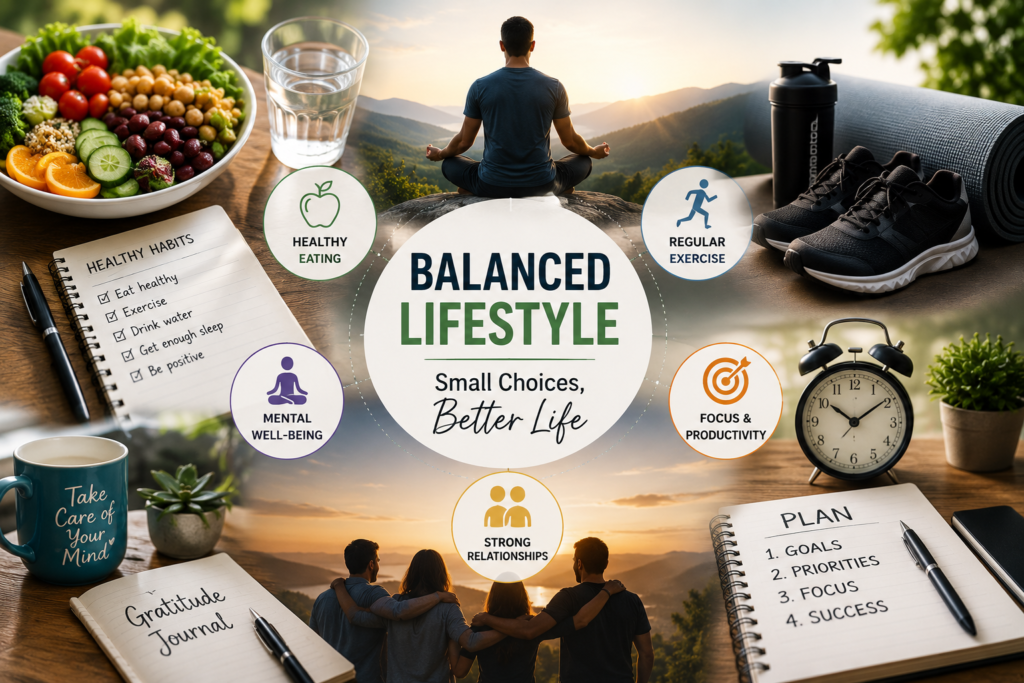
A healthy lifestyle is not built on one major decision. It is created through small, consistent choices that influence physical health, mental well-being, productivity, relationships, and overall quality of life.
Modern life often moves at a fast pace. Work responsibilities, digital devices, financial pressure, social commitments, and constant access to information can make it difficult for people to maintain balance. As a result, many individuals struggle to find enough time for rest, physical activity, meaningful relationships, and personal development.
A balanced lifestyle does not mean following a perfect routine. Instead, it means creating habits that support long-term well-being while allowing room for work, relaxation, family, hobbies, and personal goals.
The most effective lifestyle changes are usually realistic and sustainable. Small improvements made consistently can have a greater impact than extreme changes that are difficult to maintain.
Daily Habits Create the Foundation of a Healthy Lifestyle
Daily routines have a significant influence on how people feel and perform. Simple habits such as getting enough rest, eating balanced meals, staying physically active, and managing daily responsibilities can improve overall well-being.
Sleep is one of the most important parts of a healthy lifestyle. Rest allows the body and mind to recover after a demanding day. Poor sleep can affect energy, focus, mood, and productivity.
Creating a consistent sleep routine can help improve rest. Reducing unnecessary screen time before bed, maintaining a comfortable sleeping environment, and following a regular schedule may support better sleep habits.
Nutrition is also an important part of everyday health. A balanced diet provides the body with the energy and nutrients needed for daily activities. Eating a variety of foods, drinking enough water, and avoiding excessive consumption of highly processed foods can support better overall health.
Physical activity does not always require an expensive gym membership or a complicated workout routine. Walking, stretching, cycling, sports, and home-based exercises can all become part of an active lifestyle.
The key is consistency. Regular movement can support physical fitness and help people feel more energetic during the day.
Daily organization can also improve lifestyle balance. Planning tasks, setting priorities, and avoiding unnecessary distractions can help individuals manage time more effectively.
A productive routine should not be overloaded with tasks. Making time for breaks and relaxation is equally important.
Mental Well-Being and Digital Balance Are Becoming More Important
Mental well-being is an essential part of a balanced lifestyle. People often focus on physical health while ignoring stress, emotional exhaustion, and the need for mental rest.
Modern technology provides many benefits, but excessive screen time can make it difficult to disconnect. Constant notifications, social media updates, and online information can create mental fatigue.
Creating periods of digital balance can help people regain focus. This may involve limiting unnecessary notifications, taking breaks from social media, or setting specific times to disconnect from devices.
Spending time away from screens can create opportunities for reading, walking, hobbies, creativity, and personal conversations.
Stress management is also important. Everyone experiences pressure, but people respond to stress in different ways. Some may benefit from physical activity, while others may prefer quiet time, creative activities, social interaction, or relaxation techniques.
Identifying sources of unnecessary stress is an important first step. In some cases, better organization or setting clear boundaries can help reduce pressure.
Personal growth can also support mental well-being. Learning a new skill, reading, exploring a hobby, or working toward a personal goal can provide a sense of achievement.
A balanced lifestyle should include activities that create enjoyment and meaning, not only responsibilities.
Relationships, Experiences, and Personal Goals Shape a Meaningful Life
Lifestyle is not only about health and daily routines. Relationships and personal experiences also play an important role in overall happiness.
Strong relationships can provide emotional support, encouragement, and a sense of connection. Spending quality time with family and friends can help people maintain meaningful connections despite busy schedules.
Communication is an important part of healthy relationships. Listening carefully, showing appreciation, and making time for important people can strengthen social connections.
Experiences can also contribute to a fulfilling lifestyle. Travel, hobbies, outdoor activities, cultural events, and new experiences can create lasting memories and help people discover new interests.
Personal goals provide direction. These goals may involve career development, education, financial planning, fitness, creativity, or personal growth.
Goals should be realistic and flexible. Life can change, and priorities may need to change as well.
Rather than focusing only on major achievements, people can benefit from recognizing smaller forms of progress. Completing a difficult task, developing a new habit, learning something new, or improving a relationship can all represent meaningful progress.
A balanced lifestyle also requires flexibility. Unexpected responsibilities and challenges are part of life. A healthy routine should be adaptable rather than so strict that one disruption causes everything to collapse.
The goal is not perfection. The goal is to create a lifestyle that supports long-term physical health, mental well-being, meaningful relationships, and personal satisfaction.
Conclusion
A balanced lifestyle is built through consistent habits and thoughtful choices. Quality sleep, balanced nutrition, regular movement, mental relaxation, digital balance, meaningful relationships, and personal goals all contribute to a healthier and more fulfilling life.
People do not need to completely change their lives overnight. Small improvements can gradually create significant results.
The most successful lifestyle changes are those that fit naturally into a person’s daily life. A realistic routine is easier to maintain than an extreme plan that creates unnecessary pressure.
By focusing on balance rather than perfection, individuals can build healthier routines and improve their overall quality of life.
A better lifestyle begins with simple decisions made consistently. Over time, these decisions can create a stronger foundation for health, happiness, productivity, and long-term well-being.