

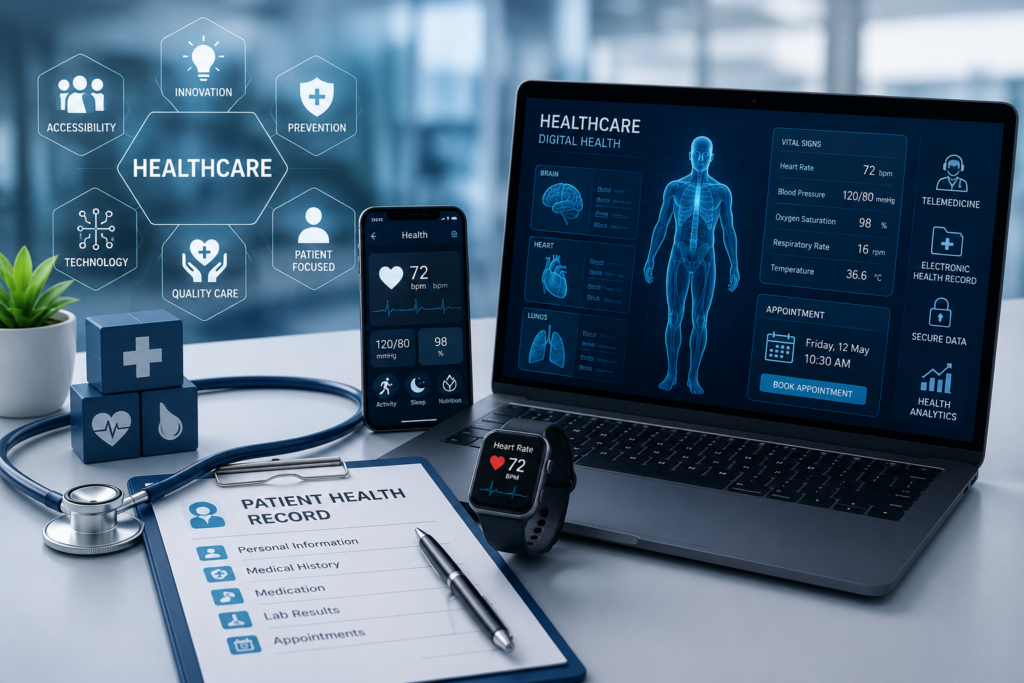
Healthcare is changing rapidly as technology, medical innovation, and changing patient expectations reshape the way people access and receive care. From digital health platforms and telemedicine to artificial intelligence and wearable devices, new developments are creating opportunities to make healthcare more accessible, efficient, and personalized.
The modern healthcare system faces many challenges. Growing populations, rising medical costs, limited access to healthcare professionals, and increasing demand for services are placing pressure on healthcare providers. Technology can help address some of these challenges by improving communication, supporting medical professionals, and helping patients take a more active role in managing their health.
However, technology is only one part of healthcare innovation. Successful healthcare systems must also focus on patient safety, privacy, accessibility, and the quality of medical care.
The future of healthcare will likely depend on combining medical expertise with responsible innovation. When technology is used effectively, it can help improve healthcare experiences for patients and professionals alike.
Digital Healthcare Is Making Medical Services More Accessible
One of the most significant developments in healthcare is the growth of digital health services. Online platforms allow patients to communicate with healthcare professionals, schedule appointments, access medical information, and manage health records more conveniently.
Telemedicine has also expanded access to medical care. Patients in remote areas or those who have difficulty traveling can communicate with healthcare professionals through virtual consultations. This can be particularly valuable for follow-up appointments, general consultations, and certain types of specialist care.
Digital healthcare can also reduce pressure on hospitals and clinics. Some consultations can be handled remotely, allowing healthcare facilities to focus their resources on patients who require in-person treatment.
Mobile health applications are another important part of the digital healthcare ecosystem. These applications can help users track appointments, medication schedules, physical activity, and other health-related information.
Wearable devices are also becoming increasingly popular. Smartwatches and other devices can collect information such as heart rate, physical activity, and sleep patterns. When used responsibly, this information may help individuals become more aware of their health habits.
However, digital healthcare must remain accessible to everyone. Not all patients have reliable internet access, smartphones, or the digital skills required to use online healthcare services.
Healthcare providers should therefore ensure that digital services complement traditional care rather than completely replacing important in-person services.
Artificial Intelligence and Data Are Supporting Better Healthcare Decisions
Artificial intelligence is becoming increasingly important in healthcare. AI systems can process large amounts of information and identify patterns that may be difficult for humans to detect quickly.
Healthcare professionals may use technology to support medical research, analyze medical images, organize information, and improve administrative processes.
AI can also help reduce the time spent on repetitive administrative tasks. For example, automated systems may assist with scheduling, documentation, and information management.
This can allow healthcare professionals to spend more time focusing on patients.
Data is another important part of modern healthcare. Medical information can help researchers and healthcare organizations understand diseases, identify trends, and improve treatment strategies.
However, the use of healthcare data requires strong privacy and security protections. Medical information is highly sensitive, and patients need confidence that their personal information is handled responsibly.
Healthcare organizations must protect patient data from unauthorized access and clearly explain how information is collected and used.
AI should also support—not replace—medical professionals. Technology can provide useful information, but medical decisions often require professional judgment, experience, and an understanding of the individual patient.
The most effective approach combines technology with human expertise.
Patient-Centered Care Is Shaping the Future of Healthcare
Modern healthcare is increasingly focused on the patient experience. Patients want convenient access to services, clear communication, shorter waiting times, and greater involvement in healthcare decisions.
Patient-centered care recognizes that every individual has different needs, circumstances, and preferences.
Clear communication is an essential part of quality healthcare. Patients should be able to understand their treatment options and ask questions about their care.
Healthcare providers can also improve patient experiences by using digital communication tools, appointment reminders, online portals, and accessible educational resources.
Preventive healthcare is another important area of focus. Instead of only treating illness after it develops, healthcare systems can encourage people to take steps to reduce health risks.
Regular checkups, healthy lifestyle choices, early detection, and health education can all support better long-term outcomes.
Healthcare organizations are also exploring ways to provide more personalized care. Data and digital tools can help professionals better understand individual patient needs and develop more informed care strategies.
However, technology must always be used responsibly. Patients should not be treated simply as data points. Human communication, compassion, and professional care remain essential.
The future of healthcare should therefore focus on balance. Technology can improve efficiency and access, but trust and human connection remain at the center of quality medical care.
Conclusion
Healthcare is entering a period of significant transformation. Digital platforms, telemedicine, artificial intelligence, wearable technology, and data-driven tools are changing how medical services are delivered.
These innovations can improve accessibility, reduce administrative pressure, support healthcare professionals, and give patients more control over their health information.
However, innovation must be combined with responsibility. Privacy, security, accessibility, patient safety, and professional medical judgment should remain key priorities.
The future of healthcare will not be defined by technology alone. The most successful healthcare systems will combine innovation with human expertise and patient-centered care.
As digital healthcare continues to develop, the goal should remain clear: use technology to make healthcare more accessible, efficient, secure, and focused on the needs of patients.