
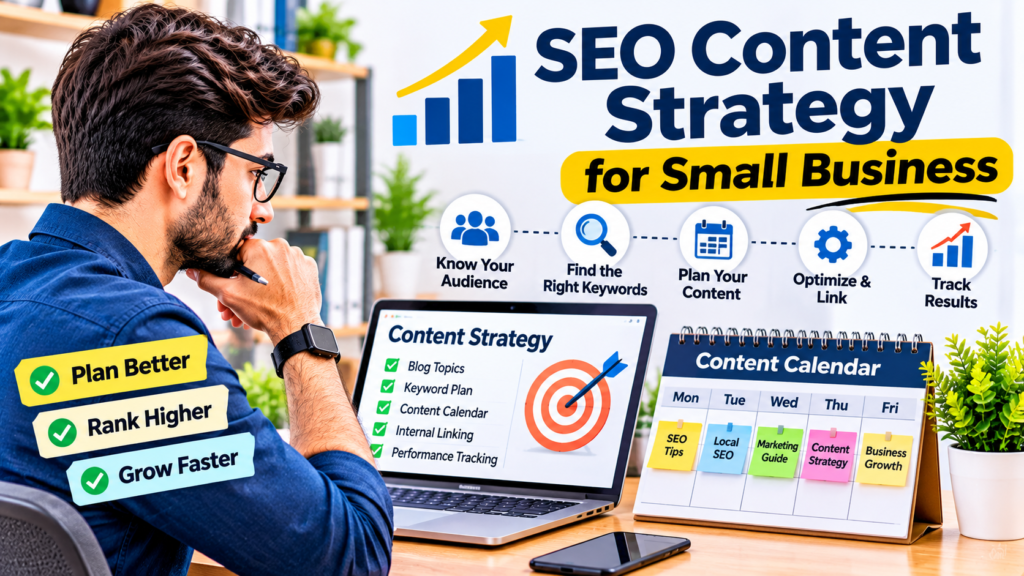
A small business website needs more than a few blog posts to attract consistent organic traffic. It needs a clear content strategy that helps potential customers find useful information, understand your products or services, and take the next step toward becoming customers.
Many businesses publish articles without a plan. They choose random topics, repeat similar keywords, or create content that does not match what their audience is searching for. This can make it difficult to build a strong and organized website.
An SEO content strategy provides direction. It helps you decide what to publish, who the content is for, which keywords to target, and how each page supports your business goals.
Whether you run a local shop, service company, online store, or small agency, a practical content strategy can help you build a useful online presence over time.
1. Define Your Audience, Goals, and Content Topics
Before creating content, understand who you want to reach and what you want your website to achieve.
A content strategy should begin with your business objectives rather than simply choosing keywords with high search volume.
Identify Your Target Audience
Your target audience includes the people most likely to benefit from your products or services.
Think about their needs, challenges, interests, and questions. For example, a small accounting firm may want to reach business owners who need help with bookkeeping, tax preparation, or financial planning.
Understanding your audience helps you create content that addresses real problems.
You can begin by asking:
- Who are my ideal customers?
- What problems are they trying to solve?
- What questions do they ask before buying?
- Which services or products do they need?
- What information would help them make a decision?
A clear understanding of your audience makes it easier to choose relevant content topics and create useful articles.
Set Clear Content Goals
Every piece of content should have a purpose.
Your goals may include:
- Increasing relevant organic website traffic
- Building awareness of your business
- Explaining your products or services
- Answering customer questions
- Generating qualified leads
- Supporting existing customers
For example, an informational blog post may help introduce your business to new visitors, while a detailed service page may help someone who is ready to contact you.
Your content goals should connect with your overall digital marketing strategy for small businesses.
Choose Topics That Match Your Business
Focus on topics that are directly related to your products, services, and customer needs.
A small digital marketing agency could create content around:
- SEO basics for small businesses
- Website optimization tips
- Social media marketing strategies
- Content marketing for beginners
- Local search visibility
Avoid publishing unrelated articles simply because they appear popular. A focused website can help visitors understand what your business offers and why your content is relevant.
2. Research Keywords and Build a Content Plan
Keyword research helps you understand how people search for information related to your business.
Once you identify relevant keywords, organize them into topics and decide which pages or articles should target them.
Find Relevant Keywords
Start with a list of phrases your customers might search for.
You can use free tools such as Google Keyword Planner, Google Trends, and Google Search Console to discover keyword ideas and review search performance.
For example, a small business offering website services might research:
- Website design for small businesses
- Affordable website development
- Website maintenance services
- How to improve website performance
For a deeper understanding, read our guide on keyword research for small businesses.
The goal is to select keywords that are relevant to your business and match the needs of your audience.
Understand Search Intent
Search intent describes what a person wants to accomplish when they enter a search query.
A user searching for “what is content marketing” wants information. Someone searching for “content marketing agency” may be looking for a service provider.
Your content should match the intent behind the keyword.
Consider these examples:
| Search Query | Content Type |
|---|---|
| What is SEO content? | Educational blog post |
| SEO content strategy examples | Guide or tutorial |
| SEO services for small business | Service page |
| Best content planning tools | Comparison article |
Matching search intent helps you provide the information visitors expect.
Create a Simple Content Calendar
A content calendar helps you organize topics, publishing dates, and responsibilities.
You do not need complicated software to begin. A spreadsheet can be enough.
Your content calendar may include:
- Article title
- Target keyword
- Search intent
- Category
- Publishing date
- Content status
- Internal links
- Update date
For example, a small business website could publish one or two useful articles each week, depending on its available resources.
Consistency matters, but quality should remain the priority. Publishing fewer helpful articles is generally more valuable than producing large amounts of repetitive or low-value content.
3. Optimize, Connect, and Measure Your Content
After publishing an article, continue improving it. SEO content strategy is an ongoing process that involves optimization, internal linking, and performance monitoring.
Optimize Your Content for Readers and Search Engines
Create a clear and descriptive title that explains what the page is about.
Use headings to organize the information into logical sections. Keep paragraphs readable and explain concepts in simple language.
Your primary keyword can appear naturally in:
- SEO title
- Main heading
- URL slug
- Introduction
- Relevant subheadings
- Content body
Use related terms where they make sense, but avoid repeating keywords unnaturally.
Google recommends creating helpful, reliable, people-first content rather than writing primarily to manipulate search rankings. You can review its guidance on creating helpful and reliable content.
Use Internal Links to Connect Related Articles
Internal links connect one page of your website to another.
They help readers discover related information and provide search engines with paths to find and understand your website pages.
For example, an article about SEO content strategy can link to related guides about keyword research, local SEO, and digital marketing.
Use descriptive anchor text that explains what the linked page covers. Avoid using vague phrases such as “click here” when a more meaningful link description is possible.
A well-organized internal linking structure can make your website easier to navigate and help visitors explore relevant content.
Measure Content Performance
Once your articles are published, review their performance regularly.
Google Search Console can help you understand how your pages appear in Google Search.
Monitor useful metrics such as:
- Search impressions
- Organic clicks
- Click-through rate
- Average search position
- Queries bringing visitors to your pages
You can also review website engagement and conversions through your analytics platform.
Do not judge an article only by its first few days of performance. Search visibility can take time to develop, and different topics may perform differently.
Use the information you collect to improve existing articles, discover new topics, and refine your content strategy.
Conclusion
An effective SEO content strategy helps small businesses publish useful, relevant, and organized website content.
Start by understanding your audience and defining clear goals. Research keywords, select topics that match search intent, and create a realistic content calendar.
Then optimize your articles, connect related pages through internal links, and monitor performance to identify opportunities for improvement.
A successful content strategy is not about publishing as much as possible. It is about creating content that genuinely helps your audience and supports your business goals.
With consistent planning and thoughtful optimization, small businesses can build a stronger online presence and make their website a more valuable resource for potential customers.