
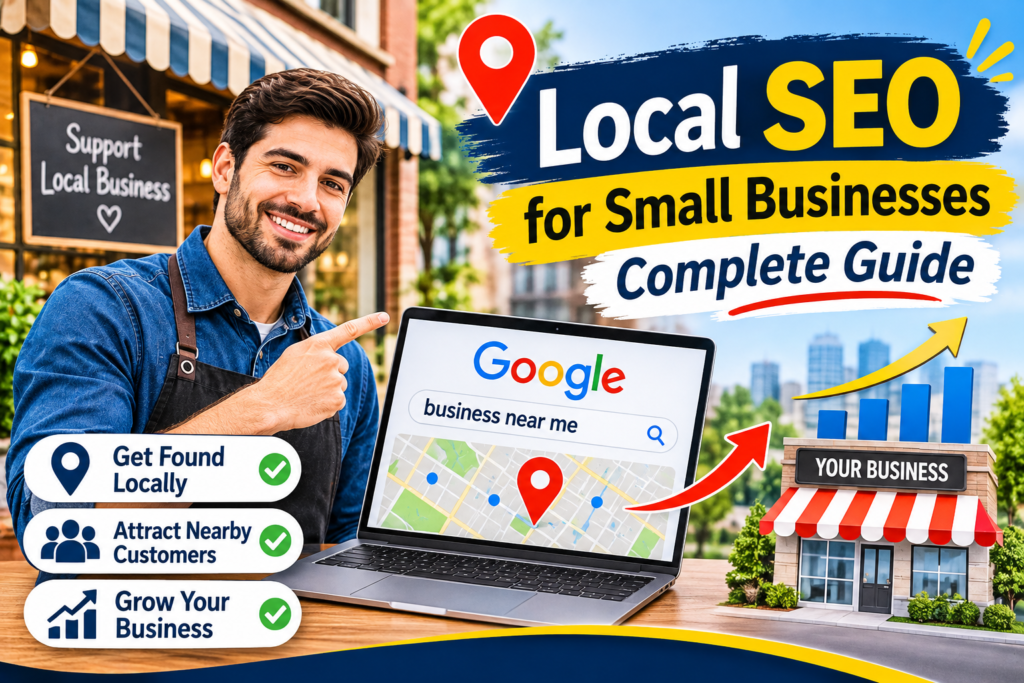
Small businesses often depend on customers from nearby areas. A restaurant wants local people to discover its menu, a plumber wants homeowners to find reliable repair services, and a retail shop wants shoppers to visit its store. However, even a great business can struggle to attract customers if people cannot find it online.
Local SEO helps businesses improve their visibility when people search for products or services in a specific location. It focuses on making business information easier to discover through search engines, maps, websites, and local directories.
For example, someone searching for “bakery near me” or “digital marketing agency in Islamabad” is looking for a relevant business in a particular area. Local SEO helps businesses connect with these potential customers by improving their online presence.
Unlike traditional marketing that may reach a broad audience, local SEO focuses on attracting people who are searching for nearby products or services. It can support customer discovery, build trust, and create more opportunities for calls, visits, bookings, and inquiries.
What Is Local SEO and Why Does It Matter for Small Businesses?
Local SEO is the process of improving a business’s online presence so it can appear in relevant location-based search results. These searches may include a city, neighborhood, service area, or phrases such as “near me.”
When customers search for local businesses, Google may display website results, business profiles, maps, reviews, and other useful information. A well-maintained online presence helps potential customers understand what a business offers and how they can contact it.
How Local SEO Helps Businesses Get Discovered
Many customers use search engines before choosing a local service provider. They may compare businesses, check opening hours, read reviews, or look for directions.
A business that provides accurate information and useful website content can make this discovery process easier.
Local SEO is particularly useful for:
- Restaurants and cafés
- Retail shops and local stores
- Clinics and professional practices
- Home repair and maintenance services
- Real estate agencies
- Salons and personal care businesses
- Local consultants and service providers
For businesses that want to reach customers in a defined area, local SEO can become an important part of their digital marketing strategy for small businesses.
Understanding Local Search Intent
Local searches often show that a customer has a specific need. Someone searching for a nearby restaurant may be ready to visit, while someone looking for an accountant may be comparing service providers.
This makes local search visibility valuable for connecting businesses with relevant audiences.
However, appearing in search results does not automatically guarantee a sale. Customers still need clear information, reliable service, and a reason to choose one business over another.
A practical local SEO strategy combines visibility with a helpful customer experience.
Practical Local SEO Strategies to Improve Your Business Visibility
Optimize Your Google Business Profile
Google Business Profile allows eligible businesses to manage how their information appears on Google Search and Google Maps.
Businesses should claim and verify their profile where applicable, then complete the information accurately.
Important details include:
- Business name
- Address or service area
- Phone number
- Website
- Opening hours
- Business category
- Products or services
- Relevant photos
The profile should represent the real business. Avoid adding unnecessary keywords to the business name or using misleading information to influence rankings.
A complete profile can help customers understand what the business offers and how to contact it. You can learn more through the official Google Business Profile website.
Use Relevant Local Keywords
Local keyword research helps businesses understand how customers search for services in their area.
For example, a bakery may target phrases related to cakes and baked goods in its city. A marketing agency may focus on searches related to digital marketing services in its location.
Relevant local keywords can be used naturally in:
- Website page titles
- Service page headings
- Website descriptions
- Location pages
- Blog articles
- Image alt text when appropriate
The goal is to make content relevant, not to repeat a city name in every paragraph.
Businesses should create location pages only when they have useful, specific information for each location. Copying the same page and changing only the city name can create a poor experience for visitors.
Encourage Genuine Customer Reviews
Reviews help potential customers understand other people’s experiences with a business.
A business can politely invite customers to leave honest feedback after a purchase or completed service. It should never pressure customers to provide positive reviews or publish fake feedback.
Responding to reviews also matters. Thank customers for useful feedback, address concerns professionally, and avoid sharing private customer information in public replies.
Google states that local results are primarily based on relevance, distance, and prominence. Complete business information can help with relevance, while reviews and information from across the web can contribute to prominence. Read Google’s official local ranking guidance for more details.
Maintain Consistent Business Listings
Business information may appear on directories, social media profiles, industry websites, and local platforms.
If the business name, address, or phone number differs across these sources, customers may become confused.
Small businesses should review important listings and keep their information accurate and consistent. They should prioritize reputable platforms relevant to their industry and location instead of submitting details to every directory available.
Useful listings can support discovery and help customers confirm that a business is legitimate.
Create Helpful Local Content
Content can help a business answer questions that are relevant to its community.
A home improvement company might publish advice about maintaining a property. A restaurant could share information about its menu and local events. A professional service provider could explain common issues faced by customers in its area.
Local content should provide genuine value rather than simply repeating location names.
Businesses can also connect local content with their broader SEO efforts. The article How SEO Helps Small Businesses Get Customers explains how search visibility can support customer acquisition.
Make Your Website Easy to Use
A local business website should make essential information easy to find.
Visitors should be able to understand the services offered, the locations served, and how to contact the business.
A useful website checklist includes:
- Clear homepage and service descriptions
- Accurate contact information
- Mobile-friendly pages
- Reliable website performance
- Helpful internal links
- A clear contact or booking option
Businesses can use Google Search Console to monitor search performance and identify potential indexing issues.
How to Measure Local SEO Results and Build Long-Term Growth
Local SEO requires consistent attention. Businesses should review their performance regularly and make improvements based on customer needs and available data.
Track Relevant Performance Metrics
Useful measurements may include:
- Search impressions and clicks
- Website visits from local searches
- Calls and customer inquiries
- Direction requests where available
- Visits to important service pages
- Leads and bookings generated through the website
The most valuable metrics depend on business goals. A local shop may focus on visits and calls, while a professional service provider may prioritize qualified inquiries.
Businesses should avoid judging success only by rankings. Search positions can change, and a ranking improvement is not meaningful if it does not help reach relevant customers.
Keep Business Information Updated
Local SEO is not a one-time setup. Opening hours, service areas, phone numbers, and business offerings can change.
Keeping this information current helps customers avoid confusion and supports a reliable online presence.
Businesses should also review website content periodically to ensure that important pages remain accurate, useful, and easy to navigate.
Build Trust Through a Better Customer Experience
Search visibility can introduce customers to a business, but the customer experience influences whether they return or recommend it.
Clear communication, reliable service, accurate pricing information, and professional responses to feedback can help build long-term relationships.
Local SEO works best when it supports genuine business strengths rather than trying to replace them.
Small businesses can begin with the basics: create an accurate business profile, improve important website pages, use relevant local keywords, maintain genuine reviews, and monitor performance.
With consistent effort, local SEO can help businesses become easier to discover and create more opportunities to connect with customers in their communities.