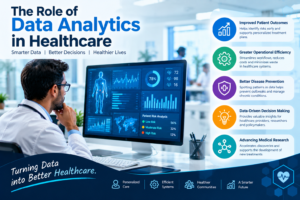

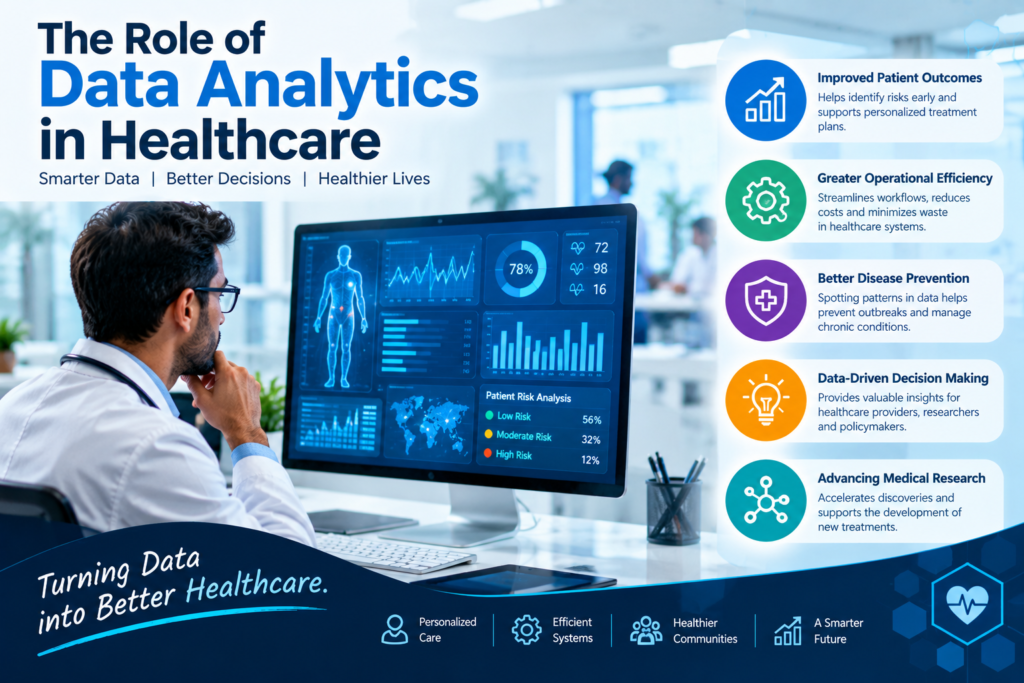
Healthcare generates large amounts of information through electronic health records, laboratory systems, medical imaging, patient surveys, health information systems, wearable devices, and other digital tools. When this information is collected, organized, and analyzed appropriately, it can help healthcare organizations understand patterns, monitor performance, plan resources, and support evidence-informed decisions.
The role of data analytics in healthcare is therefore broader than simply producing charts or reports. It can support clinical workflows, public health programs, operational planning, research, and health-system management. At the same time, healthcare data is sensitive, so accuracy, privacy, security, governance, and appropriate human oversight are essential.
The World Health Organization highlights the importance of collecting, analyzing, and using routine health-service data to monitor programs and strengthen health-system management.
1. How Data Analytics Is Used Across Healthcare
The role of data analytics in healthcare begins with turning large and complex datasets into information that healthcare professionals and organizations can understand and use.
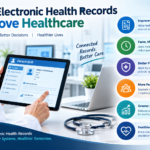
One important source is electronic health records, which can contain information such as medical histories, laboratory results, medications, diagnoses, and other healthcare information. When data from appropriate systems can be analyzed together, organizations can identify trends and understand how services are being delivered.
Healthcare analytics can generally be grouped into several approaches.
Descriptive analytics focuses on what has already happened. For example, a healthcare organization may review historical appointment numbers, hospital admissions, service utilization, or other operational information.
Diagnostic analytics goes a step further by examining patterns that may help organizations understand why something happened. This can be useful when investigating changes in service demand, operational performance, or other measurable outcomes.
Predictive analytics uses historical and current information to estimate what may happen under particular conditions. In healthcare settings, predictive methods may be studied for areas such as resource planning, patient-risk assessment, disease surveillance, and operational forecasting. However, predictions are not guarantees and should be interpreted within the limitations of the underlying data and models.
Prescriptive analytics attempts to identify possible actions based on available information and defined objectives. In healthcare, such systems require careful evaluation because recommendations can have important consequences.
Research published in PubMed describes healthcare analytics applications across areas including medical imaging, disease recognition, outbreak monitoring, and clinical decision support. The research literature also highlights challenges such as data quality, interoperability, and responsible use of analytical systems.
Another important application is data visualization. Dashboards, charts, maps, and other visual formats can make complex information easier to interpret. For healthcare managers, visual reporting can help show changes in service demand, operational indicators, or public-health measures without requiring every user to work directly with raw datasets.
Data analytics can also support healthcare research. Researchers can analyze large datasets to identify patterns, compare populations, evaluate research questions, and generate hypotheses for further investigation. These applications do not replace clinical research or professional judgment, but they can provide useful evidence for research and planning.
2. Benefits and Challenges of Healthcare Data Analytics
One potential benefit of healthcare analytics is improved visibility. Healthcare organizations often need to understand what is happening across different departments, services, locations, or patient populations. Well-designed analytical systems can bring relevant information together and make trends easier to identify.
Analytics can also support resource planning. Hospitals and other healthcare organizations need to plan staffing, facilities, equipment, appointments, supplies, and other operational resources. Historical information and current data can provide useful context for these decisions.
Public health is another important area. Health authorities can use routine data to monitor programs and identify changes that may require further investigation. WHO’s health-service data resources specifically emphasize analysis and use of routine facility data for monitoring and health-service management.
Healthcare analytics may also support quality improvement. Organizations can monitor selected indicators, identify areas that need attention, and evaluate whether operational changes are associated with different results.
However, the value of analytics depends heavily on the quality of the information being analyzed.
Incomplete or inaccurate data can produce misleading results. A sophisticated analytical model cannot automatically correct every problem in the underlying dataset. Data definitions, collection methods, missing information, duplicate records, and inconsistent formats can all affect the reliability of analysis.
Health data interoperability is therefore an important consideration. Healthcare information may be stored across different systems, organizations, and technologies. When systems cannot exchange information effectively, it can become more difficult to create a consistent view of available data.
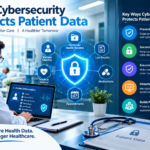
Privacy is another major consideration. Healthcare information can contain highly sensitive personal details. Organizations need appropriate policies, technical controls, access management, and governance processes to protect information.
WHO guidance on digital health data identifies interoperability, privacy, security, and control of data access as important areas when moving toward stronger digital health systems.
There is also a risk of overinterpreting analytical results. A pattern in a dataset does not automatically prove that one factor caused another. Similarly, a predictive model can produce an estimate without guaranteeing an individual outcome.
For these reasons, analytics should generally be treated as a decision-support capability rather than an automatic replacement for qualified healthcare professionals, researchers, or health-system decision-makers.
3. The Future of Healthcare Data Analytics
Healthcare data analytics is likely to become increasingly connected with artificial intelligence, machine learning, digital health platforms, and more integrated information systems.
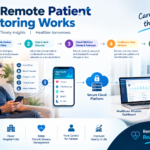
One important development is the growing use of real-time or near-real-time information. Instead of relying exclusively on historical reports, healthcare organizations may increasingly use continuously updated data to monitor operations, services, and population-level trends.
Machine learning is another area receiving significant research attention. Studies have examined its use in areas such as medical imaging, disease profiling, clinical decision support, and other healthcare applications. However, responsible implementation requires careful evaluation, appropriate validation, monitoring, and human oversight.
Artificial intelligence may also expand the ability of organizations to process large and complex datasets. WHO’s recent work on AI and evidence-informed health policy emphasizes that AI can support data integration, predictive modeling, scenario analysis, and evidence use while also highlighting risks involving bias, transparency, equity, data governance, and regulatory gaps.
Data privacy and security will remain central as healthcare organizations collect and exchange more digital information. Expanding analytics capabilities without appropriate safeguards could create additional risks, so technological development needs to be accompanied by strong governance and security practices.
Healthcare organizations will also need professionals who understand both healthcare and data. Data analysts, health informatics specialists, clinicians, administrators, researchers, and technology teams may increasingly work together to ensure that analytical systems address real healthcare needs.
Another future priority is making data easier to understand. Better dashboards and standardized reporting can help decision-makers interpret information without needing to examine large raw datasets. WHO’s data and analytics work also emphasizes data standards, measurement, visualization, and the use of evidence to support health-related decision-making.
The future of healthcare analytics is therefore not simply about collecting more information. It is about collecting appropriate information, maintaining its quality, connecting systems responsibly, analyzing it carefully, and using the resulting evidence in ways that respect privacy and professional judgment.
Conclusion: Data analytics is becoming an important part of modern healthcare because it can help organizations understand complex information, monitor services, support research, improve planning, and inform evidence-based decisions. Its effectiveness depends on data quality, interoperability, privacy, security, appropriate analytical methods, and human oversight.
As healthcare systems become increasingly digital, analytics will likely remain an important area of healthcare technology. The strongest approach is not to treat data as a substitute for healthcare professionals, but as a tool that can help qualified professionals and organizations make better-informed decisions.