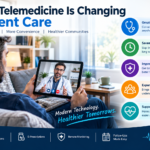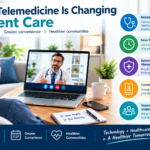

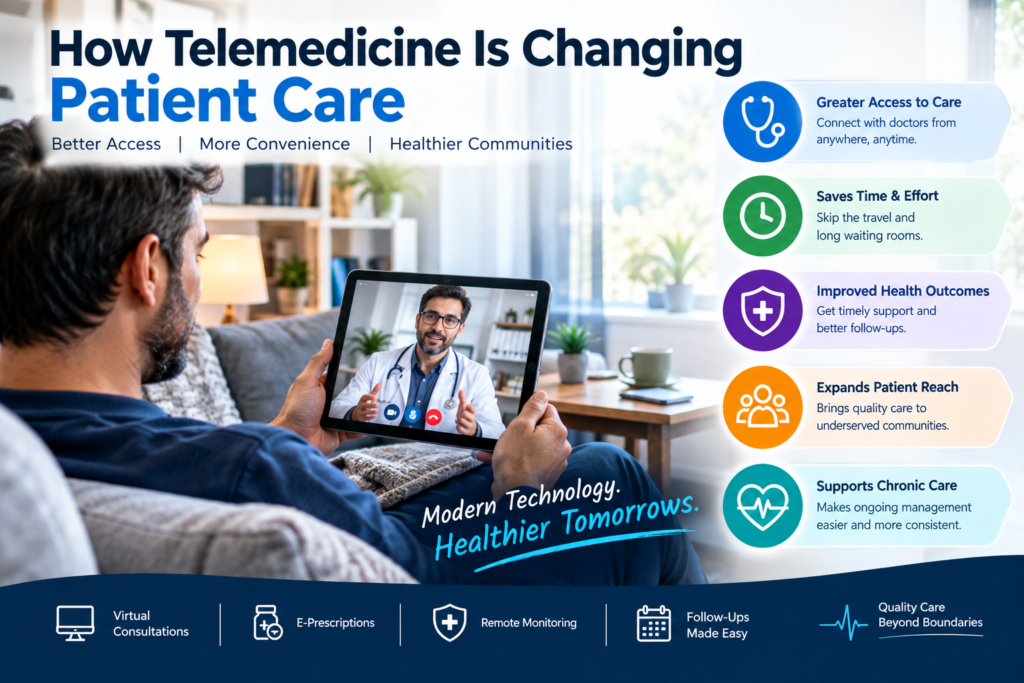
Telemedicine is changing how patients communicate with healthcare professionals and how healthcare services can be delivered across distance. Instead of requiring every interaction to happen inside a hospital or clinic, some healthcare services can now be provided through secure video calls, telephone consultations, messaging platforms, and other digital tools.
The growth of telemedicine does not mean that traditional healthcare facilities are becoming unnecessary. In many situations, physical examinations, diagnostic procedures, emergency care, and other services still require in-person healthcare. Instead, telemedicine can complement traditional care by giving patients additional ways to communicate with qualified healthcare professionals.
The World Health Organization describes telemedicine as the delivery of healthcare services over distance and highlights its potential to extend coverage and improve clinical management when it is appropriately implemented.
1. How Telemedicine Makes Healthcare More Accessible
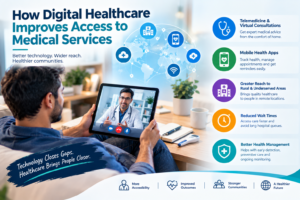
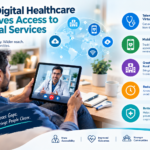
One of the most important changes brought by telemedicine is the ability to communicate with a healthcare provider without always traveling to a medical facility.
Traditional healthcare appointments can require transportation, time away from work or education, childcare arrangements, or long-distance travel. These challenges can become particularly important for people living in rural or underserved areas where certain healthcare professionals may not be available nearby.
Telemedicine can provide another option for appropriate healthcare interactions. Depending on the healthcare system and the provider, patients may communicate through video, telephone, secure messaging, or other digital channels. The U.S. Department of Health and Human Services explains that telehealth can allow patients to connect with providers from home and may reduce travel time while providing additional appointment options.
For this reason, healthcare access is one of the major areas where telemedicine can have an impact.
Telemedicine can also support communication between healthcare professionals. A provider in one location may use digital communication to consult another professional or coordinate aspects of a patient’s care. This can be particularly useful when healthcare services are distributed across different facilities or geographical areas.
However, access is not automatically improved simply because a digital platform exists. Patients need suitable devices, reliable connectivity, appropriate digital skills, and services designed around their needs. WHO guidance emphasizes that infrastructure, workforce capability, governance, and the context in which digital health technologies are introduced all influence their effectiveness.
This means that expanding telemedicine should involve more than providing an application or video platform. Healthcare organizations also need to consider whether patients can actually use the service comfortably and safely.
2. How Telemedicine Changes the Patient Experience
Telemedicine can change the way patients communicate with healthcare providers before, during, and after a healthcare encounter.
A virtual appointment may allow a patient to discuss symptoms, ask questions, review certain information, or discuss follow-up needs without traveling to a clinic. Depending on the situation, healthcare providers may also use digital tools to review test results, manage medicines, or monitor certain health information remotely. HHS notes that telehealth can support a range of services, including follow-up care and remote monitoring.
This can make virtual healthcare more convenient for situations where a physical examination is not necessary or where the provider determines that remote communication is appropriate.
Telemedicine can also support continuity. A patient who has already established a relationship with a healthcare provider may be able to maintain communication remotely when appropriate. This can be useful for follow-up discussions and ongoing care processes.
Another important development is the increasing use of technology alongside telemedicine. Patients may share relevant health information through connected devices or digital platforms. For example, some telehealth services can allow patients to share information such as blood pressure readings with their healthcare provider.
At the same time, patients should understand that remote care has limitations. A healthcare professional cannot perform every physical examination through a screen. Some symptoms or health concerns may require an examination, diagnostic testing, imaging, laboratory work, or immediate medical attention.
WHO has specifically emphasized that telemedicine can complement face-to-face interactions but cannot completely replace them.
This makes remote consultations most useful when they are integrated into a broader healthcare system rather than treated as a replacement for every type of medical interaction.
The quality of the patient experience also depends on communication. Patients need clear information about how appointments work, what technology is required, how their information is handled, and when an in-person appointment may be necessary.
3. Privacy, Quality and the Future of Telemedicine
As telemedicine becomes more common, healthcare organizations face an important responsibility: ensuring that convenience does not come at the expense of safety, quality, or privacy.
Patient privacy is particularly important because telemedicine involves the exchange of sensitive health information through digital systems. Patients should understand how their information is collected, communicated, stored, and protected, while healthcare organizations need appropriate policies and safeguards.
WHO’s digital health guidance highlights the importance of privacy protection, governance, training, infrastructure, and coordination when digital technologies are introduced into healthcare systems.
Healthcare organizations also need to consider the quality of telemedicine services. A reliable platform alone does not guarantee high-quality care. Providers need appropriate workflows, trained staff, suitable technology, clear procedures, and mechanisms for evaluating whether digital services are actually meeting patient and healthcare-system needs.
Accessibility is another important issue. Digital healthcare should not unintentionally exclude people who have disabilities, limited internet access, limited digital skills, or difficulty using particular technologies. WHO and ITU have developed standards specifically addressing accessibility challenges in telehealth services.
The future of telemedicine is therefore likely to involve greater integration with other areas of digital healthcare. Electronic health records, remote monitoring, mobile health tools, secure communication systems, and other technologies can work together as part of broader healthcare infrastructure.
For patients, the most important principle is that telemedicine should be used according to their healthcare needs. In-person care remains essential in many situations, particularly when physical assessment, diagnostic procedures, emergency intervention, or other clinical services are required.
Conclusion
Telemedicine is changing patient care by creating additional ways for people to communicate with healthcare professionals, access certain services, and maintain contact with providers across distance. Its potential benefits include greater convenience, improved access in some settings, and better opportunities for remote communication and follow-up.
However, telemedicine is not a universal replacement for traditional healthcare. Its effectiveness depends on appropriate clinical use, qualified healthcare professionals, reliable infrastructure, privacy protections, accessibility, and integration with existing healthcare services.
The future of telemedicine will therefore be less about replacing hospitals and clinics and more about building a connected healthcare system in which digital and in-person services complement each other. When implemented responsibly, telemedicine can become an important part of modern patient-centered healthcare.