
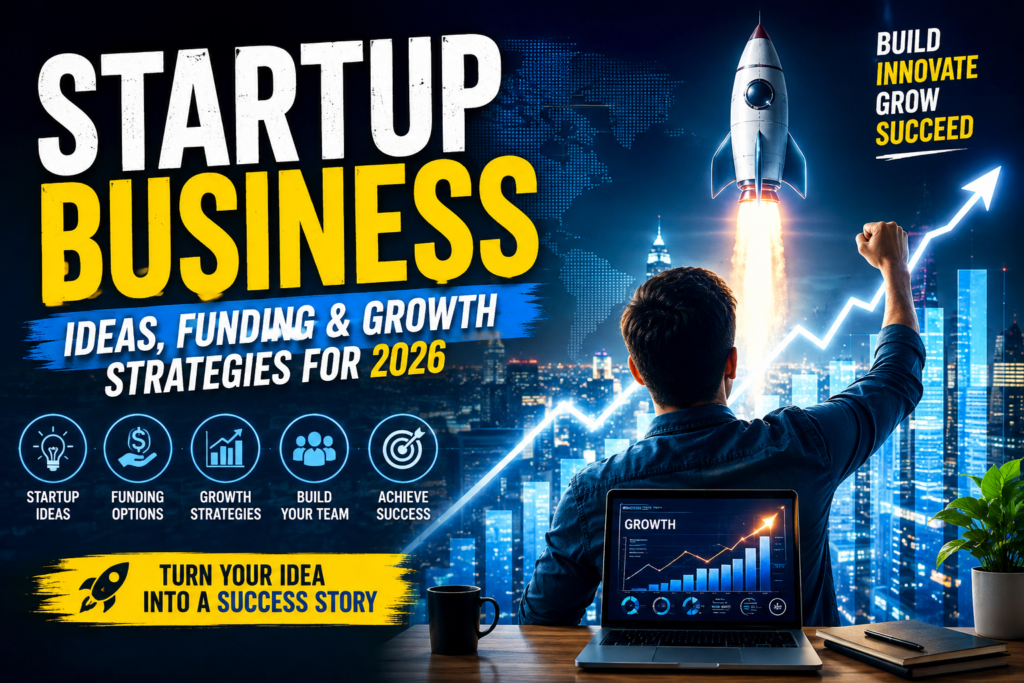
The world of entrepreneurship is changing rapidly. Technology, artificial intelligence, automation and digital platforms are creating new opportunities for entrepreneurs who want to build innovative companies. In 2026, starting a startup business can be easier than ever, but competition is also becoming stronger. Entrepreneurs need more than a good idea to succeed. They need market research, customer understanding, effective marketing, proper funding and a sustainable growth strategy.
Whether you are searching for startup ideas, planning your first business or looking for ways to grow an existing company, understanding the modern startup ecosystem can help you make smarter decisions.
Best Startup Ideas for Entrepreneurs in 2026
A successful startup usually begins by solving a genuine customer problem. Instead of developing a product first and looking for customers later, entrepreneurs should identify a problem, research the market and determine whether people are willing to pay for a better solution.
One of the biggest opportunities today is artificial intelligence. AI startups are developing solutions for customer service, marketing, sales, cybersecurity, data analysis and business automation. Entrepreneurs can create specialized AI products for particular industries instead of competing directly with large general-purpose technology companies.
Another attractive opportunity is software as a service. SaaS startups provide software through monthly or annual subscriptions. This business model can offer predictable recurring revenue and allow companies to serve customers in different markets without physical infrastructure.
Healthcare is another growing area. Healthcare startups are developing digital health platforms, patient-management software, telehealth solutions and wellness technology. Entrepreneurs entering healthcare should pay close attention to privacy, security and regulatory requirements.
Financial technology is also creating opportunities. Fintech startups are developing digital payment systems, financial management tools, lending platforms and other solutions for consumers and businesses. Because financial services are regulated, founders should understand the applicable laws before launching.
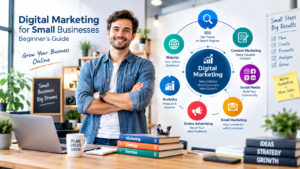
For entrepreneurs with smaller budgets, a small business startup can be an excellent starting point. Digital marketing agencies, consulting businesses, online education, niche eCommerce stores and specialized professional services can often be launched without the large capital requirements of traditional companies.
The first step in understanding how to start a startup business is therefore to identify a real problem. Ask what customers currently struggle with, how they solve the problem today and whether your proposed solution would provide enough value for them to switch.
Market research should come before significant investment. Entrepreneurs should study competitors, pricing, customer reviews, market demand and industry developments. This research can reveal gaps and opportunities that may not be obvious at first.
After validating the idea, founders can create a Minimum Viable Product, commonly called an MVP. An MVP allows entrepreneurs to test their concept with real customers before investing heavily in development.
Customer feedback should then guide future improvements. Early customers can identify weaknesses, suggest useful features and help founders understand what creates the most value.
A strong customer experience is particularly important for startups. Customers have many choices, so companies that provide fast communication, reliable products and effective support can build stronger relationships and increase customer loyalty.
Startup Funding and Marketing Strategies
Finding capital is one of the biggest challenges for many entrepreneurs. Startup funding can come from several sources, including personal savings, business revenue, angel investors, venture capital firms and crowdfunding.
Bootstrapping allows founders to use their own money and early revenue to finance the company. The major advantage is greater control because the founder does not immediately need to give investors an ownership stake.
Angel investors can provide capital to early-stage businesses while also offering industry experience and valuable business connections. This can be particularly useful for founders entering competitive markets.
Venture capital can help startups expand quickly. VC firms generally look for companies with scalable business models and significant growth potential. However, founders usually give up part of their ownership and may face strong expectations for rapid growth.
Crowdfunding provides another potential funding option. Entrepreneurs can use crowdfunding platforms to present their idea to a large audience and potentially raise money while testing market demand.
Regardless of the funding source, entrepreneurs need a clear startup strategy. Money alone does not create a successful company. Capital should be allocated carefully toward product development, customer acquisition, hiring, technology and operations.
Marketing is equally important. Even an excellent product can fail if potential customers do not know that it exists.
Content marketing can help startups educate potential customers and establish authority in their industry. Useful guides, tutorials, research, case studies and educational articles can attract people who are actively searching for solutions.
Search engine optimization can become an important part of a startup growth strategy. By creating useful content around customer questions and industry topics, startups can increase organic visibility and attract relevant traffic.
Social media is another useful channel. Platforms such as LinkedIn, YouTube, Facebook and Instagram can help entrepreneurs build brand awareness, communicate with potential customers and develop an engaged audience.
Digital PR can also support startup growth. Media coverage, expert interviews and editorial mentions can improve brand credibility while generating referral traffic and potential backlinks.
Startups should measure their marketing performance instead of relying on assumptions. Important metrics include website traffic, leads, conversion rates, customer acquisition costs, retention rates and customer lifetime value.
The goal should not simply be to generate more visitors. A strong startup should attract the right audience and convert that audience into loyal customers.
Startup Trends in 2026
Several important startup trends in 2026 are influencing the future of entrepreneurship.
Artificial intelligence remains one of the most significant trends. AI agents are increasingly being used to perform complex business tasks, automate workflows and support decision-making. This creates opportunities for entrepreneurs who can apply AI to specific industries and business problems.
Digital transformation is another major opportunity. Companies are adopting cloud platforms, automation, analytics and artificial intelligence to improve efficiency and customer service. Startups that simplify digital transformation for traditional businesses can potentially serve a large market.
Remote work has also changed the way startups operate. Entrepreneurs can build distributed teams and hire specialized professionals from different countries without requiring everyone to work from a single office.
Creator-led businesses are another growing area. Entrepreneurs can build audiences through newsletters, podcasts, videos, social media and online communities before monetizing their expertise through products, memberships, courses or professional services.
Customer experience will continue to be an important competitive advantage. Businesses that understand customer needs and provide convenient, personalized and reliable experiences can differentiate themselves from competitors.
Sustainability is also becoming increasingly important. Consumers and companies are paying greater attention to environmental impact, responsible production and efficient use of resources. Startups that provide practical solutions to sustainability challenges may benefit from growing demand.
However, entrepreneurs should avoid following every trend simply because it is popular. The most successful startups usually focus on a specific customer problem and use technology to create a practical solution.
Building a startup requires patience and continuous improvement. Founders need to test their assumptions, listen to customers, monitor competitors and adjust their strategy when market conditions change.
Ultimately, successful entrepreneurship is about creating genuine value. A great startup does not necessarily need to invent something completely new. It can succeed by making an existing process faster, cheaper, simpler or more convenient.
For entrepreneurs considering a new venture in 2026, the best approach is to identify a real problem, research the market, test the solution, build relationships with customers and develop a sustainable business model.
The startup journey can be challenging, but entrepreneurs who combine innovation with disciplined execution can create companies capable of achieving long-term growth.