
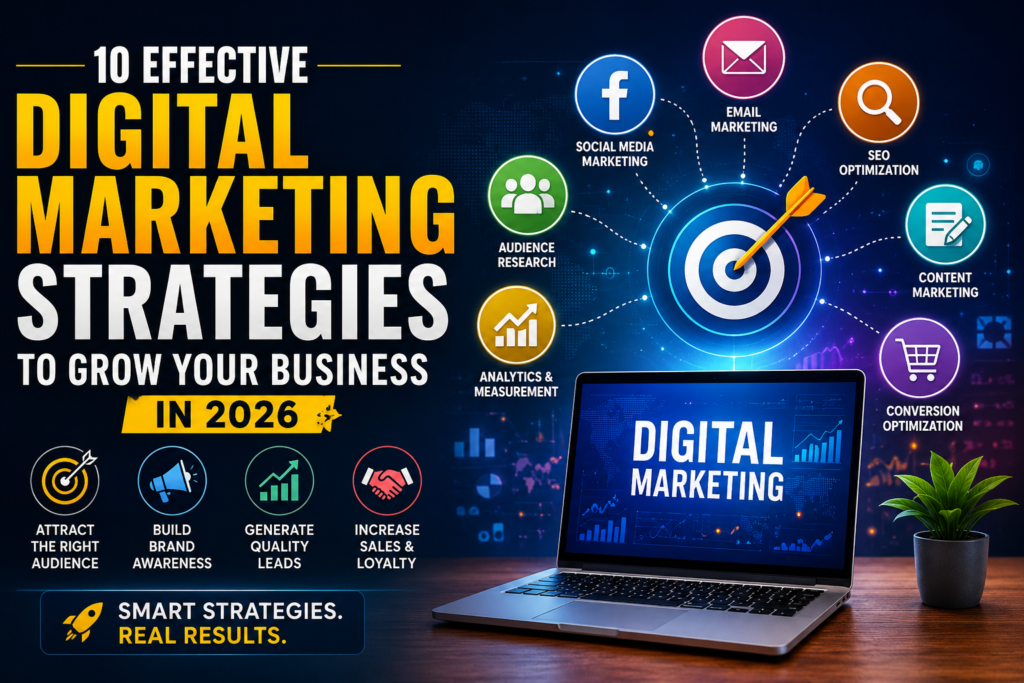
Marketing is one of the most important parts of building a successful business in today’s competitive digital environment. A great product or service can still struggle if potential customers cannot find it, understand its value, or trust the company behind it. Effective marketing helps businesses attract the right audience, build credibility, generate leads, increase sales, and develop long-term customer relationships.
The good news is that modern businesses do not always need huge advertising budgets to compete. A well-planned combination of search engine optimization, content marketing, social media, email marketing, website optimization, and customer engagement can create strong results over time. The key is to understand your audience and focus your resources on marketing channels that genuinely reach potential customers.
Whether you run a small business, startup, eCommerce store, professional service, or established company, the following marketing strategies can help strengthen your online presence and support sustainable business growth.
Build a Strong Digital Marketing Foundation
A successful marketing strategy begins with a strong digital foundation. Your website is often the first place potential customers visit after discovering your business, so it should clearly explain what you offer, who you serve, and why customers should choose you.
Start by identifying your target audience. Consider their needs, problems, interests, location, purchasing behavior, and the questions they search for online. This information can help you create a more focused marketing strategy instead of trying to reach everyone.
Search engine optimization should also be part of your foundation. SEO best practices can help search engines understand your website and make it easier for potential customers to discover your content through organic search.
Keyword research is important, but businesses should avoid filling pages with keywords simply to manipulate rankings. Instead, use relevant phrases naturally in page titles, headings, descriptions, URLs, and useful content. Google recommends creating helpful content for people rather than producing content primarily to manipulate search rankings.
If your website already contains useful articles about SEO, you can connect them using internal links such as SEO strategies, SEO tips, or search engine optimization. Internal links help visitors discover related information and can create a logical structure throughout your website.
Your website should also be fast, mobile-friendly, easy to navigate, and secure. Clear calls to action can guide visitors toward useful next steps, such as requesting information, contacting your business, subscribing to a newsletter, or making a purchase.
Content marketing should work alongside SEO. Create articles, guides, tutorials, industry explanations, checklists, and original insights that answer questions your audience actually has. People-first content is especially important because useful information can build trust while also giving search engines a better understanding of your website.
Businesses can also review Google Search Essentials to understand the fundamental technical requirements, spam policies, and recommended practices associated with appearing in Google Search.
Another important part of a strong digital foundation is measurement. Install analytics and connect your website with Google Search Console so you can monitor search visibility, queries, clicks, indexing, and other useful performance information.
Use Content, Social Media, Email, and Paid Marketing Together
Once your digital foundation is ready, the next step is to consistently attract and engage your target audience.
Content marketing is one of the most effective ways to demonstrate expertise. Instead of publishing content only when you want to promote a product, create resources that help your audience make better decisions.
For example, a marketing website could publish articles about content marketing, social media marketing, lead generation, online advertising, and business growth strategies. A technology company could publish software guides, industry trends, tutorials, and comparisons. A local business could create location-specific guides and answers to common customer questions.
When writing articles, make each piece useful on its own. Avoid producing large amounts of repetitive content simply because you believe publishing frequently will automatically improve rankings. Quality, relevance, originality, and usefulness should remain the priority.
Social media can then amplify your content. Share important articles, short educational posts, statistics, customer stories, videos, industry opinions, and practical tips. Choose platforms according to your audience rather than trying to maintain every social media account available.
LinkedIn can be particularly useful for B2B businesses, consultants, agencies, technology companies, and professional services. Instagram and TikTok may be more effective for visually focused consumer brands, while Facebook can remain useful for local businesses and community-based marketing.
Consistency matters more than posting excessively. A realistic schedule that your business can maintain is better than publishing heavily for a few weeks and then disappearing.
Email marketing provides another direct communication channel. Encourage visitors to subscribe by offering something useful, such as a newsletter, checklist, industry report, discount, or free guide. Once someone joins your email list, provide valuable information rather than sending constant promotional messages.
A good email campaign can include educational content, company news, product updates, useful resources, and carefully selected offers. Segmenting your audience can make campaigns more relevant because different customers may have different needs.
Paid advertising can also complement organic marketing. Google Ads, LinkedIn Ads, Facebook Ads, Instagram Ads, and other platforms can help businesses reach specific audiences quickly. However, advertising should be measured carefully.
Before launching a campaign, establish a clear objective. Are you trying to generate leads, increase sales, drive website traffic, promote a product, or build brand awareness? Track conversions and compare the results with your advertising costs.
Businesses should also test different headlines, images, offers, landing pages, and calls to action. Small improvements can have a significant effect when campaigns receive thousands of impressions or clicks.
The strongest marketing systems combine these channels instead of depending on only one. For example, you might publish an SEO-focused article, share it on social media, promote it through email, and use paid advertising to reach a highly targeted audience.
This approach also creates opportunities for internal linking. If your website has a relevant article about social media marketing, content strategy, digital advertising, or business growth, link to it naturally from new content.
External references can also strengthen an article when they provide useful supporting information. Use descriptive anchor text such as SEO best practices, Google Search Console, and people-first content rather than placing links randomly.
Measure Results, Build Trust, and Improve Continuously
Marketing becomes much more effective when decisions are based on real performance data.
Businesses should regularly monitor website traffic, search impressions, clicks, rankings, engagement, leads, conversions, and revenue. These metrics help identify which strategies are actually producing results.
For SEO, Google Search Console can provide valuable information about how your pages appear in Google Search. You can identify queries that generate impressions, pages receiving clicks, indexing issues, and opportunities for improvement.
Do not judge an SEO strategy only by rankings. A keyword ranking highly but generating no relevant traffic may be less valuable than a lower-volume keyword that consistently produces qualified customers.
Customer feedback is another important source of information. Reviews, surveys, emails, social media comments, and direct conversations can reveal what customers appreciate and where your business needs improvement.
Building trust should be a central marketing objective. Display genuine customer reviews, case studies, testimonials, author information, company details, contact information, and other credibility signals where appropriate.
Avoid fake reviews, exaggerated claims, misleading headlines, and promises that your business cannot fulfill. Short-term attention is not worth damaging long-term credibility.
Your content should also clearly communicate who created it and why readers should trust the information. When appropriate, include an author bio, relevant experience, sources, references, and links to supporting information.
Another important part of long-term marketing is updating existing content. Review older articles and improve outdated information, broken links, weak explanations, images, headings, and internal links when necessary. However, do not change dates or rewrite pages merely to make them appear fresh without meaningful improvements.
Internal linking should also be reviewed regularly. When you publish a new article, look through your older relevant posts and add links where they genuinely help readers. For example, if you publish a new marketing guide, you could connect it with existing articles using anchor phrases such as digital marketing, SEO techniques, business growth, content marketing, or online marketing strategies.
External links should be used selectively. Link to authoritative sources when they add evidence, definitions, official guidance, statistics, or additional information. Avoid adding unnecessary external links simply to make an article look more optimized.
Ultimately, successful marketing is not about finding one secret technique that instantly produces customers. It is about building a system that consistently attracts the right audience, provides useful information, earns trust, and turns attention into meaningful business results.
A business that combines SEO, useful content, social media, email marketing, paid advertising, website optimization, reputation management, and data analysis can create a stronger foundation for sustainable growth.
The most important principle is to put the customer first. Understand what your audience needs, answer their questions clearly, provide genuine value, and make it easy for them to take the next step. When marketing is built around helping people rather than simply chasing rankings or clicks, businesses can develop stronger brands, better customer relationships, and more sustainable online growth.