
Digital technology is becoming an increasingly important part of modern healthcare. Hospitals, clinics, public-health organizations, researchers, and patients are using digital tools to manage information, communicate with healthcare professionals, monitor health, and support healthcare operations.
The World Health Organization (WHO) has extended its Global Strategy on Digital Health through 2027, reflecting the continued importance of digital transformation in health systems. The strategy emphasizes areas including interoperability, data sharing, digital health governance, and responsible use of emerging technologies.
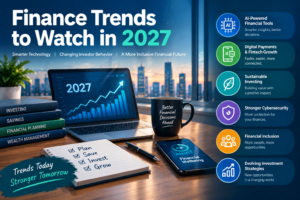
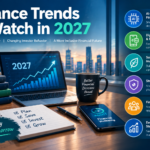
As 2027 approaches, several areas are worth watching. These trends should not be viewed as guarantees about how healthcare will develop. Adoption will vary by country, healthcare system, available infrastructure, regulation, funding, and the needs of patients and healthcare professionals.
1. AI, Connected Care, and More Personalized Digital Health
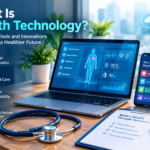
One of the most closely watched areas is digital health, which covers a broad range of technologies used to support healthcare delivery, health information, communication, monitoring, and decision-making.
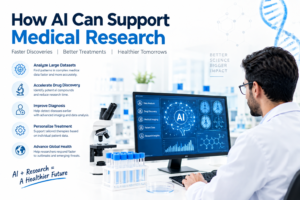
Artificial intelligence is likely to remain an important area of digital-health development. WHO describes AI as already having applications across areas such as diagnosis and clinical care, drug development, disease surveillance, outbreak response, and health-system management. At the same time, WHO emphasizes the need for governance, safety, equity, evidence, and ethical implementation.
In 2027, attention may increasingly move from simply experimenting with AI to understanding how these systems can be responsibly integrated into existing healthcare workflows.
Possible applications include:
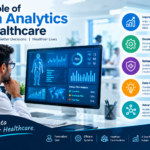
- Supporting analysis of large health datasets
- Assisting with medical imaging and information processing
- Supporting administrative documentation
- Helping researchers identify patterns in health data
- Improving health-system planning
- Supporting communication and information management
The role of AI should remain complementary to qualified healthcare professionals. Digital tools do not remove the need for clinical judgment, professional accountability, appropriate validation, or patient communication.
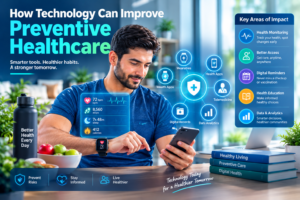
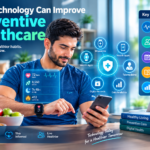
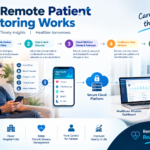
Another area to watch is remote patient monitoring. Connected devices can collect health-related information outside traditional clinical settings and transmit relevant data to healthcare systems or professionals. This can support ongoing monitoring in appropriate circumstances, although the usefulness of any device depends on its accuracy, clinical context, integration, and regulatory requirements.
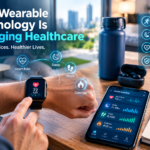
Wearable devices and connected health technologies may also become more integrated with broader digital-health systems. Instead of operating as isolated consumer products, some technologies may increasingly connect with healthcare platforms and patient records where appropriate standards and safeguards exist.
Personalization is another important theme. Digital systems can process different types of information and potentially support more individualized healthcare workflows. However, personalization requires high-quality data, appropriate governance, privacy protections, and careful evaluation to avoid inaccurate or biased outputs.
2. Interoperability, Health Data Governance, and Digital Infrastructure
The future of digital healthcare depends not only on new applications but also on whether different systems can communicate effectively.
Interoperability is therefore likely to remain a major healthcare technology priority in 2027. WHO identifies interoperability and data sharing as important elements of digital-health development. Its SMART Guidelines work also uses standards-based approaches designed to help digital systems exchange information and implement health recommendations consistently.
In practical terms, interoperability means that relevant information can move between compatible systems in a structured and useful way. This can matter when a patient interacts with different healthcare providers, laboratories, pharmacies, hospitals, or public-health systems.
Standards such as HL7 FHIR are part of the broader interoperability landscape. WHO describes FHIR as an open data-exchange standard that supports interoperability across patient-centered healthcare applications.
Another important area is health data governance. As healthcare organizations collect and process larger amounts of information, they need appropriate policies for how data is collected, stored, shared, accessed, protected, and used.
WHO notes that effective health-data governance supports interoperability, data quality, evidence-informed decision-making, and responsible use of AI. It also highlights the importance of ensuring that data used for AI is ethically sourced, representative, and appropriately governed.
This means that digital-health progress is not simply about buying new software. Healthcare organizations may also need suitable infrastructure, trained personnel, clear policies, compatible standards, and reliable data-management processes.
Digital infrastructure will be particularly important in regions where connectivity, technical capacity, and access to digital services remain uneven. WHO’s digital-health strategy emphasizes that digital transformation should be designed to support equitable access rather than deepen existing gaps.
3. Cybersecurity, Responsible AI, and Patient-Centered Digital Care
As more healthcare information moves through digital systems, cybersecurity and privacy will remain central concerns.
Healthcare organizations manage highly sensitive information, while their digital environments can include electronic health records, cloud systems, mobile applications, connected medical devices, web applications, and AI systems. WHO’s 2025 cybersecurity guidance highlights the need to assess and strengthen security and privacy across digital-health information systems.
In 2027, healthcare organizations may place greater emphasis on:
- Cybersecurity risk assessments
- Access controls
- Data protection
- Secure information transmission
- Monitoring and incident response
- Privacy policies
- Staff cybersecurity awareness
- Security of connected medical devices
Cybersecurity should be treated as part of digital-health planning rather than something added after a system has already been deployed.
Responsible AI is another major issue. WHO has emphasized that the rapid development of AI can move faster than legal and regulatory frameworks. Its approach focuses on safety, equity, governance, evidence, and ethical practices.
This suggests that future healthcare technology discussions will increasingly include questions such as:
- How was an AI system evaluated?
- What data was used to develop it?
- How is privacy protected?
- How are errors identified?
- Who remains accountable for decisions?
- Can the system work fairly across different populations?
- How is human oversight maintained?
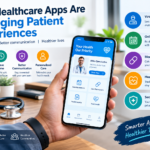
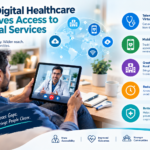
Finally, patient-centered digital care will remain important. Technology should not be adopted simply because it is new. Its practical value depends on whether it addresses genuine healthcare needs and can be used safely and effectively.
Digital services should therefore consider accessibility, usability, patient privacy, digital literacy, language, connectivity, and the needs of people who may have limited access to technology.
Conclusion
digital health trends to watch in 2027 include the responsible development of AI, connected monitoring, interoperability, health-data governance, stronger cybersecurity, and more patient-centered digital services.
The direction of digital healthcare will depend on more than technological innovation. Healthcare organizations will also need reliable infrastructure, appropriate standards, skilled professionals, responsible governance, privacy protections, and evidence-based implementation.
For patients and healthcare professionals, the most important question is not simply which technology is newest. It is whether a digital solution is safe, useful, accessible, appropriately evaluated, and capable of supporting better healthcare without compromising privacy or trust.
This article is intended for general educational and informational purposes. It does not provide medical diagnosis, treatment, or individualized healthcare advice.