
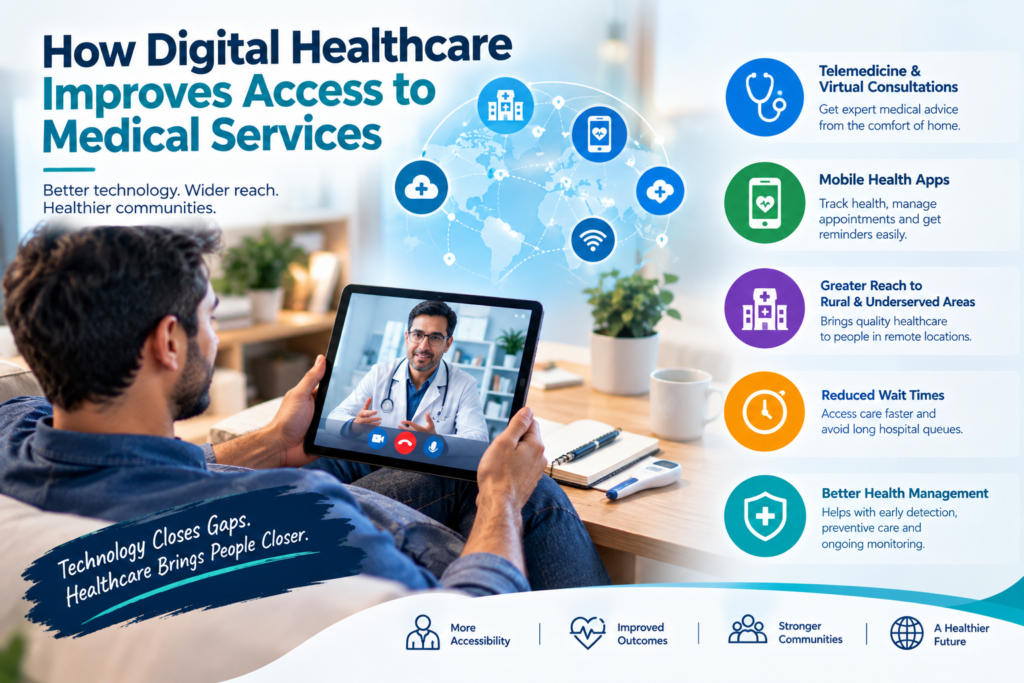
Digital technology is changing how people interact with healthcare systems. Instead of depending entirely on physical visits to hospitals and clinics, patients can increasingly use digital tools for appointments, communication, health information, remote consultations, records, and other healthcare services.
This shift can be particularly useful for people who live far from healthcare facilities, have mobility limitations, face transportation challenges, or need access to services that may not be available locally. However, digital healthcare is not a replacement for every form of medical care. Its value depends on appropriate technology, reliable infrastructure, trained healthcare professionals, privacy protections, and equal access.
The World Health Organization (WHO) describes digital health as an important part of strengthening health systems and supporting equitable access to quality health services.
1. How Digital Healthcare Makes Medical Services More Accessible
One of the main advantages of digital healthcare is that it can reduce some of the physical and geographical barriers associated with traditional healthcare delivery.
A person living in a rural or underserved area may have limited access to specialists or healthcare facilities. Digital services can sometimes allow that person to communicate with healthcare professionals remotely, depending on the available infrastructure, local regulations, the type of service required, and the patient’s individual circumstances.
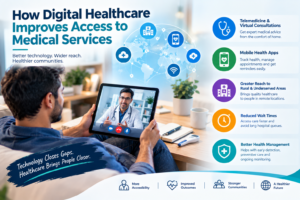
Telehealth is one example. It can support remote communication between patients and healthcare professionals through video consultations, telephone services, secure messaging, and other approved communication methods. These services can make certain types of healthcare interaction more convenient when an in-person visit is not necessary.
Another important benefit is reduced travel requirements. Patients may not need to travel long distances for every follow-up conversation, appointment-related communication, or routine service that can appropriately be handled remotely.
Digital appointment systems can also make access more organized. Patients may be able to request appointments, receive reminders, review schedules, or communicate with healthcare facilities through digital platforms.
For people with mobility limitations, remote healthcare services may provide additional convenience. Accessibility can also improve when digital platforms are designed according to recognized accessibility standards. WHO and the International Telecommunication Union have published a global standard specifically addressing accessibility of telehealth services for people with disabilities.
Digital healthcare can also improve access to health information. Reliable digital resources can help people understand general health topics, healthcare services, prevention, and when professional medical advice may be appropriate.
However, health information found online varies greatly in quality. Patients should use credible medical and public-health sources and should not treat online information as a substitute for individualized medical evaluation.
2. Digital Tools That Can Improve Access to Healthcare
Several types of digital tools can contribute to better healthcare access when they are properly implemented.
Telehealth services allow healthcare professionals to communicate with patients without requiring every interaction to take place inside a clinic. Depending on the service and local rules, telehealth may support consultations, follow-up communication, health education, and some forms of ongoing care.
Electronic health records can also support continuity. When authorized healthcare professionals can securely access relevant patient information, they may have a clearer view of previous consultations, test results, medications, allergies, and other relevant information.
Remote monitoring technologies can support healthcare teams by collecting selected health information outside traditional clinical settings. These systems may be particularly useful for certain patients who require ongoing monitoring, although they should be used under appropriate professional guidance.
Mobile health applications provide another route for interacting with health services. Depending on the application, they may support appointment management, reminders, communication, educational resources, or tracking of selected health information.
Digital systems can also improve communication between healthcare organizations. Better information exchange can reduce unnecessary duplication and help different parts of a healthcare system coordinate services.
The WHO’s digital health strategy emphasizes the importance of integrated systems, governance, infrastructure, workforce capacity, and human-centred approaches rather than treating digital health as simply a collection of apps or devices.
This distinction is important. Technology by itself does not guarantee better healthcare access. A digital service is useful only when people can actually access it, understand how to use it, trust it, and receive appropriate support through it.
3. Challenges, Digital Equity and the Future of Healthcare Access
Although digital healthcare can remove certain barriers, it can also create new ones.
The most important concern is digital health equity. People without reliable internet access, suitable devices, digital skills, accessible platforms, or adequate language support may not benefit equally from digital healthcare.
WHO/Europe reported in 2026 that people with greater health needs and language barriers can face difficulties using digital health services because of limited access, low digital literacy, and services that are not sufficiently adapted to diverse needs.
This means healthcare organizations need to consider both technology and inclusion.
Privacy and security are also essential. Healthcare services involve sensitive personal information, so digital systems need appropriate safeguards, access controls, governance, and security practices.
Accessibility should be considered from the beginning of platform development. Digital healthcare services should be designed to accommodate people with disabilities and different levels of digital literacy.
Another challenge is that not every healthcare situation is suitable for remote services. Some conditions require physical examination, diagnostic testing, emergency intervention, procedures, or other forms of in-person care. Digital healthcare should therefore complement appropriate clinical services rather than being presented as a universal replacement for physical healthcare.
Healthcare professionals also need appropriate training to use digital systems effectively. Poorly implemented technology can create additional administrative work, communication problems, or fragmented services instead of improving access.
The future of digital healthcare is likely to depend on combining technology with strong healthcare systems and patient-centred design. Governments, healthcare organizations, technology providers, and professionals will need to work together to improve interoperability, accessibility, privacy, digital literacy, and infrastructure.
Conclusion
Digital healthcare can improve access to medical services by reducing geographical barriers, supporting remote communication, improving access to information, simplifying some administrative processes, and helping healthcare organizations coordinate services.
At the same time, technology should not be treated as a complete solution to healthcare access. Reliable infrastructure, professional oversight, privacy, accessibility, affordability, and digital literacy remain important.
A strong digital healthcare system should ultimately make healthcare easier to access without creating new barriers for people who are already underserved. The most useful approach is one that combines appropriate technology with human-centred healthcare and maintains in-person services where they are clinically necessary.
Editorial Disclaimer: This article is for general educational and informational purposes only. It does not provide medical diagnosis, treatment, or individualized medical advice. Healthcare decisions should be discussed with a qualified healthcare professional.