
Introduction
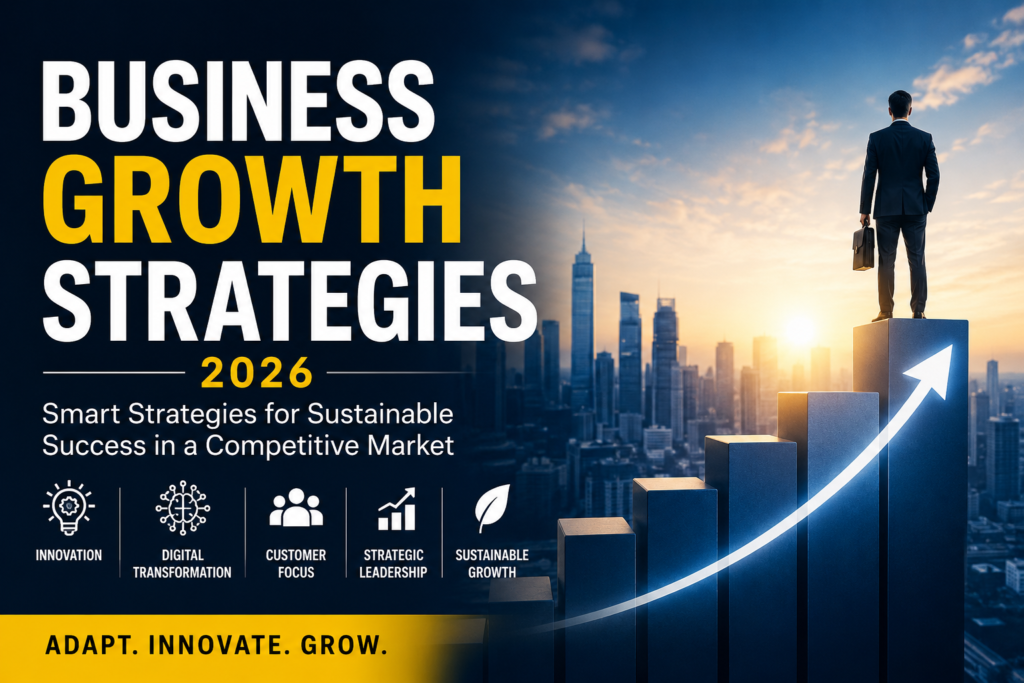
The global business environment is changing at an unprecedented pace. New technologies, shifting consumer expectations, economic uncertainty, and increasing competition are forcing companies to rethink their growth strategies. In 2026, businesses can no longer rely solely on traditional methods to achieve success. Instead, they must embrace innovation, digital transformation, and customer-focused strategies to remain competitive.
Whether you run a startup, a small business, or a large enterprise, understanding the latest business growth strategies is essential for long-term success. Companies that adapt quickly to market changes are more likely to increase revenue, strengthen customer loyalty, and achieve sustainable growth.
This article explores the most effective business strategies that organizations can implement in 2026 to stay ahead of competitors and capitalize on emerging opportunities.
Embracing Digital Transformation and Innovation for Business Success
Digital transformation has become one of the most important factors influencing business growth. Organizations across industries are investing heavily in technology to improve efficiency, reduce costs, and enhance customer experiences. Businesses that fail to modernize their operations risk losing market share to more innovative competitors.
One of the most significant developments in recent years is the adoption of artificial intelligence (AI). AI-powered tools are helping businesses automate repetitive tasks, analyze large amounts of data, and improve decision-making processes. From customer service chatbots to predictive analytics platforms, artificial intelligence is transforming how companies operate.
Cloud computing is another critical component of digital transformation. Cloud-based solutions allow businesses to store data securely, collaborate remotely, and scale operations more efficiently. As remote and hybrid work models continue to grow, cloud technology has become an essential business investment.
Automation is also reshaping industries worldwide. Businesses are automating administrative tasks, inventory management, marketing campaigns, and customer communications. This not only reduces operational costs but also allows employees to focus on higher-value activities that contribute to growth and innovation.
Innovation extends beyond technology. Successful businesses continuously evaluate their products, services, and processes to identify areas for improvement. Companies that encourage creative thinking and experimentation are often better equipped to respond to market changes and customer demands.
Furthermore, data-driven decision-making is becoming increasingly important. Modern businesses collect vast amounts of information about customer behavior, purchasing patterns, and market trends. By analyzing this data effectively, organizations can make smarter decisions, optimize marketing efforts, and identify new revenue opportunities.
Investing in digital transformation is no longer optional. It is a fundamental requirement for businesses that want to remain competitive in today’s rapidly evolving marketplace. Organizations that embrace technology and innovation position themselves for sustainable growth and long-term success.
Building Strong Customer Relationships and Brand Authority
Customer relationships are the foundation of every successful business. While acquiring new customers remains important, retaining existing customers often generates greater profitability. Studies consistently show that loyal customers spend more, refer others, and contribute significantly to long-term business growth.
One of the most effective ways to strengthen customer relationships is by delivering exceptional customer experiences. Modern consumers expect fast responses, personalized interactions, and seamless experiences across multiple channels. Businesses that consistently meet these expectations are more likely to build trust and loyalty.
Personalization has become a powerful competitive advantage. Customers appreciate brands that understand their needs and provide relevant recommendations. Businesses can use customer data to personalize email campaigns, product suggestions, and marketing messages, creating more meaningful connections with their audience.
Content marketing continues to play a crucial role in building brand authority. Publishing high-quality articles, guides, case studies, and industry insights helps businesses establish credibility and attract organic traffic through search engines. Companies that consistently create valuable content position themselves as trusted experts within their industries.
Search engine optimization (SEO) remains one of the most cost-effective digital marketing strategies. By targeting relevant business keywords, optimizing website content, and improving user experience, businesses can increase visibility in search results and attract qualified leads. A strong SEO strategy can generate consistent traffic and reduce dependence on paid advertising.
Social media platforms also provide valuable opportunities to engage with customers and strengthen brand awareness. Businesses can use social media to share updates, answer customer questions, showcase products, and build communities around their brands. Consistent engagement helps foster trust and encourages customer loyalty.
Transparency and authenticity are increasingly important in today’s business environment. Consumers prefer brands that communicate openly, demonstrate integrity, and provide genuine value. Businesses that prioritize honesty and customer satisfaction often enjoy stronger reputations and higher retention rates.
Building strong customer relationships requires continuous effort, but the rewards are substantial. Companies that focus on customer experience, content marketing, SEO, and authentic communication create a solid foundation for sustainable business growth.
Future-Proofing Your Business Through Strategic Leadership and Adaptability
The ability to adapt is one of the defining characteristics of successful businesses. Market conditions, consumer preferences, and technological advancements can change rapidly, making adaptability essential for long-term survival.
Effective leadership plays a critical role in navigating uncertainty. Modern business leaders must be capable of making informed decisions, managing change, and inspiring teams to embrace innovation. Leadership today requires more than operational expertise; it demands strategic thinking, emotional intelligence, and a willingness to learn continuously.
One of the most important aspects of future-proofing a business is workforce development. Employees are a company’s greatest asset, and investing in their skills can significantly improve organizational performance. Businesses that provide training opportunities and encourage professional growth are better positioned to adapt to changing market demands.
Remote and hybrid work models continue to reshape the workplace. Companies that offer flexibility often attract top talent and improve employee satisfaction. At the same time, businesses must implement effective communication systems and performance management practices to maintain productivity.
Sustainability is another major factor influencing business success. Consumers, investors, and stakeholders increasingly expect companies to operate responsibly. Businesses that adopt environmentally friendly practices, reduce waste, and support social initiatives often strengthen their reputation and gain a competitive advantage.
Risk management has become more important than ever. Economic fluctuations, cybersecurity threats, supply chain disruptions, and regulatory changes can significantly impact business operations. Organizations that proactively identify risks and develop contingency plans are better prepared to overcome challenges.
Diversification is also an effective strategy for long-term stability. Businesses that rely heavily on a single product, service, or market may face greater vulnerability during periods of disruption. Expanding revenue streams and exploring new opportunities can help reduce risk and improve resilience.
Ultimately, future-proofing a business requires a commitment to continuous improvement. Organizations that embrace change, invest in their workforce, prioritize sustainability, and maintain strategic flexibility are more likely to thrive in an increasingly competitive global marketplace.
Conclusion
Business success in 2026 will depend on an organization’s ability to innovate, build strong customer relationships, and adapt to changing market conditions. Digital transformation, artificial intelligence, content marketing, customer experience, and strategic leadership are no longer optional—they are essential components of sustainable growth.
Companies that invest in technology, prioritize customer satisfaction, and foster a culture of innovation will be better positioned to navigate future challenges and seize emerging opportunities. As competition continues to intensify, businesses that remain agile, data-driven, and customer-focused will stand out as industry leaders.
The future belongs to organizations that embrace change rather than resist it. By implementing these proven business growth strategies, companies can strengthen their market position, increase profitability, and achieve long-term success in the years ahead.