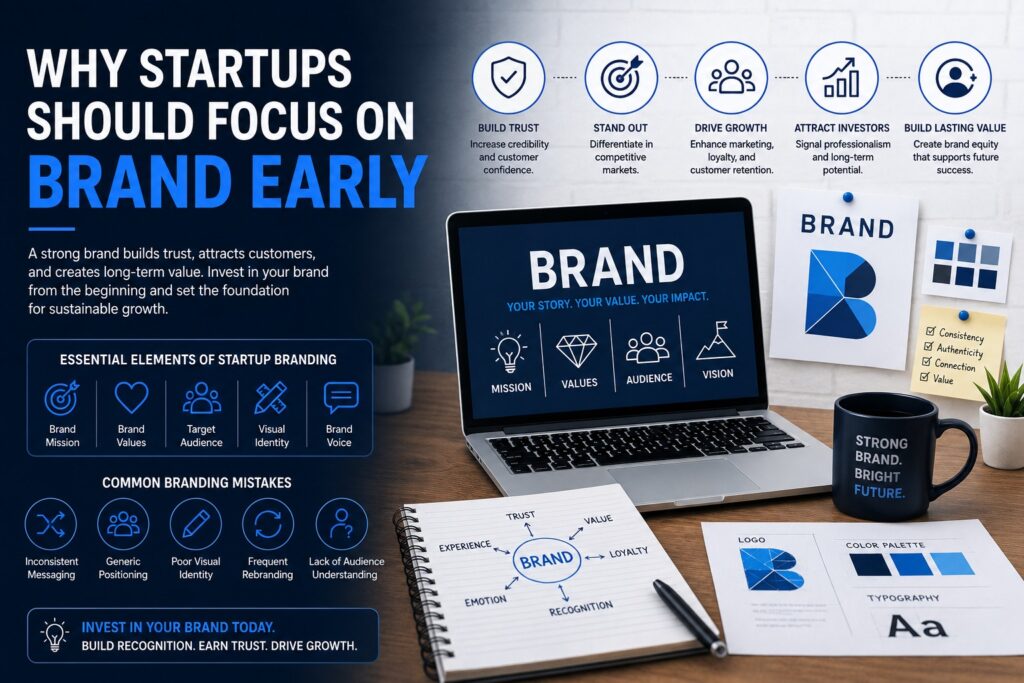

Many startup founders prioritize product development, customer acquisition, and fundraising during the early stages of growth. While these areas are undoubtedly important, branding is often overlooked until much later.
This can be a costly mistake.
A strong brand is more than just a logo or a company name. It represents how customers perceive a business, what it stands for, and why people should trust it. In today’s competitive marketplace, startups that invest in branding early often gain a significant advantage over competitors.
Building a brand from the beginning helps startups establish credibility, attract customers, secure partnerships, and create long-term business value.
What Is a Brand?
A brand is the complete perception people have about a company.
It includes:
- Company name
- Logo and visual identity
- Messaging and communication style
- Customer experience
- Reputation
- Values and mission
Every interaction a customer has with a business contributes to the overall brand perception.
Strong brands create emotional connections that influence purchasing decisions and customer loyalty.
Why Branding Matters for Startups
New businesses often face a common challenge: lack of trust.
Potential customers may not be familiar with the company, its products, or its track record.
A professional and consistent brand helps overcome this challenge by creating confidence and credibility.
Strong branding can:
- Increase customer trust
- Improve recognition
- Differentiate from competitors
- Support marketing efforts
- Attract investors
- Encourage customer loyalty
For startups, branding serves as a foundation that supports future growth.
First Impressions Matter
Customers often form opinions within seconds of discovering a business.
A startup’s website, logo, social media presence, and messaging all contribute to that first impression.
Professional branding communicates:
- Reliability
- Expertise
- Quality
- Consistency
A weak or inconsistent brand may cause potential customers to question the legitimacy of the business.
Investing in branding early helps startups create a positive first impression from day one.
Standing Out in Competitive Markets
Most industries today are highly competitive.
Customers have access to countless alternatives, making differentiation essential.
Branding helps startups communicate:
- What makes them unique
- Why their solution is valuable
- How they solve customer problems
A clear brand position allows businesses to occupy a distinct place in the minds of customers.
When customers remember a brand, they are more likely to choose it over competitors.
Building Trust Faster
Trust is one of the most valuable assets a startup can develop.
People are more likely to buy from companies they recognize and trust.
Brand consistency across all channels helps strengthen credibility.
This includes:
- Website design
- Content marketing
- Customer service
- Social media communication
- Advertising campaigns
Consistent experiences reinforce trust and make customers more comfortable engaging with the business.
Supporting Marketing Success
Marketing and branding work together.
Without a clear brand, marketing campaigns often become less effective.
Strong branding improves:
- Advertisement performance
- Website conversions
- Social media engagement
- Customer retention
- Referral marketing
When customers understand a company’s identity and values, marketing messages become more memorable and impactful.
This can reduce customer acquisition costs and improve overall marketing efficiency.
Creating Emotional Connections
Many purchasing decisions are influenced by emotions rather than logic alone.
Successful brands connect with customers on a deeper level.
Examples include:
- Innovation
- Reliability
- Sustainability
- Simplicity
- Community
When customers identify with a brand’s values, they are more likely to remain loyal and recommend the business to others.
These emotional connections often become a key driver of long-term growth.
Attracting Investors and Partners
Investors evaluate more than just financial projections and business models.
A strong brand signals:
- Professionalism
- Market awareness
- Long-term vision
- Growth potential
Investors often view branding as evidence that a startup understands its audience and competitive landscape.
Similarly, strategic partners are more likely to collaborate with businesses that have a credible and recognizable market presence.
Recruiting Top Talent
Branding does not only influence customers.
It also affects hiring and employee retention.
Talented professionals often prefer working for organizations with:
- Clear missions
- Strong reputations
- Positive cultures
- Meaningful values
A compelling employer brand can help startups attract skilled employees even when competing against larger companies.
Strong teams contribute directly to business success.
Establishing Long-Term Value
Products and services may evolve over time, but strong brands often endure.
Many successful companies have expanded into new markets because customers trust their brand.
Brand equity creates long-term value by:
- Increasing customer loyalty
- Supporting premium pricing
- Strengthening market position
- Improving business resilience
Startups that invest early in brand development can build assets that continue generating value for years.
Essential Elements of Startup Branding
Brand Mission
Define why the company exists beyond generating revenue.
Brand Values
Identify principles that guide business decisions and customer interactions.
Target Audience
Understand who the ideal customers are and what matters most to them.
Visual Identity
Develop a professional logo, color palette, typography, and design system.
Brand Voice
Establish a consistent communication style across all channels.
Together, these elements create a cohesive and memorable brand experience.
Common Branding Mistakes Startups Make
Many startups delay branding efforts or make avoidable mistakes.
Common issues include:
- Inconsistent messaging
- Generic positioning
- Poor visual identity
- Frequent rebranding
- Lack of audience understanding
These mistakes can confuse customers and weaken brand recognition.
A strategic approach to branding helps avoid these challenges.
Leveraging Content to Build Brand Authority
Content marketing is one of the most effective ways to strengthen a startup brand.
Publishing valuable content such as:
- Industry insights
- Educational articles
- Case studies
- Research reports
- Expert opinions
helps establish credibility and demonstrate expertise.
Over time, consistent content creation positions the startup as a trusted authority within its industry.
The Role of Digital Presence
Today’s customers often encounter brands online before interacting with them directly.
A strong digital presence should include:
- Professional website
- Active social media profiles
- Search engine visibility
- Consistent branding across platforms
Digital channels provide startups with opportunities to reach larger audiences and reinforce brand recognition.
Conclusion
Branding is not a luxury reserved for large corporations. It is a critical growth asset that startups should develop from the very beginning.
A strong brand helps businesses build trust, differentiate themselves, attract customers, secure investment, and create lasting value. While product development and sales are essential, branding provides the foundation that supports sustainable growth.
Startups that invest in branding early are often better positioned to compete, scale, and succeed in increasingly crowded markets.
As competition continues to intensify across industries, building a recognizable and trusted brand may become one of the most important investments a startup can make.