
Why Business Is Changing Faster Than Ever
Business in 2026 is not the same as it was even a few years ago. Technology, automation, artificial intelligence, and global connectivity have completely reshaped how companies operate, compete, and grow. Today, businesses are no longer limited by geography or traditional models—they are digital, scalable, and highly data-driven.
One of the biggest shifts in modern business is the move from physical-first operations to digital-first ecosystems. Companies now rely heavily on online platforms, cloud systems, and digital marketing channels to reach customers. Even traditional industries like retail, manufacturing, and services are adopting digital transformation to stay competitive.
Customers have also changed. They are more informed, more selective, and more demanding than ever before. Before making a purchase, they research brands, compare options, read reviews, and analyze credibility. This means businesses must focus not only on selling products but also on building trust and authority.
Another major factor is artificial intelligence. AI tools are helping businesses automate processes, analyze data, predict customer behavior, and optimize decision-making. From customer service chatbots to predictive analytics in marketing, AI is becoming an essential part of business operations.
At the same time, competition has increased globally. Small businesses can now compete with large corporations if they have strong branding, smart marketing, and efficient systems. This has created a more level playing field, but it also means businesses must constantly innovate to stay relevant.
In this environment, success depends on adaptability, digital presence, and customer-centric thinking. Businesses that fail to evolve often struggle to survive, while those that embrace change continue to grow rapidly.
Key Strategies for Building a Successful Modern Business
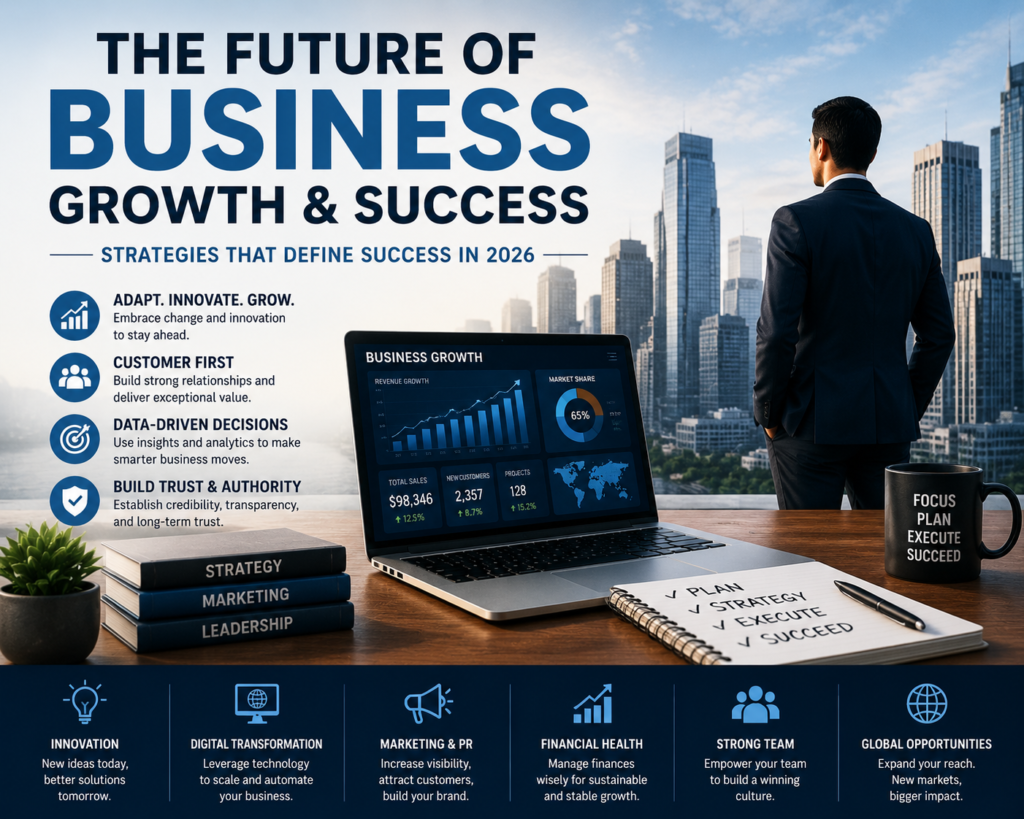
Building a successful business today requires a combination of strategy, execution, and consistency. It is no longer enough to simply have a good product or service. Businesses must focus on visibility, positioning, and long-term value creation.
One of the most important strategies is digital marketing. Search Engine Optimization (SEO), content marketing, social media engagement, and digital PR all play a critical role in attracting and converting customers. Businesses that rank on search engines or appear in trusted media outlets automatically gain more credibility and traffic.
Brand authority is another essential factor. Customers trust businesses that appear in reputable publications, receive positive reviews, and maintain a strong online presence. This is why digital PR and backlink strategies are becoming increasingly important for business growth.
Customer experience is equally important. A business that provides excellent service, fast response times, and smooth user experience will always outperform competitors who neglect customer satisfaction. Happy customers not only return but also recommend the business to others, creating organic growth.
Financial management is another key pillar. Many businesses fail not because they lack customers, but because they cannot manage cash flow, expenses, and investments effectively. Smart budgeting, forecasting, and financial planning are essential for long-term stability.
Innovation also plays a major role. Businesses must continuously improve their products, services, and processes to stay ahead of competitors. This can include adopting new technologies, exploring new markets, or improving internal systems.
Data-driven decision-making has become a standard practice. Businesses now rely on analytics tools to understand customer behavior, track performance, and optimize marketing campaigns. Decisions based on data are more accurate and lead to better outcomes compared to guesswork.
The Future of Business: Trends That Will Shape Tomorrow
The future of business is being shaped by several powerful trends that are redefining how companies operate and grow.
Artificial intelligence will continue to be one of the biggest drivers of change. AI will not only automate tasks but also help businesses make smarter decisions, personalize customer experiences, and predict market trends with higher accuracy.
Generative AI and AI search systems are also changing how customers find information. Instead of relying only on traditional search engines, users now interact with AI tools that recommend businesses, services, and solutions. This means businesses must optimize their visibility for both search engines and AI platforms.
Remote and hybrid work models are becoming the norm. Businesses are no longer restricted to hiring locally. They can now build global teams, access top talent worldwide, and operate more efficiently using digital collaboration tools.
E-commerce and digital services will continue to grow rapidly. More consumers are shifting toward online purchasing, digital subscriptions, and on-demand services. Businesses that fail to establish strong digital platforms risk losing market share.
Sustainability is also becoming a major focus. Customers are increasingly aware of environmental and ethical practices. Businesses that adopt sustainable operations, reduce waste, and promote responsible practices will gain stronger customer loyalty.
Finally, trust and transparency will remain at the core of successful businesses. In a world filled with information, customers prefer brands that are honest, reliable, and consistent in their communication.
In conclusion, the business world is evolving rapidly, and success belongs to those who adapt. Companies that invest in digital transformation, customer experience, innovation, and authority building will thrive in the new era of global competition. The future is not just about doing business—it is about building smart, scalable, and trusted systems that create long-term value.