

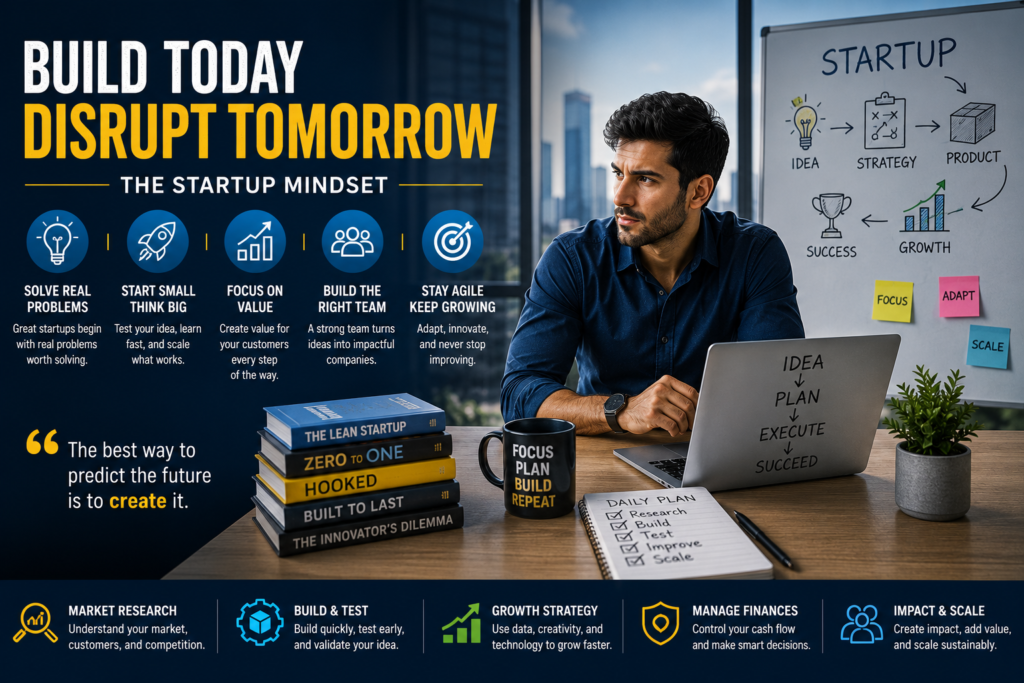
The global startup ecosystem continues to evolve rapidly as entrepreneurs develop new solutions for changing consumer needs, emerging technologies, and complex business challenges. From artificial intelligence and financial technology to healthcare, e-commerce, and climate innovation, startups are playing an increasingly important role in shaping the future of business.
However, launching a startup is not simply about having a creative idea. Many businesses begin with exciting concepts but struggle because they fail to solve a genuine problem or understand their target customers. The most successful startups are usually built around a clear need and a practical solution that delivers measurable value.
In 2026, successful founders are increasingly focused on sustainable growth, efficient operations, customer experience, and responsible use of technology. Instead of chasing every trend, startups are concentrating on building products and services that can create long-term value.
A strong startup combines a real market opportunity with effective execution. The idea may be important, but the ability to understand customers, adapt to change, build a capable team, and manage resources often determines whether a company succeeds.
Solving a Real Problem Is the Foundation of Startup Success
Many entrepreneurs begin with a product idea and immediately start developing it. However, successful startups often follow a different approach: they first identify a problem and then develop a solution.
Before building a product, founders should understand who experiences the problem, how serious it is, and whether customers are willing to pay for a solution. This process helps entrepreneurs avoid spending significant time and money developing products that have little market demand.
Customer research is one of the most valuable steps in the startup journey. Speaking with potential users, analyzing competitors, studying industry trends, and testing early ideas can provide valuable insights.
A minimum viable product, commonly known as an MVP, allows startups to test an idea with a basic version of their product. Instead of spending years developing a perfect solution, founders can launch an early version, collect feedback, and improve the product based on real customer experiences.
This approach reduces risk and helps startups understand what customers actually value.
Customer feedback should remain central throughout the development process. Markets change, customer expectations evolve, and new competitors emerge. Startups that listen carefully and adapt quickly are often better positioned for long-term growth.
The strongest startups do not simply sell products. They solve problems, improve experiences, save time, reduce costs, or create new opportunities for their customers.
Technology and Lean Growth Are Changing the Startup Landscape
Technology has made it easier than ever to launch and grow a startup. Cloud computing, artificial intelligence, automation, digital marketing, and online payment systems allow small companies to compete with much larger organizations.
Artificial intelligence is becoming particularly important for startups. Entrepreneurs are using AI to automate customer service, analyze data, improve marketing campaigns, develop software, and personalize customer experiences.
Automation also allows startups to operate more efficiently with smaller teams. Repetitive tasks such as data entry, scheduling, reporting, and customer communication can increasingly be managed through digital tools.
Cloud-based software has reduced the cost of building a business. Startups can now access powerful tools without investing heavily in physical infrastructure or expensive technology systems.
Digital marketing has also created new opportunities for startups to reach global audiences. Social media, search engine optimization, email marketing, and content marketing allow new companies to build brand awareness without the massive advertising budgets traditionally required by large corporations.
However, technology alone does not guarantee success. Startups must use technology strategically and ensure that their investments create real value.
Lean operations have become increasingly important. Instead of hiring large teams and spending heavily before achieving product-market fit, many startups are focusing on efficiency and sustainable growth.
This approach helps founders preserve capital, reduce unnecessary expenses, and adapt more quickly to market changes.
Building a Strong Team and Sustainable Business Model
A great idea can only go so far without the right team. Successful startups require people with different skills, including product development, marketing, sales, finance, technology, and customer service.
Founders should build teams that share a clear vision while bringing different strengths to the organization. A strong company culture encourages creativity, collaboration, accountability, and continuous learning.
Leadership is also critical. Startup founders must make decisions under uncertainty, manage limited resources, and remain focused during challenging periods.
Financial management is another major factor in startup success. Many startups fail not because their product is poor, but because they run out of money before reaching sustainable profitability.
Founders should carefully monitor expenses, cash flow, revenue, and customer acquisition costs. Understanding these financial metrics helps businesses make better decisions and plan for future growth.
A sustainable business model is equally important. Startups need to clearly understand how they will generate revenue and create long-term value.
Some businesses rely on subscriptions, while others use transaction fees, advertising, licensing, or direct sales. The right model depends on the market and customer needs.
Funding can help startups accelerate growth, but raising investment should not always be the primary goal. Venture capital can provide resources for expansion, but it may also create pressure to grow rapidly.
Many modern startups are choosing a more balanced approach by focusing on revenue, profitability, and sustainable growth.
The future of entrepreneurship will likely belong to startups that combine innovation with financial discipline. Companies that solve real problems, manage resources effectively, and build strong customer relationships will be better positioned to survive changing markets.
Conclusion
Startups continue to play a major role in shaping the future of the global economy. From artificial intelligence and fintech to healthcare, e-commerce, and climate technology, entrepreneurs are creating solutions for some of the world’s most important challenges.
However, successful startups are not built on ideas alone. They require a deep understanding of customer problems, strong execution, effective technology, financial discipline, and talented teams.
The most promising startups of 2026 are focused not only on rapid growth but also on creating sustainable businesses that deliver long-term value.
For aspiring entrepreneurs, the most important lesson is simple: start with a real problem, listen to customers, test ideas quickly, manage resources carefully, and remain willing to adapt.
A startup may begin with a small idea, but with the right strategy and execution, it can become a business capable of transforming an entire industry.