

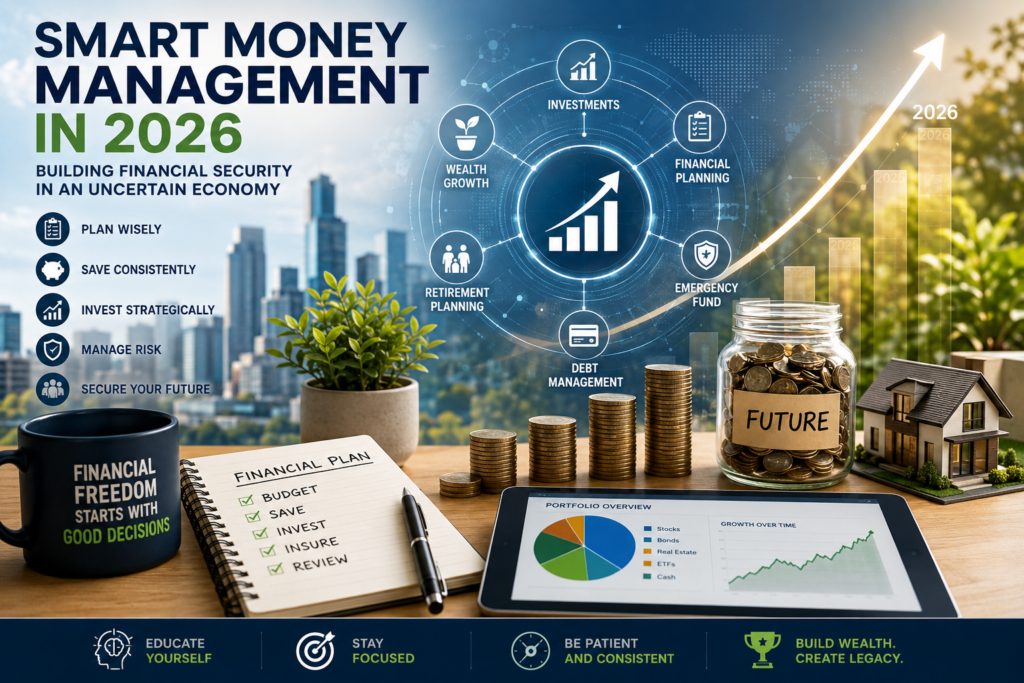
Why Financial Planning Matters More Than Ever
The global financial landscape continues to evolve at a rapid pace. Rising living costs, economic uncertainty, technological disruption, and changing employment trends have made financial planning more important than ever before. While many people focus on increasing their income, long-term financial success is often determined by how effectively money is managed rather than how much is earned.
Financial planning provides individuals and businesses with a roadmap for achieving both short-term and long-term goals. Whether saving for retirement, purchasing a home, starting a business, or building generational wealth, proper financial management creates stability and reduces financial stress.
One of the biggest challenges facing consumers today is inflation. As prices for goods and services increase, purchasing power declines. This means that money sitting idle in a bank account may lose value over time. As a result, individuals must adopt strategies that not only preserve wealth but also help it grow.
Emergency preparedness is another critical aspect of financial planning. Unexpected events such as job loss, medical emergencies, economic downturns, or business disruptions can significantly impact financial stability. Experts generally recommend maintaining an emergency fund that can cover several months of essential expenses.
Debt management also plays a crucial role in financial health. While certain types of debt can support growth and investment, excessive high-interest debt can limit financial flexibility and slow wealth accumulation. Creating a structured repayment plan and prioritizing financial discipline can help individuals regain control of their finances.
Financial literacy remains one of the most valuable skills in today’s economy. Understanding budgeting, saving, investing, taxation, and risk management enables people to make informed decisions and avoid costly mistakes. As financial products become increasingly complex, education becomes even more important.
Ultimately, financial planning is not about restricting spending. It is about creating a framework that aligns financial decisions with personal goals and future aspirations.
Investment Strategies for Long-Term Wealth Creation
Investing remains one of the most effective ways to build wealth over time. While markets experience short-term fluctuations, history has consistently shown that disciplined long-term investing can generate significant returns.
The foundation of successful investing begins with diversification. Diversification involves spreading investments across multiple asset classes, industries, and geographic regions to reduce risk. A diversified portfolio is generally more resilient during periods of market volatility.
Stocks continue to play a major role in wealth creation. By investing in companies with strong fundamentals, consistent growth, and sustainable business models, investors can benefit from capital appreciation and dividend income. Long-term investors often focus on quality businesses rather than short-term market movements.
Exchange-traded funds (ETFs) have gained popularity because they provide broad market exposure at relatively low costs. ETFs allow investors to diversify efficiently while minimizing the need for active management.
Real estate remains another attractive investment option. Property investments can provide rental income, capital appreciation, and portfolio diversification. In many markets, real estate continues to be viewed as a reliable long-term asset.
Fixed-income investments such as bonds may offer greater stability and predictable income streams. While returns are generally lower than equities, bonds can help balance risk within a portfolio.
Technology has also expanded investment opportunities. Digital platforms now provide access to global markets, automated investment solutions, and educational resources that were previously available only to professional investors.
One important principle of investing is consistency. Regular contributions over time can significantly increase portfolio value through the power of compounding.
Compounding allows investors to earn returns not only on their original investment but also on previous gains. Over long periods, this effect can dramatically accelerate wealth accumulation.
Risk management is equally important. Every investment carries some level of uncertainty. Successful investors understand their risk tolerance, maintain realistic expectations, and avoid emotional decision-making during market fluctuations.
Long-term investing requires patience. Market downturns are inevitable, but maintaining a disciplined approach often produces better outcomes than attempting to time the market.
The Future of Personal Finance and Wealth Management
The future of finance is being shaped by technology, automation, and changing consumer expectations. Financial services are becoming more accessible, personalized, and efficient than ever before.
Artificial intelligence is transforming financial decision-making. AI-powered tools can analyze spending patterns, recommend investment strategies, identify savings opportunities, and help individuals make more informed financial choices. These technologies are making sophisticated financial guidance available to a broader audience.
Digital banking continues to grow rapidly. Consumers increasingly expect seamless online experiences, real-time transactions, and mobile-first financial services. Traditional banking institutions are investing heavily in digital transformation to meet these demands.
Financial education is also becoming more accessible through online courses, podcasts, webinars, and educational platforms. As awareness increases, more individuals are taking proactive steps to improve their financial literacy and long-term planning.
Retirement planning remains a major concern for many households. Longer life expectancies mean that individuals must prepare for extended retirement periods. Building diversified income streams and maintaining consistent investment habits can help support financial security later in life.
Sustainable investing has emerged as another important trend. Investors increasingly consider environmental, social, and governance factors when evaluating investment opportunities. This approach seeks to generate financial returns while supporting responsible business practices.
Businesses are also adapting to changing financial realities. Companies are focusing on efficiency, innovation, and digital transformation to remain competitive in evolving markets. Strong financial management helps organizations navigate uncertainty and capitalize on growth opportunities.
The most successful individuals and organizations recognize that financial success is not achieved overnight. It is the result of consistent decision-making, disciplined planning, and a commitment to continuous learning.
As economic conditions continue to evolve, the principles of sound financial management remain unchanged: spend wisely, save consistently, invest strategically, manage risk effectively, and focus on long-term goals. Those who embrace these principles will be better positioned to build financial security and achieve sustainable wealth in the years ahead.