

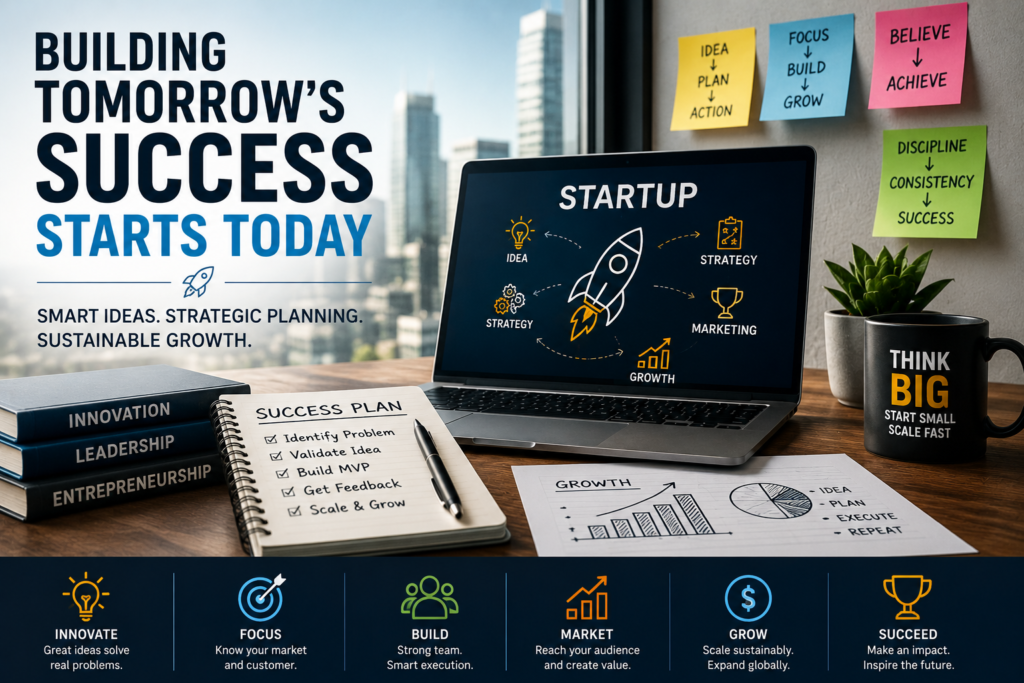
Why Startups Are Driving the Future of Innovation
The startup ecosystem has become one of the strongest drivers of innovation, economic growth, and job creation worldwide. In 2026, launching a startup is more accessible than ever thanks to cloud technology, artificial intelligence, remote teams, and global digital marketplaces. Entrepreneurs no longer need millions of dollars or large offices to build successful businesses. Instead, they need a strong idea, a clear understanding of customer problems, and the ability to execute consistently.
Modern startups are solving real-world challenges across industries such as healthcare, financial technology, artificial intelligence, education, logistics, cybersecurity, and sustainability. Consumers are constantly looking for better, faster, and more affordable solutions, creating opportunities for innovative companies to enter the market.
However, launching a startup is only the beginning. Statistics show that many startups fail within the first few years due to poor planning, lack of market research, limited funding, or ineffective marketing. Successful founders understand that building a startup requires continuous learning, adaptability, and resilience.
One of the most important factors behind startup success is identifying a genuine market problem. Businesses that focus on solving meaningful challenges naturally attract customers because they provide value instead of simply selling products.
Technology has significantly reduced barriers to entry. Entrepreneurs can now use affordable software for website development, customer relationship management, marketing automation, accounting, project management, and analytics. These tools allow small teams to compete with much larger organizations.
Investors are also becoming increasingly interested in startups that demonstrate sustainable growth, scalable business models, and strong leadership. Venture capital firms, angel investors, crowdfunding platforms, and startup accelerators continue supporting businesses with high growth potential.
Ultimately, startups represent more than new companies—they represent innovation, disruption, and the willingness to challenge traditional ways of doing business.
Essential Strategies for Startup Growth
Building a successful startup requires much more than having a great idea. Entrepreneurs must develop strategies that support sustainable growth while minimizing unnecessary risks.
The first priority should always be market research. Understanding customer needs, competitor strengths, pricing models, and industry trends helps founders validate their ideas before investing significant resources. Speaking directly with potential customers often reveals valuable insights that surveys and reports cannot provide.
Creating a Minimum Viable Product (MVP) allows startups to test ideas quickly. Instead of building every feature immediately, successful startups launch a simplified version of their product, collect customer feedback, and improve continuously. This approach reduces development costs while ensuring that future investments align with real customer needs.
Building a strong brand is equally important. Customers are more likely to trust businesses that communicate a clear mission, consistent messaging, and professional visual identity. A memorable brand helps startups stand out in competitive markets and encourages customer loyalty.
Digital marketing plays a crucial role in startup success. Search Engine Optimization (SEO), content marketing, social media, email campaigns, and Digital PR help businesses reach their target audience without relying entirely on expensive advertising. Publishing valuable educational content positions startups as industry experts while generating long-term organic traffic.
Customer experience should remain at the center of every business decision. Excellent support, transparent communication, and quick responses create satisfied customers who become repeat buyers and recommend the business to others.
Financial discipline is another essential factor. Many startups fail because they spend aggressively before achieving consistent revenue. Careful budgeting, cash flow management, and strategic investment decisions provide stability during the early stages of growth.
Networking also creates valuable opportunities. Connecting with mentors, investors, industry experts, and fellow entrepreneurs opens doors to partnerships, funding opportunities, and practical business advice. Startup communities often provide resources that accelerate growth while reducing common mistakes.
Finally, startups should embrace data-driven decision-making. Tracking website performance, customer acquisition costs, conversion rates, and customer retention helps founders optimize operations and make informed strategic decisions.
Preparing Your Startup for Long-Term Success
Long-term success requires startups to think beyond launching products. Sustainable businesses continuously improve their offerings while adapting to changing customer expectations and market conditions.
Innovation should become part of the company’s culture. Teams that encourage creativity, experimentation, and continuous learning remain competitive even as industries evolve. Businesses that resist change often struggle when new technologies or competitors emerge.
Hiring the right people also contributes significantly to startup success. A motivated, skilled, and collaborative team can solve problems faster and deliver better customer experiences. Founders should prioritize attitude, adaptability, and cultural fit alongside technical skills.
Scalability is another important consideration. Successful startups build systems and processes that support future growth without dramatically increasing operational costs. Cloud technology, automation, and standardized workflows allow businesses to serve larger customer bases efficiently.
Cybersecurity has become increasingly important for startups handling customer data. Protecting sensitive information builds trust while ensuring compliance with privacy regulations. Investing in secure systems early prevents costly security incidents later.
International expansion offers exciting opportunities for growing startups. Digital businesses can now reach customers across multiple countries through online platforms, multilingual websites, and global payment systems. Expanding carefully into new markets increases revenue potential while reducing dependence on a single region.
Business resilience has become equally important. Economic uncertainty, technological disruption, and changing consumer behavior require startups to remain flexible. Companies that regularly review strategies, monitor market trends, and diversify revenue streams are better prepared for unexpected challenges.
Above all, successful entrepreneurs maintain persistence. Every startup faces obstacles, setbacks, and periods of uncertainty. Learning from failures, listening to customer feedback, and continuously improving products are characteristics shared by many of today’s most successful companies.
The startup landscape in 2026 offers tremendous opportunities for ambitious entrepreneurs. Those who combine innovation, strategic planning, customer-focused thinking, and consistent execution will be well-positioned to build businesses that create lasting value for customers, investors, and society. Every successful company begins with a single idea—but it grows through determination, adaptability, and the commitment to solve real problems better than anyone else.